Apple delivered its latest budget handset, the $599 iPhone 16e, without pomp. There was no big event in person, nor was there one online. No journalists scrambled through hoards of colleagues to snap photos of the phone. Instead, CEO Tim Cook tweeted out that new hardware was on the way, days before Apple announced the handset via a press release.
Accordingly, the 16e isn’t an exciting device. It’s a safe one. It’s an amalgam of earlier iPhones, in a bid to create a product that’s reliable, while keeping costs down. The handset most closely resembles the iPhone 13 and 14, both in dimensions and the inclusion of the display notch up top. The iPhone 15’s Action button is here, but the 16’s Camera Control is absent.
From an innovation standpoint, the iPhone 16e’s most exciting element would have to be its custom C1 modem. That’s not a sentiment you hear too often. Modems are decidedly unsexy. Most consumers only ever acknowledge their existence when theirs goes on the fritz. But it’s not the technology that makes the component interesting. It’s the fact that this is the first time Apple has made one.
While the 16e borrows liberally from earlier Apple handsets, there are elements of the company’s latest flagship that help justify Apple’s new naming scheme. The strongest argument in favor of ditching the familiar iPhone SE branding is the inclusion of another component: the A18. That’s the same processor found on the regular iPhone 16.
This is important for a couple of reasons. The first is that the 16e is $200 cheaper than the iPhone 16, which was, up to now, the cheapest way to get the chip. The second and more important is future-proofing. Apple will continue supporting the chip longer than it will the iPhone 15’s A16 chip.
Beyond bug fixes and security updates, future-proofing also includes Apple Intelligence, the nascent generative AI platform the company is banking on as the future of iPhone. Before last week, the existing iPhone 16 line and the most expensive iPhone 15 models were the only iOS devices capable of running the feature.
A “modern” take on a familiar form factor

Don’t get things tangled, though. The star of this show isn’t a particular piece of silicon. It’s the price. Pricing, after all, is why analysts have pointed the iPhone 16e’s potential to help Apple make up for lost ground in key markets like China and India. In the grand scheme of things, a $200 price drop from the entry-level iPhone isn’t huge, but every bit counts, particularly in developing markets where true flagships can struggle.
But dropping the price point doesn’t automatically translate to a deluge of new iPhone users. Apple faces extremely stiff competition from domestic manufacturers in China — a phenomenon that’s only likely to worsen as trade tensions increase.
There are other complicated factors in markets like India, where both the iPhone 14 and 15 will be around to purchase through retail channels for a while. The iPhone 14’s discontinuation makes finding a new one far more difficult here in the U.S., but the iPhone 15 is still officially available here, starting at $699.
Elements like these obscure the 16e’s position in the current iPhone lineup. A $100 price difference between it and the 15 isn’t insignificant, but it’s nowhere near the price gulf some Android manufacturers put between their mid-tier and flagship devices. Serviceable, cheap Android devices have never been in short demand. The iPhone 16e isn’t a budget device, per se, because Apple doesn’t make budget devices.
Further blurring the lines is the fact that the 16e’s iPhone 14-inspired design doesn’t feel like throwback in the way the last SE did when it was launched in 2022. While the 16e still sports the display notch rather than the Dynamic Island (introduced on the 14 Pro), the overall design of the line hasn’t radically changed over the last couple of years. For this reason, the 16e feels like a “modern” iPhone in a way the last SE didn’t.
That’s a benefit for most potential buyers, but there will undoubtedly be those who will mourn the end of Touch ID in favor of Face ID. The 16e’s arrival also heralds the end of the “small” iPhone. Some will miss the more compact, 4.7-inch display found on the last SE. The 16e’s arrival means that you can no longer purchase an iPhone with a screen under 6 inches.

The iPhone 15, iPhone 16e, and iPhone 16 all sport a 6.1-inch Super Retina XDR display. The screens are largely the same, but there are a few key differences. The 16e has a notch in the place of the Dynamic Island and tops out at 1,200 nits of brightness compared to the maximum 2,000 nits on the other models. The three handsets share nearly identical footprints and weights.
All three sport a USB-C port (by law), though the 16e doesn’t feature the MagSafe connector on the rear. The handset does charging through the Qi standard, though its speeds top out at 7.5 watts, to the 15’s 15 watts and the 16’s 25 watts. The 16e sports the longest stated battery life of the three phones, at 26 hours to the 16’s 22 hours and the 15’s 20 hours. The new C1 modem played an important part in the 16e extended battery life, being both less power hunger than older silicon and smaller in a way that allowed the company to free up space for a larger battery than the iPhone 16.
Both the iPhone 16 and 16e sport the latest A18 chip with a six-core CPU and 16-core neural engine. The 16e takes a bit of a hit on the graphics processing side with a four-core GPU to the 16’s five cores. All three phones start at 128GB of storage, upgradable to both 256GB or 512GB. The 16 and 16e, meanwhile, sport 8GB of RAM to the 15’s 6GB. That little extra boost of RAM should help with some of that on-device Apple Intelligence processing.
Intelligent design
Apple Intelligence currently features text rewrite, summaries, and generative imagery, created through Image Playground. Is the ability to run Apple’s answer to Google Gemini enough reason to opt for the 16e over the less intelligent iPhone 15? The platform’s usefulness will, of course, vary dramatically between individuals in its current form. But these are very much early days.
Apple is committed to its generative AI offering, and it’s set to be the centerpiece of updates for years to come. I can’t promise any life-changing features on the horizon, but it’s entirely possible you’ll kick yourself in a year or two for deprioritizing the technology.
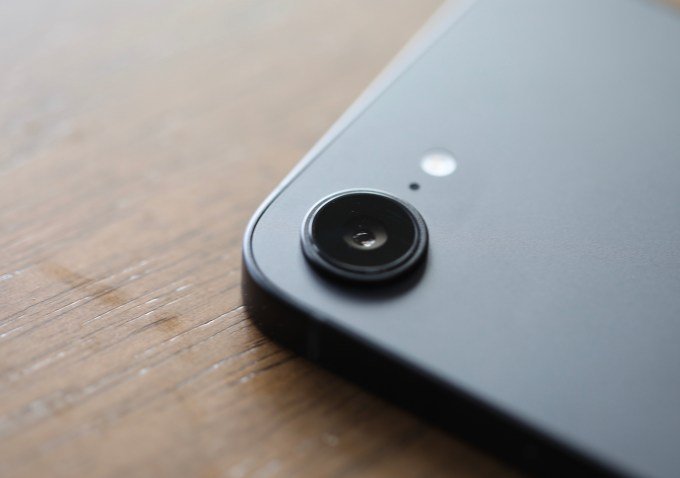
Visual Intelligence — Apple’s answer to Google Lens — is also available on the 16e, though the absence of the Camera Control feature means you’ll have to access it by means of the Action Button. More notable than the absence of Camera Control, however, is the presence of a single camera on the rear of the iPhone 16e.
Apple glossed over this fact during the announcement, instead highlighting what it calls a “2-in-1” camera system. Through the magic of computational photography, the iPhone 16e is a single-camera smartphone that “feels” like a two-camera system. This boils down to the 48-megapixel sensor with “integrated telephoto,” which means the image will give you a closer, 12-megapixel version of the image, without majorly sacrificing image quality for zoom.
You will inevitably lose versatility moving from two image sensors to one, even if said image sensor utilizes fancy fusion technology. For some users, this alone is enough to justify the added $100 to $200 to get the iPhone 15 or 16 instead. That said, the 16e is capable of getting some nice shots for a single-sensor handset and certainly marks a big leap over the last iPhone SE.
It comes down to the features you need
Every time the price drops by $100, you’re sacrificing something. That’s how profit margins work. Choosing the best “entry-level” iPhone in the current lineup is less straightforward than it might have been in the past. It comes down to what features you need and what you’re willing to do without.
The 16e is an exercise in feature prioritization. If you need the latest everything, eat the extra $200 and get the regular iPhone 16. If Apple Intelligence isn’t a priority, the iPhone 15 has you covered.
In the end, there’s surprisingly little daylight between the iPhone 16 and 16e. It prioritizes Apple Intelligence through the inclusion of the A18 and 8GB of RAM. The handset makes sacrifices in the name of affordability, like MagSafe, Dynamic Island, Camera Control, and the dual-camera system. If you can live without all those, by all means, save yourself the $200.