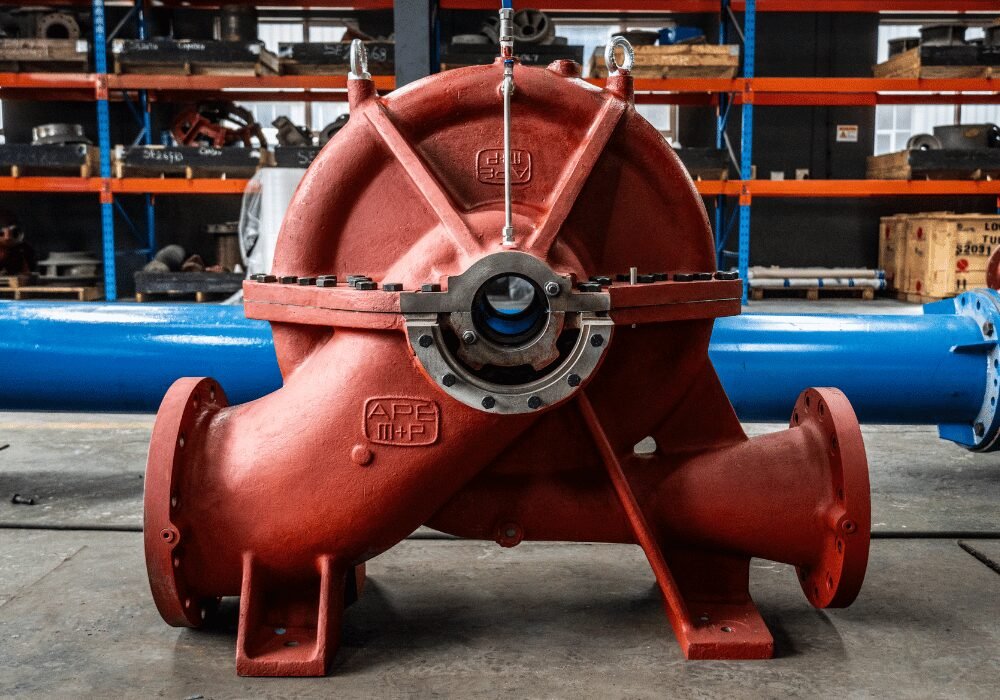
Over the past five years, South African original equipment manufacturer (OEM) – APE Pumps – has quadrupled its turnover. Contracts with various power-utility clients across the African continent have played an important role in supporting this growth.
“Entities responsible for generating, transmitting and distributing electricity to homes, businesses and industry are critical to any country’s economy. They operate under a unique set of pressures, and as a result it is common for critical pumping infrastructure to be run until failure — turning what could have been routine maintenance interventions into system-wide emergencies. This trend is now reversing, largely as power utilities recognise the value of partnering directly with original equipment manufacturers such as APE Pumps, whose deep asset knowledge and long-term involvement support a shift from reactive, failure-driven responses to planned, preventative maintenance,” explains John Montgomery, General Manager of APE Pumps and Mather + Platt (the Group).


The operational pressures that undermine preventative maintenance
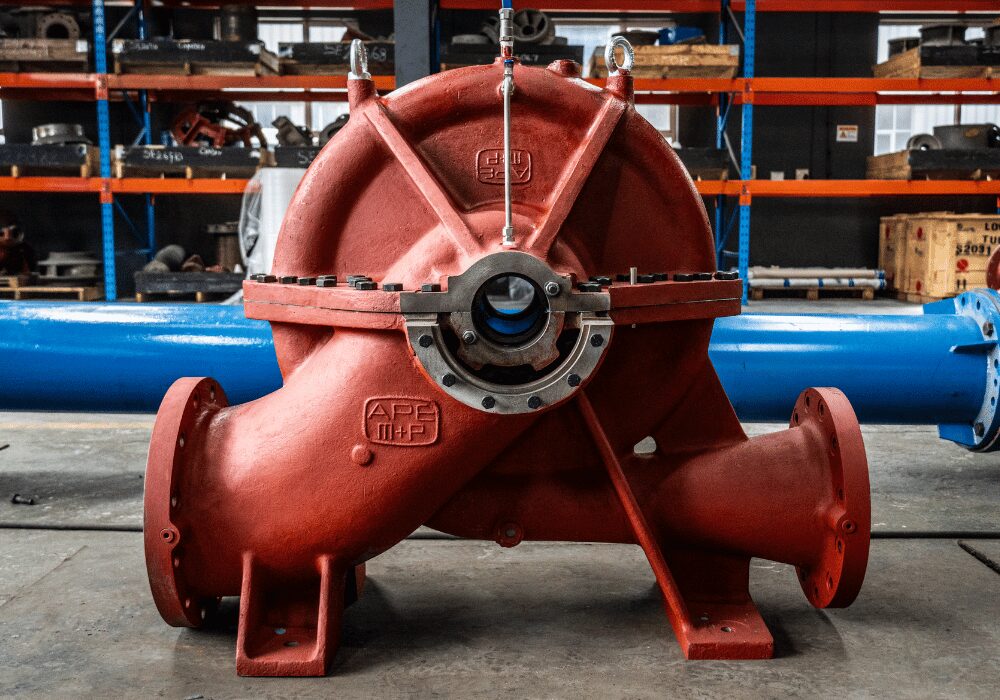
Power utilities are under constant pressure to maintain generation and grid stability. Electricity demand is continuous and largely inflexible, and any unplanned outage has immediate, system-wide consequences. Shutting down a pump for planned maintenance can mean reducing load, or taking an entire system offline. In many cases, operators perceive the risk of planned downtime as greater than the risk of running equipment harder for longer, even when deterioration is evident.
Many power stations and associated water systems were designed decades ago with defined maintenance cycles that assumed stable funding, skilled maintenance teams and readily available spares. As budgets tightened, capital replacement has been deferred and maintenance shifted from preventative to reactive. Pumps that should have been overhauled or replaced are kept in service because there is no approved funding or schedule for intervention.
Furthermore, preventative maintenance requires forward planning, long-lead spares, framework contracts and engineering sign-off. In highly regulated or public-sector environments, this can be slow and bureaucratic. By contrast, catastrophic failures frequently trigger emergency procurement pathways, allowing faster approvals and spending. This unintentionally incentivises a run-to-failure approach.
The movement back to OEMs
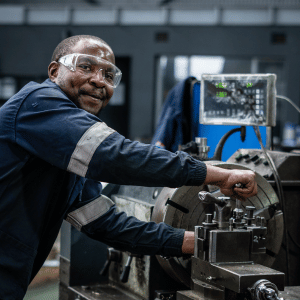 “Fortunately, power utilities are shifting away from crisis response towards structured maintenance planning. The result is a more resilient operating environment: fewer catastrophic failures, shorter outages and improved lifecycle cost performance. As power utilities across Africa reassess how best to maintain ageing infrastructure, OEM-led service, skills transfer and digital integration are becoming essential components of sustainable operations,” states Montgomery.
“Working directly with OEMs such as APE Pumps reduces corruption risk for power utilities by cutting out middlemen. OEM engagement brings transparent pricing and clear accountability for design, materials and workmanship, all aligned to original specifications. This makes it far harder to inflate costs and helps ensure that maintenance and refurbishment decisions are driven by actual asset condition and engineering requirements, rather than by commercial opportunism. In short, power utilities can save huge amounts of money through dealing directly with an OEM,” he adds.
In service level agreements, APE Pumps is increasingly requested to stock strategic spares, particularly for long lead-time components, enabling faster response (and reducing downtime) when failures occur.
“Power utilities require partners that can provide end-to-end technical support and have a rapid response capability. Rather than operating purely as a remote supplier, we provide embedded technical teams at power stations, supported by long-term service contracts. These teams consist of qualified artisans with deep pump expertise, capable of diagnosing, maintaining and refurbishing equipment on site,” states Montogomery.
Skills development
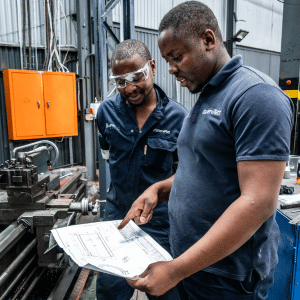 A critical element needed by power utilities is skills development. As institutional knowledge within utilities has declined over time, OEMs are increasingly expected to fill capability gaps.
Through certain contracts with power utilities, APE Pumps have structured training and apprenticeship programmes where people are drawn from communities around power stations and sent to colleges, where they attain a qualification, are trained onsite by APE Pumps and then integrated into site operations with formal artisanal skills.
This approach strengthens local capacity while ensuring equipment is maintained by personnel who understand OEM specifications and performance requirements.
“APE Pumps is often asked to establish satellite workshops at power stations, equipped with lathes, milling machines and tooling that allow day-to-day repairs to be completed without removing equipment from site. Only major components requiring specialised facilities are returned to the APE Pumps’ workshop, significantly reducing turnaround times and logistics delays.
Movement away from pirated/non OEM specified parts
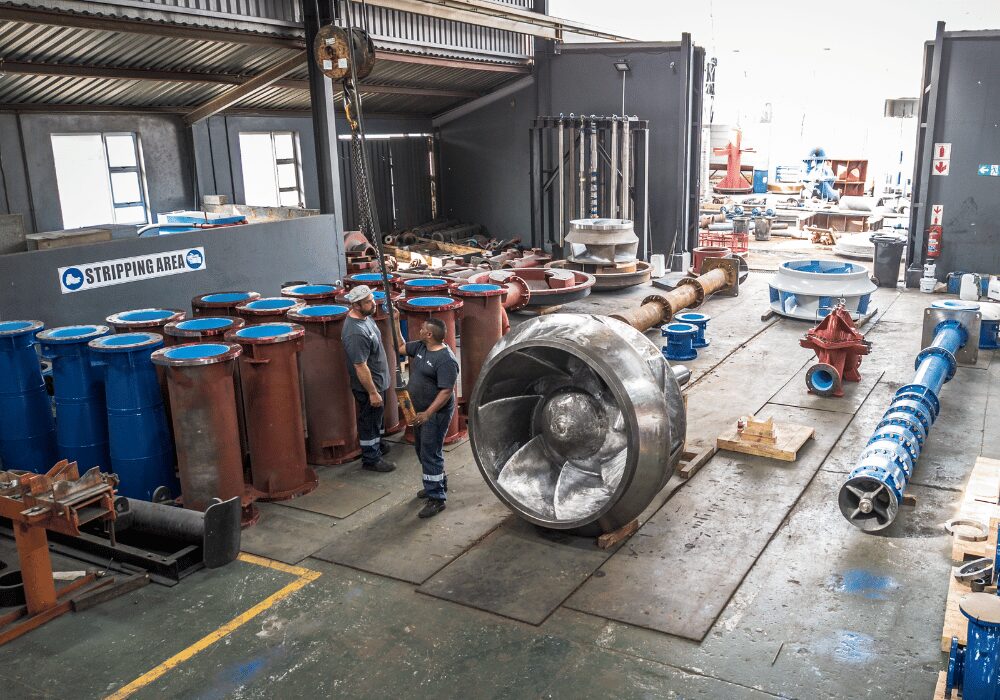
Montgomery adds that when refurbishing pumps, there are often instances where a pump has been retrofitted with pirated parts. “Counterfeit component fabrication is an ongoing concern. Those who succumb to the temptation of perceived short-term savings due to ‘cheaper’ prices will initially experience pump inefficiency and ultimately pump failure.”
This is why power utilities are turning back to OEM’s. From a supply-chain perspective, OEM involvement mitigates risk associated with non-original or poorly refurbished components.
“Power utilities have experienced repeated failures where equipment was reportedly serviced but not dismantled or inspected correctly. OEM refurbishment restores equipment to original design intent, using specified materials and tolerances, extending asset life and improving energy efficiency,” explains Montgomery.
Recent projects
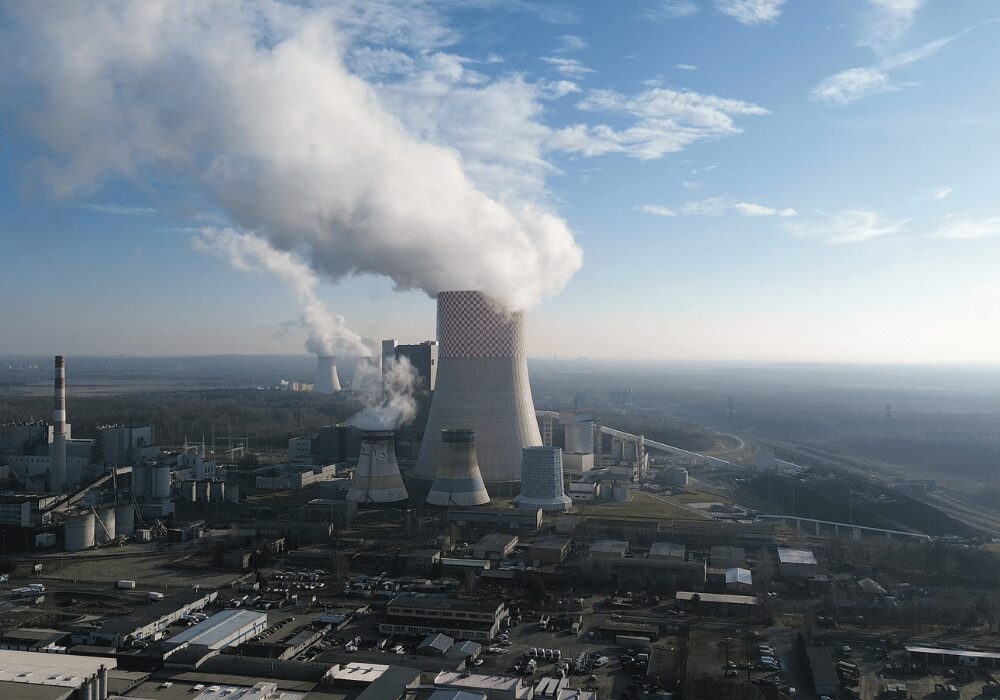
APE Pumps is recently servicing seven power utility contracts across the continent. Recently, they have been awarded a contract for maintenance, refurbishment and repair on the cooling water and the demin (demineralised) water transfer pumps of a power station.
In another contract, APE Pumps employed 3D scanning on the client’s Archimedes screw pump installations to accurately price the job based on a detailed method statement.
Taken together, these developments reflect a broader shift in how power utilities across Africa are approaching asset management and risk. APE Pumps’ growth in this space is underpinned by its ability to combine deep OEM knowledge, in-house engineering and fabrication capability, on-site technical support, skills development and digital tools such as 3D scanning into a single, integrated offering.
By restoring equipment to original design intent, rebuilding lost skills, improving maintenance planning and reducing supply-chain risk, APE Pumps is helping power utilities stabilise ageing infrastructure and move away from crisis-driven operations. As the energy sector faces increasing pressure to improve reliability, efficiency and governance, partnerships with OEMs that understand both the equipment and the operating environment are becoming central to long-term sustainability.