

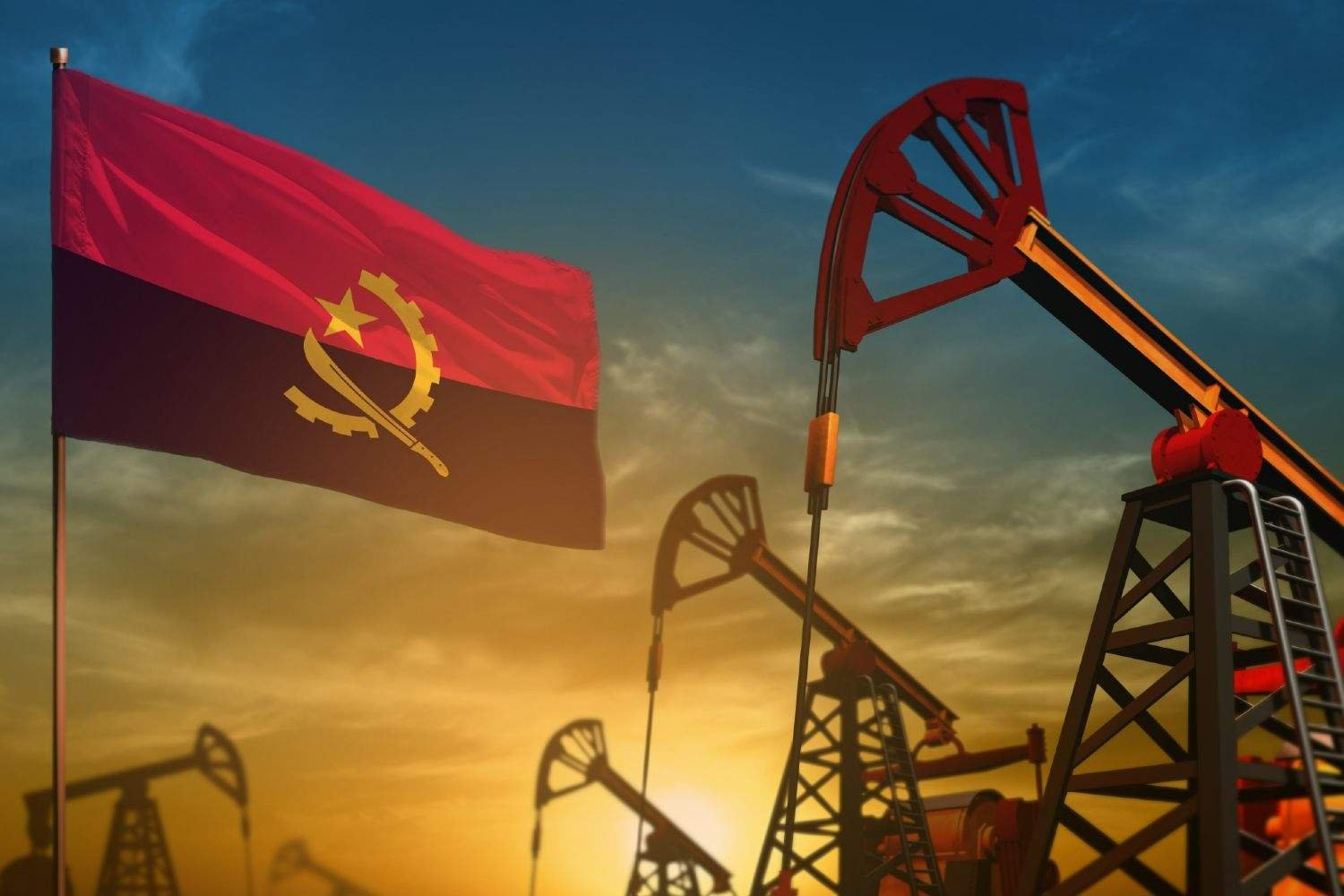
For decades, Angola’s economy has lived and breathed oil, riding its booms and enduring its busts.
But as global crude markets remain unpredictable and production volumes slip, the country is pivoting towards natural gas.

Officials in Luanda see gas as a crucial lever to stabilise revenues, attract new investment, and chart a path to long-term growth beyond oil.
Just months after leaving the Organisation of Petroleum Exporting Countries (OPEC), Angola is now searching for steadier ground, relinquishing its long-held spot as Africa’s second-largest producer to a resurgent Libya.
The government hopes the untapped huge gas beneath its soil can be both the bridge to economic diversification and stability.
To many citizens, gas represents not only a source of energy but also the engine of national recovery.
For others, it is a blank canvas; to be shaped by whatever officials in Luanda attach to it.
But one thing seems clear; natural gas is as much a potent tool for Angola’s economic future as crude has been for its past, but let’s take a closer look.
Angola’s oil stagnates as gas gains momentum
Once a heavyweight producer pumping more than 2 million barrels of oil per day (bpd), Angola’s crude output has slipped dramatically in recent years.
Today, the government is targeting a modest 1.1 to 1.2 million bpd through 2030 as it battles declining reserves and ageing fields.
But even that goal looks shaky.
In July 2025, Angola’s production fell below the one-million-barrel mark, averaging 998,757 bpd.
That is the lowest level since March 2023, according to the National Agency for Petroleum and Gas (ANPG).
The figure was well short of the 1.07 million bpd the agency had projected for the month.
The struggle to sustain output comes in the wake of Angola’s December 2023 exit from OPEC, ending a 16-year membership.
Oil Minister Diamantino Azevedo said the country gained “nothing by remaining in the organisation and, in defence of its interests, decided to leave.”
At the time of the exit, production was hovering around 1.1 million bpd.
Despite new projects coming online, the slide has been hard to reverse.
TotalEnergies, Angola’s largest foreign operator, recently added 60,000 bpd from the CLOV Phase 3 and BEGONIA offshore projects.
In the same vein, Azule Energy started production from the Agogo FPSO, expected to deliver over 100,000 bpd.
Yet these gains have not been enough to offset production decline.
A strategic pivot to gas
Angola has 38 trillion cubic feet (tcf) of discovered gas and another 56 tcf of prospective resources.
Since launching its LNG plant (Angola LNG) in Soyo in 2013 to monetise flared offshore gas, the country has growingly invested in gas development due to growing demand and exports.
Earlier this year, the country launched a 25-year National Gas Master Plan (NGMP) that targets a 25% (up from the 7–10%) share of gas in the national energy mix by 2025.
A drilling campaign led by Azule Energy (a 50:50 JV between BP and Eni) and other partners recently spudded over 1 trillion cubic feet of gas and 100 million barrels of condensate at Gajajeira-01.
Gajajeira-01 is Angola’s first exploration well dedicated solely to natural gas, and the second well is planned for the next two years.
“This resource is vital for enhancing energy access and domestic consumption, as well as for boosting Angola’s petrochemical and fertiliser industries,” said Paulino Jerónimo, Chairman of the Board of Directors of the National Agency of Petroleum, Gas and Biofuels (ANPG).
Angola LNG, a $12 billion gas project launched about a decade ago, is seeking additional feedstock from gas-specific exploration wells over the coming months to hit full capacity.
The plant, owned by Chevron, TotalEnergies, Eni and Sonangol, is designed for a single train of 5.2 million tons a year, but current supplies are still far from closing the gap.
Non-associated gas now the big thing
Angola boasts trillions of cubic feet of associated gas from offshore oil fields.
Historically, most of this was flared until recent years when the government has invested heavily on building infrastructure to convert it into LNG.
Still, the country is now taking a more intentional look into further leveraging non-associated gas reserves like Gajajeira.
The country’s Gas Master Plan is primarily focused on unlocking non-associated gas through several projects like the New Gas Consortium (NGC), which seeks to develop the Quiluma and Maboqueiro fields.
This $2.4 billion Azule-led project aims for 330 mmscf/d output and is expected online by late 2025 or early 2026. It is Angola’s first non-associated gas project, and the first phase will link the two shallow water fields to the Angola LNG facility.
Chevron’s Sanha Lean Gas Connection, which began delivering in December 2024, will add an extra 220 mmscf/d over the coming years to feed the Angola LNG plant.
Sanha Lean is the world’s first LNG plant to be supplied by associated gas and is projected to increase Angola LNG’s supply by about 40% over 15 years.
Another major project that will also tap into Angola’s rich non-associated gas reserves is the ongoing phase 2 of the Soyo power plant.
The additional 750MW combined-cycle power upgrade will feature four gas turbines out of a total of six. This gas will be sourced from the Angola LNG terminal and the Sanha Lean Gas Connection,
Domestic and export infrastructure expands
Gas demand has seen consistent growth in Angola.
State projections foresee gas production rising to 3,659 million standard cubic feet daily (mmcf/d) by 2030, up from about 2,973 mmcf/d in 2025.
In 2023, when Angola LNG shipped its 400th cargo, the country’s natural gas demand reached 591 million cubic metres, an increase of 3 million cubic metres compared to 2022.
Similarly, LNG exports have grown.
For instance, in the second quarter of 2025, government data reveals LNG exports grew 19.1%, with India and Spain as top buyers.
Yet, despite being fed with both associated and non-associated gas, Angola LNG still operates at only 70% capacity.
To address this deficit, expansion projects are underway like the Sanha Lean and Quiluma/Maboqueiro, including a new 3 mtpa mini-train (3 mtpa) and several gas pipelines.
These developments support broader economic goals and will serve the country’s ambitious fertiliser and petrochemical plans as well as power agriculture.
Economic outlook and opportunities in Angola’s gas
African oil producers often feel the sting when crude production falls short of projections, and Angola is no exception.
The country is struggling to meet revenue targets in its 2025 budget as output declines, forcing the government to run budget stress tests in anticipation of prolonged price volatility.
Luanda is even considering contingency support from the International Monetary Fund (IMF), a path that has proven unsustainable in the past.
Compounding the pressure is the burden of repaying billions of dollars in oil-backed loans owed to China, a challenge that has weighed on the economy for years.
Yet Angola is not standing still.
In its determination to boost economic base, the government has unveiled plans to channel up to $60 billion into oil and gas investments over the next five years, including the drilling of 23 new exploration wells.
A significant share of this spending is earmarked for natural gas, with hopes that the resource can fuel industrialisation, expand exports, and create jobs.
For policymakers, gas offers more than just diversification. It represents a cleaner, more stable pathway compared to oil’s notorious volatility.
The ambition is spelled out in Angola’s Gas Master Plan,which outlines the development of more than 40 gas fields in the coming years.
Still, the road ahead will be long. With oil revenues accounting for nearly 90% of national income, it may take years before gas begins to rival crude as Angola’s economic backbone—if it ever does.


