

The agriculture sector is notoriously volatile, but producers can find stability using financial derivative tools. This article clearly defines and differentiates between two key instruments: forward contracts and futures contracts.
– ADVERTISEMENT –
Agriculture has always been notorious for its volatility with commodity prices swinging wildly between seasons.
In such an environment, risk management has become key to ensuring sustainability. This is where financial tools such as forward contracts and commodity futures can assist.
Though often associated with speculators and investors, these instruments are in fact powerful tools for producers themselves, offering ways to shift and manage risk.
There has long been a tendency to lump together forward contracts and future contracts. This confusion is largely driven by a lack of understanding about the mechanics of these derivative products.
There are fundamental differences between these, and both offer distinct advantages and risks to farmers. Understanding these differences is essential for producers who want to use them effectively.
Forward contracts
A forward contract is perhaps the more straightforward of the two and traditionally the one farmers were most exposed to. It is a private, customised agreement between two parties to buy or sell an agricultural commodity at a set price on a future date.
Because it is a private agreement, its terms are flexible and can be negotiated between the buyer and the seller. By entering a forward contract, farmers secure a guaranteed price for their harvest, insulating themselves from the risk of falling market prices. Buyers, such as food processors or millers, benefit by ensuring steady supply at predictable costs.
Forward contracts are not without risks. Because they are private agreements, there is no secondary market in which they can be easily transferred. Once signed, the contract is binding; if circumstances change, the farmer cannot simply sell the contract to another party.
There is also the issue of counter-party risk; if one party defaults the other bears the loss.
For this reason, farmers are advised not to commit their entire harvest to forward contracts. Best practice is to cover only a portion of expected production through such contracts. This provides guaranteed income for part of the crop while leaving room to benefit if market prices rise. In South Africa, co-operatives continue to play an important role in offering forward contracts and can be seen as a type of contract farming.
Futures contracts
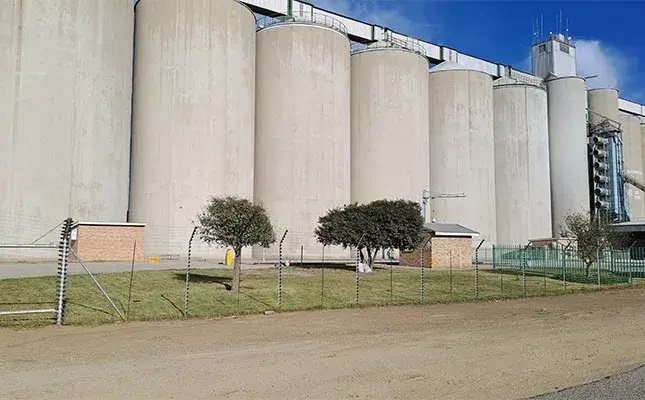
Futures contracts (futures), by contrast, are standardised agreements traded on regulated exchanges. In South Africa, the South African Futures Exchange (SAFEX) provides a transparent platform for trading grain futures. Internationally, exchanges such as the Chicago Board of Trade (CBOT) serve similar functions.
A futures contract is a legally binding agreement to buy or sell a specific amount of an agricultural commodity at a predetermined price on a future date. The fact that the contracts are standardised mean they are accessible and transparent for all market participants.
Because commodities are traded on an open market, the resulting deliverable prices provide valuable information for producers regarding potential commodity price trends for a given season.
For farmers, the advantages of futures can be significant. By selling futures contracts, they can hedge against falling prices. Buyers of these contracts can hedge against rising prices by purchasing futures. The contracts are highly liquid and can be bought and sold easily.
Just like with forward contracts, there are risks associated with commodity futures of which producers should be aware. Farmers must maintain margin accounts, setting aside funds as collateral in case of daily settlements, meaning that price fluctuations can trigger margin calls, requiring additional capital. For smaller producers, this can strain cash flow if not properly planned.
It is one of the reasons smaller producers are much more likely to engage with a more localised forward contract with a local cooperative or banks rather than futures trading on SAFEX.
Futures trading therefore demands careful financial management and a clear understanding of the risks involved.
Despite these challenges, futures contracts remain a vital tool for risk management. A practical approach is to hedge enough of the crop to cover production costs. By locking in this portion through futures, the farmer ensures that even if market prices fall, the operation will break even.
The process of hedging with futures can be broken down into a series of steps.
First, the farmer must assess exposure by analysing how much commodity is produced and the timing of sales. Next, the appropriate contract must be chosen, matching the commodity and delivery window.
With the help of a broker, the farmer then enters the market by placing buy or sell orders.
Finally, before delivery, the farmer can close or offset the futures position by taking the opposite trade or prepare for physical delivery if applicable.
It is important to note that futures contracts manage price risk, not production risk. Crop insurance remains essential for protecting against various losses.
For South African producers, the choice between forward contracts and futures depends on individual circumstances, and many farmers use a combination of both.
By understanding the mechanics of these derivative products and applying them wisely, agricultural producers can plan, protect profitability, and build resilience.
Get trusted farming news from Farmers Weekly in Google Top Stories.
➕ Add Farmers Weekly to Google
✔ Takes 10 seconds · ✔ Remove anytime


