


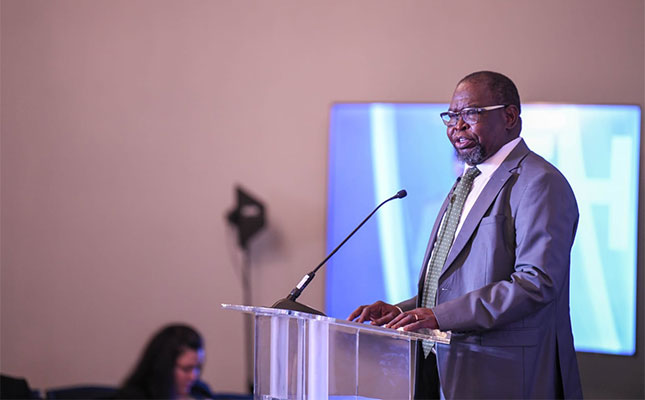
The response to the 2026 Budget Speech, delivered in Parliament on Wednesday by Finance Minister Enoch Godongwana, was largely positive. However, the absence of specific support to address the foot-and-mouth disease outbreak has left the sector feeling discouraged.
– ADVERTISEMENT –
Speaking to Farmer’s Weekly, Paul Makube, senior agricultural economist at FNB, noted that while President Cyril Ramaphosa placed strong emphasis on foot-and-mouth disease (FMD) during his State of the Nation Address, it was surprising that Godongwana only briefly referenced it in the budget speech.
He expressed hope that animal health would receive more detailed attention in the agriculture budget, warning that a range of diseases continue to pose significant risks to the livestock industry.
AgriSA CEO Johann Kotzé said in a statement that while the budget advanced fiscal stabilisation, it falls short in one critical area: targeted strategic investment to strengthen agricultural competitiveness and biosecurity.
“Agriculture is one of the few sectors that consistently delivers export growth and foreign exchange earnings, supports rural employment and income stability, stimulates downstream agro-processing activity, and strengthens national food security resilience. The sector is central to economic growth and fiscal recovery, but growth cannot be sustained without strategic reinforcement.”
He said the FMD outbreak has exposed systemic weaknesses in animal health systems. While the budget acknowledged biosecurity risks, Kotzé said it did not yet provide sufficiently clear, ring-fenced, and measurable funding commitments to address immediate outbreaks, rebuild state veterinary capacity, modernise disease surveillance systems, strengthen vaccine procurement and distribution, enhance movement control enforcement, or establish structured public-private biosecurity partnerships.
“Biosecurity systems must be strengthened, vulnerable value chains stabilised, and implementation capacity accelerated. Without this, fiscal stability will not translate into sustained agricultural expansion,” he explained.
Structural support welcomed
Makube said that aside from the absence of detail on biosecurity, the budget was broadly positive, particularly for agriculture. He welcomed the increase in infrastructure spending and said investment in logistics and water supply would directly benefit the sector.
“Government is spending money on the right things. It is smart expenditure. Improved infrastructure will help lower costs and improve competitiveness.”
He added that tax relief measures could provide a boost to consumer incomes, potentially supporting demand for agricultural products.
Makube described government’s economic growth projections of 1,6% in 2026, rising to 2% by 2028, as realistic, provided infrastructure reforms remain on track. However, he cautioned that delivery would be decisive.
“The budget is a wish list and implementation is critical. Continued collaboration with the private sector is essential to fixing what is broken and restoring momentum to the economy.”
Budget largely on track, with some drift
Waldo Krugell, a professor of economics at North-West University, said the budget should be assessed against whether Godongwana remained aligned with the plan set out in the Medium-Term Budget Policy Statement and whether financial discipline was on track.
“There is reason to be cautiously reassured. Growth forecasts for 2026 to 2028 were unchanged, the consolidated expenditure trajectory was broadly maintained, and debt was still projected to stabilise in 2025/26 before declining. The deficit is expected to narrow to 3,1% by 2028/29, while the so-called targeted and responsible savings were expanded to R12 billion, up from the R6,7 billion previously announced,” he told Farmer’s Weekly.
However, Krugell noted some slippage. Revenue projections over the medium term are lower after the withdrawal of the proposed R20 billion tax increase, narrowing fiscal space despite stronger-than-expected in-year collections. The debt-to-GDP peak is now projected at 78,9%, one percentage point higher than before, partly due to deliberate pre-financing and partly weaker nominal GDP.
Bond issuance in 2025/26 is also higher than planned, a prudent move ahead of large redemptions in 2027/28 but one that lifts the near-term debt stock. As a result, the debt ratio is set to decline more slowly than previously projected.
Overall, he said the fiscal framework remains broadly consistent with the earlier plan but that the pace of consolidation has slowed somewhat as Godongwana opted to withdraw a politically difficult tax increase in exchange for a slightly more gradual debt reduction path.


