• Business
  • Markets
  • Politics
  • Crypto
  • Finance
  • Intelligence
    • Policy Intelligence
    • Security Intelligence
    • Economic Intelligence
    • Fashion Intelligence
  • Energy
  • Technology
  • Taxes
  • Creator Economy
  • Wealth Management
  • LBNN Blueprints
  • Business
  • Markets
  • Politics
  • Crypto
  • Finance
  • Intelligence
    • Policy Intelligence
    • Security Intelligence
    • Economic Intelligence
    • Fashion Intelligence
  • Energy
  • Technology
  • Taxes
  • Creator Economy
  • Wealth Management
  • LBNN Blueprints

Agricultural village business units transform rural Zimbabwe

Simon Osuji by Simon Osuji
February 16, 2026
in Business
0
Agricultural village business units transform rural Zimbabwe
0
SHARES
1
VIEWS
Share on FacebookShare on Twitter

Village business units registered as commercial agricultural ventures are transforming Zimbabwe’s rural landscape, long associated with subsistence farming.


Related posts

Ghana sets 2030 deadline to overhaul cocoa financing and end raw mineral exports

Ghana sets 2030 deadline to overhaul cocoa financing and end raw mineral exports

February 16, 2026
How repeated bird strikes in Nigeria grounded two Airbus in 24 hours

How repeated bird strikes in Nigeria grounded two Airbus in 24 hours

February 16, 2026

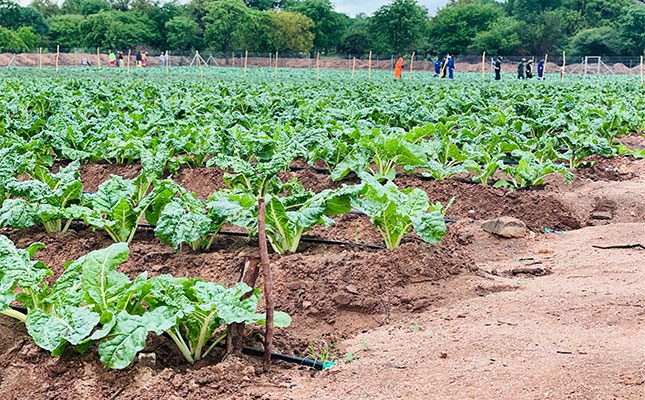
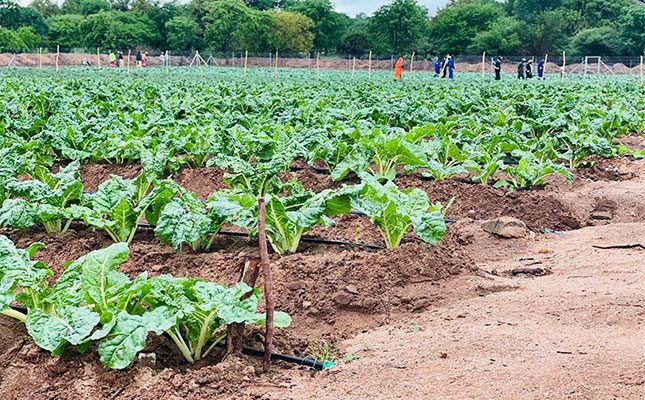
Spinach-at-Sekusile-Makorokoro

Spinach being grown at Sekusile Makorokoro Village Business Unit in Mangwe, Matabeleland South.

– ADVERTISEMENT –

These community-based, commercially run village business units (VBUs) are located in rural areas to generate income and improve livelihoods through agricultural activities such as horticulture and fisheries. Each centre is equipped with a piped water scheme, washing slabs, cattle troughs, and two fishponds.

Speaking to Farmer’s Weekly, Tinotenda Mhiko, CEO of Zimbabwe’s state-run Agricultural and Rural Development Authority (ARDA), said each 1ha VBU is solar powered, with horticulture gardens using renewable energy to pump water for crop production.

He added that a “whole-of-government approach”, guided by the Ministry of Lands, Agriculture, Fisheries, Water and Rural Development, has seen ARDA collaborate with other agricultural state entities, including the Zimbabwe National Water Authority and the Department of Irrigation on irrigation projects, and the Agricultural Marketing Authority on crop marketing. The ARDA oversees the agronomy and business management aspects of the value chain.

Mhiko said that under the Companies and Other Business Entities Act, VBUs are registered to operate as professional agricultural companies, enabling beneficiaries to access credit for operational and capital expenditure.

“All crop production is supported by a profitable, viable business case and a guaranteed supply market through a contract, ensuring sustainability and long-term success of the units,” he added.

According to Mhiko, they are also finalising a few export market agreements for contract farming of chillies, fine green beans, and peas at these units.

The government established VBUs under the Rural Development 8.0 programme, with agricultural development serving as the main driver, creating a strategic focus on agribusiness growth in rural areas.

Minister of Lands, Agriculture, Fisheries, Water and Rural Development Anxious Masuka recently told Zimbabwe’s Parliament that the VBUs fall under the Horticulture Enterprise Enhancement Project (HEEP) jointly funded by the government, the International Fund for Agricultural Development, and the OPEC Fund for International Development, among others.

“[The HEEP] is focused on horticulture and VBUs in particular, as well as value chain development, business skills, and capacitation,” he said.

While the HEEP seeks to establish 620 VBUs by 2030, the government’s long-term vision is to have one unit in each of the country’s 35 000 villages.

“The first success story was that of Sekusile-Makorokoro VBU in Mangwe, Matabeleland South, where the Presidential Rural Development Programme was launched by [President Emmerson Dambudzo Mnangagwa] in 2021.

President Emmerson Mnangagwa during the launch of the Sekusile Makorokoro Village Business Unit in Mangwe, Matabeleland South.

“The business unit has attracted youth participation, some of whom returned from Botswana and South Africa, where they had emigrated to look for jobs but have since realised the potential of growing a successful business through irrigated horticulture, even in dry and arid areas such as theirs,” Mhiko explained.

“Rural farmers are now earning an average income of between US$260 and $312 [around R4 265 to R5 118] per household per cycle, translating to between $65 and $78 [R1 066 and R1 280] per household per month, depending on the crop cycle, season, and market conditions.”

He added that the VBU programme is building resilience in rural communities, ensuring food and nutritional security, and creating employment for more than 1,25 million youths and women. It is also stimulating rural agro-industrialisation to accelerate rural development and support Zimbabwe’s Vision 2030 of becoming an upper-middle-income economy.

🌾 Enjoyed this article?

Get trusted farming news from Farmers Weekly in Google Top Stories.

➕ Add Farmers Weekly to Google
✔ Takes 10 seconds · ✔ Remove anytime

Source link

Previous Post

Application forms for 2027 SANDF MSDS intake now available

Next Post

Eni Confirms Large Gas, Condensate Find off Ivory Coast

Next Post
Eni Confirms Large Gas, Condensate Find off Ivory Coast

Eni Confirms Large Gas, Condensate Find off Ivory Coast

Leave a Reply Cancel reply

Your email address will not be published. Required fields are marked *

RECOMMENDED NEWS

BioAge shares tumble after decision to halt obesity drug study

BioAge shares tumble after decision to halt obesity drug study

1 year ago
China and Zambia Exchange of Letters on Emergency Humanitarian Food Assistance and China-Aid Projects

China and Zambia Exchange of Letters on Emergency Humanitarian Food Assistance and China-Aid Projects

1 year ago
Dewpoint, Mitsubishi partner on ALS drug in deal worth up to $480M

Dewpoint, Mitsubishi partner on ALS drug in deal worth up to $480M

1 year ago
Judges Are Slowing Down Trump’s Fascist Deportation Regime. Now He’s Arresting Them For It.

Judges Are Slowing Down Trump’s Fascist Deportation Regime. Now He’s Arresting Them For It.

10 months ago

POPULAR NEWS

  • Ghana to build three oil refineries, five petrochemical plants in energy sector overhaul

    Ghana to build three oil refineries, five petrochemical plants in energy sector overhaul

    0 shares
    Share 0 Tweet 0
  • The world’s top 10 most valuable car brands in 2025

    0 shares
    Share 0 Tweet 0
  • Top 10 African countries with the highest GDP per capita in 2025

    0 shares
    Share 0 Tweet 0
  • Global ranking of Top 5 smartphone brands in Q3, 2024

    0 shares
    Share 0 Tweet 0
  • When Will SHIB Reach $1? Here’s What ChatGPT Says

    0 shares
    Share 0 Tweet 0

Get strategic intelligence you won’t find anywhere else. Subscribe to the Limitless Beliefs Newsletter for monthly insights on overlooked business opportunities across Africa.

Subscription Form

© 2026 LBNN – All rights reserved.

Privacy Policy | About Us | Contact

Tiktok Youtube Telegram Instagram Linkedin X-twitter
No Result
View All Result
  • Home
  • Business
  • Politics
  • Markets
  • Crypto
  • Economics
    • Manufacturing
    • Real Estate
    • Infrastructure
  • Finance
  • Energy
  • Creator Economy
  • Wealth Management
  • Taxes
  • Telecoms
  • Military & Defense
  • Careers
  • Technology
  • Artificial Intelligence
  • Investigative journalism
  • Art & Culture
  • LBNN Blueprints
  • Quizzes
    • Enneagram quiz
  • Fashion Intelligence

© 2023 LBNN - All rights reserved.