

The measure was announced following a cabinet meeting held on March 12, 2026, where the government reaffirmed its commitment to strengthening oversight of the mining sector.
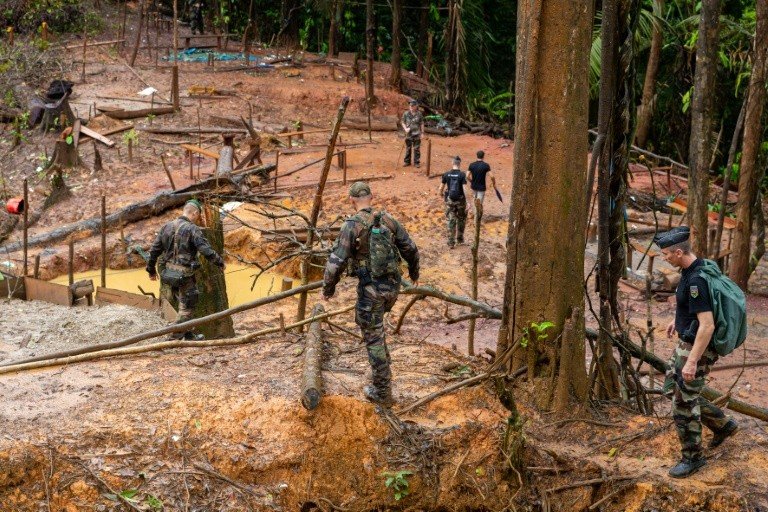
The unit, known as the Brigade spéciale des mines, will have judicial powers to carry out inspections, enforce mining regulations and take action against illegal mining activities.
Authorities say challenges such as illegal gold panning, mineral trafficking and the use of hazardous chemicals continue to persist despite reforms introduced since 2020.
Government aims to address illegal mining activities
Gold remains Mali’s most important export and a key source of government revenue, accounting for the majority of the country’s export earnings.
Most of Mali’s gold is exported to international refining and trading centres, including Switzerland, South Africa and the United Arab Emirates.
However, unregulated mining activities continue to pose challenges for authorities, including environmental damage and loss of fiscal revenue.
Officials say the new brigade is intended to strengthen enforcement of existing mining laws. With judicial authority, the unit will be able to carry out inspections, seize equipment used in illegal operations and pursue legal action against offenders.
The government has also cited concerns about environmental damage linked to informal mining, particularly the use of prohibited chemicals that may contaminate water sources and agricultural land.
Mali among Africa’s leading gold producers
Mali is one of Africa’s largest gold producers, with several major industrial mines operated by international companies.
Among the country’s largest gold operations are the Fekola mine, operated by Canadian company B2Gold, and the Loulo-Gounkoto complex, run by Barrick Gold.
Other notable mining sites include Sadiola, Morila and Yatela.
These mines contribute significantly to Mali’s annual gold output, which has exceeded 60 tonnes in recent years.
In addition to industrial mining, the country also has a large artisanal mining sector that provides income for thousands of people across rural communities.
Rising global demand for gold
The government’s move comes at a time when global attention is increasingly focused on commodity supply chains.
Demand for gold remains strong, with global consumption exceeding 5,000 tonnes in 2025 and prices reaching record levels.
For major gold-producing countries such as Mali, regulatory oversight is considered important for maintaining production stability and ensuring compliance with environmental and legal standards.
Across Africa, governments are reviewing policies in the mining sector as interest in mineral resources continues to grow.


