
• Business
  • Markets
  • Politics
  • Crypto
  • Finance
  • Intelligence
    • Policy Intelligence
    • Security Intelligence
    • Economic Intelligence
    • Fashion Intelligence
  • Energy
  • Technology
  • Taxes
  • Creator Economy
  • Wealth Management
  • LBNN Blueprints
  • Business
  • Markets
  • Politics
  • Crypto
  • Finance
  • Intelligence
    • Policy Intelligence
    • Security Intelligence
    • Economic Intelligence
    • Fashion Intelligence
  • Energy
  • Technology
  • Taxes
  • Creator Economy
  • Wealth Management
  • LBNN Blueprints

Africa’s richest man, Dangote, finally explains why his cement is cheaper outside Nigeria

Simon Osuji by Simon Osuji
December 20, 2025
in Business
0
Africa’s richest man, Dangote, finally explains why his cement is cheaper outside Nigeria
0
SHARES
3
VIEWS
Share on FacebookShare on Twitter

From cement to sugar and, most recently, oil refining, the billionaire industrialist has consistently stressed local manufacturing as a means of achieving economic self-sufficiency.

Nonetheless, two unusual inconsistencies continue to dominate public debate: why Dangote’s products are frequently cheaper outside of Nigeria than within it, and why his much-touted refinery, built to alleviate Nigeria’s energy difficulties, is meeting strong opposition from the exact people it is intended to serve.


Related posts

Turkey signs $350 million arms deal with Africa’s most powerful military

Turkey signs $350 million arms deal with Africa’s most powerful military

February 6, 2026
Historic BRICS Trade Turnover Exceeds US$1 Trillion

Historic BRICS Trade Turnover Exceeds US$1 Trillion

February 6, 2026

Why Dangote Cement is cheaper outside Nigeria

Dangote has openly said that the price differential between his exporting cement and what Nigerians pay domestically is primarily caused by Nigeria’s high tax and regulatory burden.

During a press conference with members of the press on Monday, exporting permits his company to avoid a variety of taxes that would dramatically increase production expenses at home.

“When you look at my invoice, the cement I export is cheaper than the one I’m selling domestically, because that’s how exports work… in export I’m saving a lot of money, I’m not paying 30% income tax, I’m not paying 2%, education, I’m not paying 1% health, I’m not paying 7.5% VAT, and I’m not paying 10% withholding tax.”

By eliminating these costs, the Nigerian billionaire noted that he would be able to price Nigerian cement competitively in global markets against producers from Turkey, Russia, and China.

In fact, Nigeria’s fiscal framework makes it cheaper to sell locally produced items overseas than at home, reflecting deeper structural flaws in the economy.

“So when you reduce all these taxes, I can afford to go and compete with the international market, with the likes of Turkey, Russia, and China,” he stated.

The implication is clear: Nigerian consumers bear the cost of high taxes, various levies, and regulatory inefficiency. While local production is sometimes marketed as a remedy to high pricing, Dangote’s experience demonstrates how policy decisions can undercut that goal.

Backlash against the refinery built to solve fuel scarcity

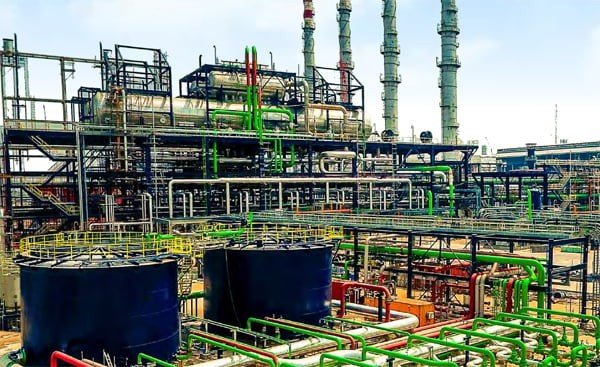
Dangote Refinery

Fuel queues have been a frequent aspect of Nigerian life since the early 1970s. Dangote claims that the refinery immediately addresses this past failure.

Despite its potential to stabilize fuel supplies, relieve foreign exchange pressure, and provide thousands of jobs, the refinery has faced opposition from a variety of sources.

Critics are concerned about market dominance, pricing power, and the concentration of such a valuable national asset in private hands.

Others contend that gasoline costs have not plummeted as swiftly or severely as anticipated.

“People are always trying to look at the negative, when you look at it, since when has Nigeria been having problems with fuel queues? Since 1972, somebody has addressed this problem, and you’re calling the company that addressed this issue names,” he stated.

Dangote also spoke about his battle against importing fuel.

Rather than relying on imports to maintain stable prices, he believes Nigeria should focus on attracting more domestic investors to the energy sector.

Increased competition, he claims, will automatically balance market power and strengthen regulation.

“What you do is you invite more people to invest, when you have many investors, then you can regulate market shares.

But even if you’re going to regulate now, what are you regulating? You don’t use imports to checkmate domestic production, cause you are creating jobs elsewhere,” he added.

Dangote’s sentiments imply that the problem may not be primarily with manufacturers, but with the larger ecosystem in which they operate.

Until Nigeria addresses the structural costs of doing business and implements consistent policies to boost local production, the contradiction of cheaper exports and contentious indigenous remedies is likely to endure.

Source link

Previous Post

A correction or a new market paradigm

Next Post

From rent to school fees, these post-holiday bills explain why you should plan around year-end bonuses

Next Post
From rent to school fees, these post-holiday bills explain why you should plan around year-end bonuses

From rent to school fees, these post-holiday bills explain why you should plan around year-end bonuses

Leave a Reply Cancel reply

Your email address will not be published. Required fields are marked *

RECOMMENDED NEWS

Africa aims to crack $300bn business process outsourcing market

Africa aims to crack $300bn business process outsourcing market

9 months ago
Economic Community of West African States (ECOWAS) participation in the Digital Transformation for Africa /Western Africa Regional Digital Integration Program declared effective

Economic Community of West African States (ECOWAS) participation in the Digital Transformation for Africa /Western Africa Regional Digital Integration Program declared effective

2 years ago
Western Cape FMD outbreak remains contained as control measures set in place

Western Cape FMD outbreak remains contained as control measures set in place

2 months ago
Nigerian Government Fines Binance $10B for ‘Illegal Transactions’

Nigerian Government Fines Binance $10B for ‘Illegal Transactions’

2 years ago

POPULAR NEWS

  • Ghana to build three oil refineries, five petrochemical plants in energy sector overhaul

    Ghana to build three oil refineries, five petrochemical plants in energy sector overhaul

    0 shares
    Share 0 Tweet 0
  • The world’s top 10 most valuable car brands in 2025

    0 shares
    Share 0 Tweet 0
  • Top 10 African countries with the highest GDP per capita in 2025

    0 shares
    Share 0 Tweet 0
  • Global ranking of Top 5 smartphone brands in Q3, 2024

    0 shares
    Share 0 Tweet 0
  • When Will SHIB Reach $1? Here’s What ChatGPT Says

    0 shares
    Share 0 Tweet 0

Get strategic intelligence you won’t find anywhere else. Subscribe to the Limitless Beliefs Newsletter for monthly insights on overlooked business opportunities across Africa.

Subscription Form

© 2026 LBNN – All rights reserved.

Privacy Policy | About Us | Contact

Tiktok Youtube Telegram Instagram Linkedin X-twitter
No Result
View All Result
  • Home
  • Business
  • Politics
  • Markets
  • Crypto
  • Economics
    • Manufacturing
    • Real Estate
    • Infrastructure
  • Finance
  • Energy
  • Creator Economy
  • Wealth Management
  • Taxes
  • Telecoms
  • Military & Defense
  • Careers
  • Technology
  • Artificial Intelligence
  • Investigative journalism
  • Art & Culture
  • LBNN Blueprints
  • Quizzes
    • Enneagram quiz
  • Fashion Intelligence

© 2023 LBNN - All rights reserved.