

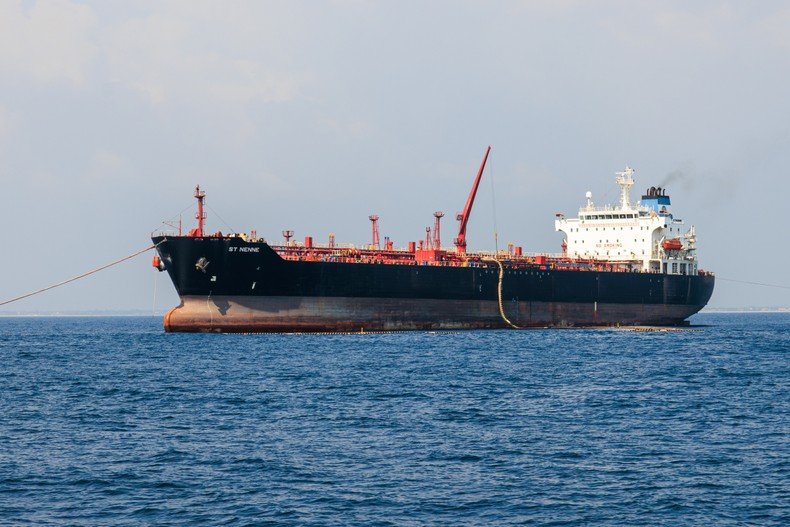
Chief Executive Officer and Managing Director, David Bird, disclosed the outlook during a media tour aimed at clarifying the refinery’s operating model and countering what he described as persistent misconceptions about the plant.
According to Bird, the refinery has already handled roughly 800 vessels since inception, underscoring the scale of its maritime footprint even before full ramp-up.
“This is not a refinery just sitting at the end of a crude pipeline. All of our feedstock is imported by sea, and our products can go into Nigeria or out to the global market,” Bird said.
The executive stressed that the model places heavy emphasis on storage, marine logistics, and port infrastructure rather than solely on refining units, noting that the facility’s coastal location and deep-sea access were deliberate strategic decisions.
Industry observers say the projected rise to about 600 vessel calls annually could create spillover benefits for Nigeria’s maritime ecosystem, including employment, local content development, and logistics services.
“It’s a no-brainer to control your supply chain,” he said, linking the strategy to recent global shipping disruptions and the group’s wider Pan-African expansion plans, including a proposed tank farm in Namibia and market engagements in Cameroon and Ghana.
Providing further technical insight, Captain Satendra Singh Rana, Head of Marine, Petroleum, and Petrochemical, detailed the refinery’s offshore infrastructure.
Rana said the complex operates five Single Point Mooring buoys offshore, two dedicated to crude intake and three for refined product export. The systems are connected by 48-inch pipelines buried two metres beneath the seabed for safety.
“With the refinery ramping up to 650,000 barrels per day, we expect about 600 tankers per year, combining crude and products,” Rana said, describing the throughput as a milestone for a new refinery-terminal combination.
The offshore design leverages natural water depths of up to 40 metres for crude and 20 metres for refined products, eliminating the need for costly dredging and enabling year-round operations.
Meanwhile, maintenance planning engineer Victor Ngangha Oyama said the Dangote Port, originally built as a construction jetty, has evolved into a full import and export hub. The facility already handles fertiliser exports to markets including Brazil and is slated for further expansion.
As the refinery pushes towards full capacity, analysts say its maritime-heavy model could reshape fuel trade flows across West Africa while strengthening Nigeria’s position in global refined products markets.


