


By John Kourkoutas
Forget the GDP charts. Forget the foreign direct investment heatmaps. Forget the trade-flow diagrams and the color-coded risk indexes that have become the wallpaper of every emerging-market conference room from London to Singapore.
The most revealing map of Africa is the simplest one: no overlays, no indicators, no arrows tracing export corridors across the Indian Ocean. Just the continent itself – raw, massive, and staggeringly beautiful.
And that, paradoxically, is precisely why it tells the more important story.
Because before Africa is a “market opportunity” or an “emerging frontier” or a “growth story” catalogued in an investor pitch deck, it is this: 54 sovereign nations, 30 million square kilometers of terrain, more than 1.4 billion people, and greater linguistic diversity than any other continent on Earth. To reduce it to a single slide in a boardroom presentation is not analysis.
It is a failure of imagination.
A Decade Across the Map
Over more than a decade of working across the continent – from Lusaka to Nairobi, Addis Ababa to Dar es Salaam, Accra to Johannesburg – one thing has become clear: the gap between how the world perceives Africa and what Africa actually contains is not merely wide. It is commercially consequential.
The roads to opportunity on this continent do not always appear on Google Maps. The flights are rarely direct. The deals require patience measured in years, not quarters.
But the picture that emerges for those who show up and stay is entirely different from the one assembled from data terminals in distant financial capitals.
Look at the map again. The Copperbelt – that mineralogical spine stretching across Zambia and the Democratic Republic of Congo – holds reserves critical to the global energy transition.
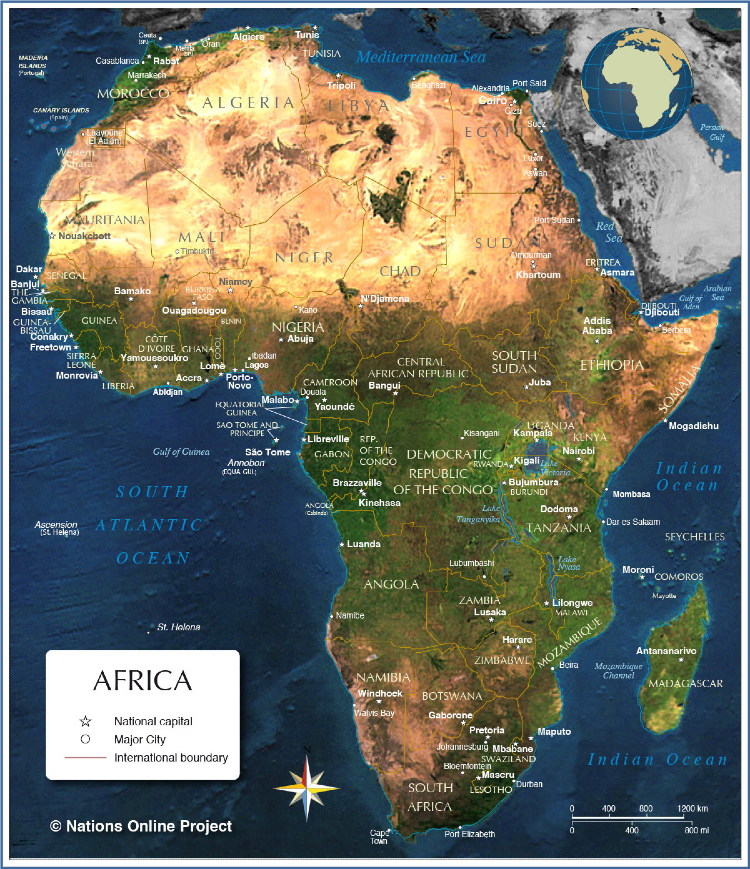
The agricultural heartlands of East Africa feed regions the world increasingly cannot afford to overlook. The port corridors of Mombasa and Dar es Salaam are not peripheral infrastructure; they are the arteries connecting landlocked nations to global commerce.
And the technology sectors of Lagos, Nairobi, and Cape Town have produced not merely startups, but paradigm shifts in mobile finance, logistics, and healthcare delivery.
The gap between how the world perceives Africa and what Africa actually contains is not merely wide. It is commercially consequential.
The Risk That Isn’t
Most external observers look at Africa and see risk. Distance. Complexity. Governance challenges. Currency volatility. A mental model assembled from headlines rather than experience. That perception is not entirely without foundation – but it is systematically and expensively incomplete.
Risk, properly understood, is not the presence of complexity. It is the mismatch between perceived and actual probability of loss. And in markets where the crowd is perpetually risk-averse, the asymmetry that accrues to early, informed entrants is substantial.
More than 100 projects delivered across the continent have made this point with striking consistency: the places most people decline to look are precisely the places where the returns on attention are highest.
The relationships built across African borders – with governments, entrepreneurs, local partners, and communities – cannot be replicated by a market entry study or a two-day scoping visit. They are the product of sustained presence, cultural curiosity, and a willingness to operate in conditions of genuine ambiguity.
They are also, it turns out, among the most durable professional assets one can hold.
The Blank Spaces Are the Point
Every map has its blank spaces – the areas cartographers once labeled terra incognita, not because nothing was there, but because no one with a pen had yet bothered to go.
Africa’s contemporary blank spaces are not geographic. They are conceptual. They are the sectors, the corridors, the cities, and the partnerships that the global investment community has collectively agreed to defer – and that deferral has a cost, paid unevenly by those who most need the capital.
But that cost also creates opportunity – for the investors, developers, and operators who are already there, doing the unglamorous work of building supply chains, training workforces, and structuring deals in markets where the rule book is often still being written.
This is not romance. It is strategy.
Africa’s demographic trajectory alone should command more serious attention than it receives. The continent will account for more than half of global population growth between now and 2050.
Its median age is lower than any other region’s. Its urban centers are expanding at a pace that will fundamentally reshape global consumer markets within a generation.
These are not projections crafted to attract capital. They are structural realities that the data, even the data on those conference room slides, corroborates fully.
What the Map Is Really Asking
The map of Africa does not need a data overlay to make its case. It makes the case by simply existing at the scale it does – a continent that contains multitudes the world has barely begun to understand, a market the size of which no single framework can contain, and a story in which the most interesting chapters have not yet been written.
The career built across this map was not planned. It evolved through a willingness to be present in places that most people, examining the same map with the same data, had decided were not worth the trouble.
That judgment, consistently and stubbornly, has proved wrong.
The opportunity on this continent lives precisely where attention is absent. Not despite the complexity – but, often enough, because of it.
John Kourkoutas is business development expert that specializes in helping companies, export teams, and business leaders succeed in Africa’s dynamic and emerging markets.