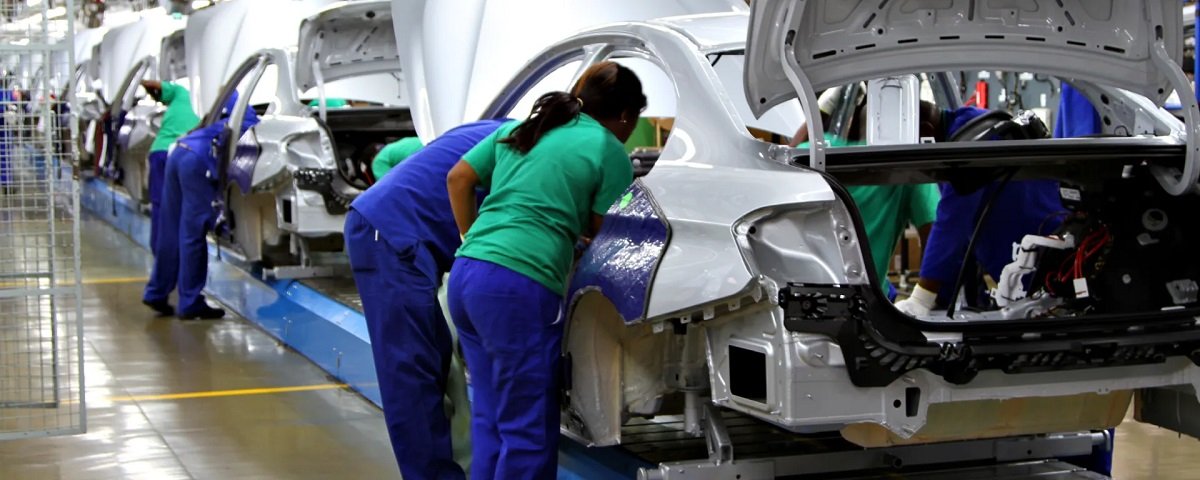
- Africa’s automobile industry is growing at 7 per cent annually.
- Morocco overtakes South Africa as Africa largest automobile manufacturer.
- Volkswagen leads foreign investment in Africa automobile manufacturing investment.
The Africa automobile industry is growing rapidly driven by rising middle class income and demand for public transport (buses) also driven by growing working class population in urban centers.
According to a presentation at the World Economic Forum earlier this year, African researchers Signe and Muniyati, Africa’s automotive industry was valued at $30.44 billion in 2021 and is expected to reach $42.06 billion by 2027.
According to the research, the Africa automobile industry expansion represents a growth of nearly 40 per cent over six years.
“The continent sees an average annual demand for 2.4 million passenger cars and 300,000 commercial vehicles,” details the research paper.
The World Economic Forum was informed that; “this demand is currently met largely through imports of used vehicles, it is being driven upward by rising disposable incomes, a growing middle class, and rapid urbanization.”
The report further places domestic automotive production as gaining momentum, growing at an average annual rate of 7 per cent.
However, despite growth in domestic demand, according to the research , Africa automobile producers like Algeria, Egypt, Morocco, and South Africa export more than half (56 per cent) of their vehicle output outside Africa.
The researchers are optimistic that; “With production capacities already expanding, there is a strong opportunity to shift this focus toward meeting local demand.”
According to the report, Morocco and South Africa are currently leading Africa automobile exports. The two countries account for 80 percent of Africa’s total automobile exports, with Algeria showing rapid growth, the research shows.
As of last year, research shows, Morocco overtook South Africa as Africa automobile main manufacturer. According to a Global Fleet report, the takeover happened in 2023, when Morocco produced 582,000 cars and LCVs.
Then last year, according to Fitch Solutions , that figure will rose to just under 614,000 units. This while South Africa’s light-vehicle production decreased to 591,000 units.
Tapping into the growing automobile industry, automotive giants like Volkswagen, Peugeot, and Hyundai have already established local operations across the continent.
Read also: Airbus bolsters African aviation with Johannesburg support hub
Africa automobile industry, Volkswagen takes lead
So far, investment in Africa automobile industry is led by Volkswagen, the report says. “Volkswagen is a notable example of successful automotive investment in Africa, having established local assembly operations with the aim of driving industrialization through robust local value chains,” it says.
Successful investment in Africa’s automobile industry is thanks to strong collaboration with African governments in shaping automotive policy, the research quotes Volkswagen executives.
“Volkswagen emphasizes the importance of consistent, enabling industrial frameworks for attracting investment,” details the report.
A driving factor for Volkswagen is the establishment of the AfCFTA as a critical enabler for market access and policy coordination.
It says countries such as South Africa, Morocco, Tunisia, Ghana, Kenya, and Egypt have made notable strides in creating investment-friendly environments, and have positiones themselves as key destinations for automotive manufacturing in Africa.
Volkswagen put it’s money in it’s first vehicle assembly plant in Rwanda. The plant was inaugurated by none other than Rwanda’s President Paul Kagame, highlighting growing investment in the automotive assembly and manufacturing sectors across Africa.
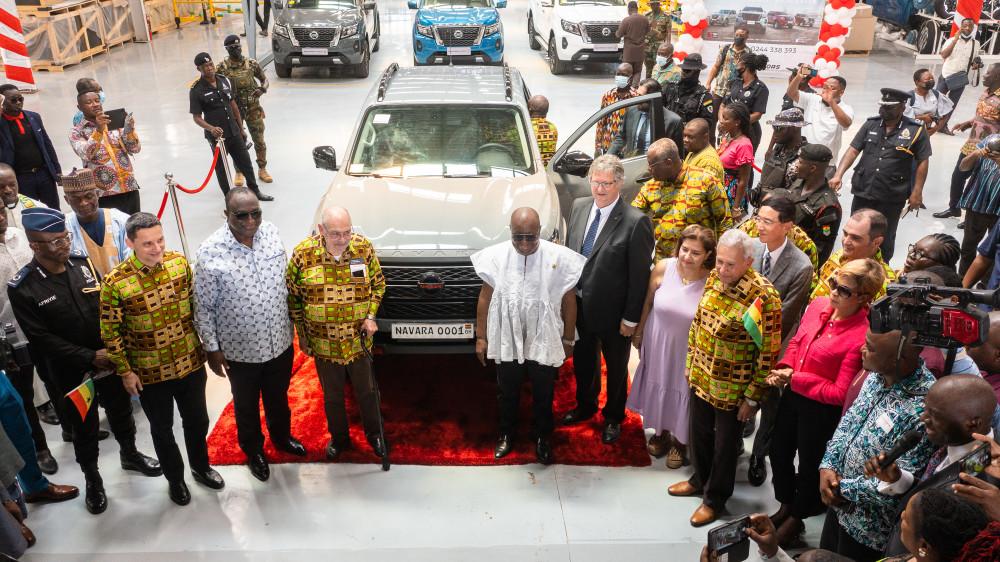
Similarly, the new Volkswagen Touareg was assembled in Ghana, and the Volkswagen Sahel, it’s first electric car was assembled in Burkina Faso also this year.
Volkswagen’s investment stands as a testament to Africa’s growing role in the global automotive industry and it’s commitment to green energy transition.
In South Africa, Volkswagen maintains a highly advanced automotive industry. Right in its heels is the Peugeot automotive industry in Morocco, all of which showcase Africa’s potential in automotive assembly and manufacturing.
Africa’s automobile industry growth: Vehicle assembly, manufacturing plants
As testimony to growth of Africa’s automobile industry, Ethiopia has this year inaugurated a car assembly plant in the town of Jigjiga.
Celebrating the achievement, the first electric vehicle was unveiled by renowned Ethiopian athlete Haile Gebrselassie who now serves as company representative for Hyundai Motors Africa.
The vehicle was put to the test by Ethiopian Prime Minister Abiy Ahmed during the launch ceremony. Overall, Africa’s rapidly growing population, rising disposable incomes, and a burgeoning middle class all are factors fuelling domestic demand for both passenger and commercial vehicles and research shows this demand is expected to increase significantly year on year.
“The demand for cars is projected to reach 2.4 million units annually, creating a substantial market for locally produced vehicles,”
The report holds; “As domestic production grows, currently at a rate of 7 per cent per year, there is a strong opportunity for automotive companies to shift focus from imports to local production.”
It is expected that the shift will effectively reduce reliance on foreign vehicles and as the local Africa automobile industry blossoms, so will the local economies.
Another factor that is attracting investors into the sector is realization of the African Continental Free Trade Area (AfCFTA).
Experts say the AfCFTA provides a significant opportunity to expand intra-African trade and the automobile industry stands to both benefit as well as contribute to success of the AfCFTA.
“By eliminating tariffs and trade barriers, the AfCFTA makes it easier for manufacturers to access new markets across the continent and increase exports,” explains
In recognition of this fact, most African governments are working to create favourable conditions for automotive investment.
Governments are enacting supportive policies aimed at boosting local manufacturing and assembly of vehicles.
“Countries like South Africa, Morocco, and Ghana have made significant strides in developing policies that attract foreign investment and support local production,” Global Fleet reports.
Likewise, the global shift toward green energy and sustainability, the African automotive industry is poised to tap into the Electric Vehicle (EV) market.
“Initiatives like the assembly of electric cars in countries like Burkina Faso and the growing interest in sustainable transportation provide new opportunities for innovation and industrial growth,” the Global Fleet report shows.
Supporting these developments, the Africa Union (AU) says expansion of roads, ports, and transport infrastructure across the continent is another facilitating factor driving growth of the automotive sector.
According to the AU, enhanced logistics capabilities will serve to support both local production and trade, driving further opportunities for businesses involved in vehicle manufacturing and supply chains.
The AU also says the automotive industry is a key driver for job creation, especially in manufacturing, technical services, and supply chains.
“This growth will lead to an increase in local skills training and development, helping to boost the broader economy and improve livelihoods across the continent,” the AU says.
Likewise, the AU cites Africa’s resources as a factor fuelling the automobile industry.
“Equipped with the essential materials to drive the growth of its automotive industry and attract global business,” the AU reports.
It gives the Democratic Republic of Congo as an example pointing to it’s cobalt, then Mozambique and it’s aluminum, and Côte d’Ivoire as a key supplier of rubber, all these are key resources for the automobile industry.
Another is the Zambian Copperbelt that offers copper, and various other minerals including platinum, bauxite, and lithium all of which support growth of Africa automotive manufacturing.