The feud cast a shadow over the 39th Ordinary Session of the African Union, held in Addis Ababa, Ethiopia, as leaders gathered to discuss continental priorities while carefully avoiding open alignment in the Gulf dispute, according to diplomats cited by Reuter
The rift between the two Gulf powers intensified in December after Saudi Arabia supported a demand for UAE forces to withdraw from Yemen within 24 hours.
Saudi-led coalition forces later struck what Riyadh described as a UAE-linked weapons shipment in Yemen’s southern port of Mukalla, marking one of the most visible escalations in tensions between the two oil producers.
Initially focused on the Red Sea and the Gulf of Aden, both crucial global shipping routes, the rivalry is now extending further inland. “Today it is in Somalia, but it is also playing out in Sudan, Sahel and elsewhere,” a senior African diplomat told Reuters.


Sudan: Gold, Arms and Fiscal Stakes
Sudan has emerged as one of the most economically exposed countries in the Gulf dispute.
In 2024, Sudan officially exported $1.97 billion worth of gold to the UAE. In the first nine months alone, approximately 10.9 tonnes valued at $1.05 billion were shipped to Dubai, reinforcing the UAE’s dominance in Sudan’s bullion trade.
As the war between the Sudanese Armed Forces (SAF) and the Rapid Support Forces (RSF) continues, Khartoum has moved to diversify its export partnerships.
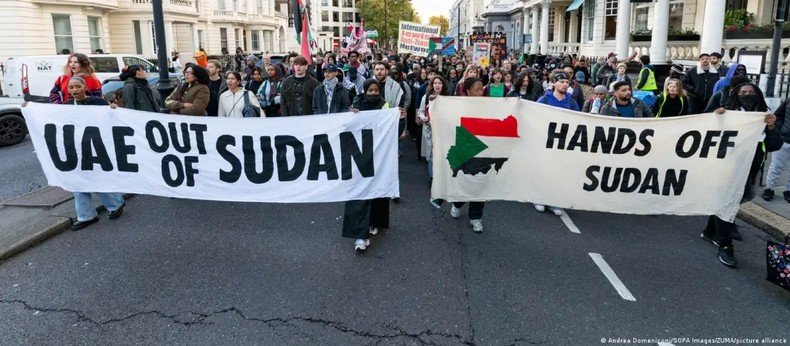
Regional powers including Saudi Arabia, Qatar, Iran, Turkey, Egypt and Russia are backing opposing factions in Sudan based on their strategic interests.
Meanwhile, Sudan has directly accused the UAE of involvement in the conflict; allegations Abu Dhabi denies.
Talks have also included granting Saudi firms exploration rights for minerals such as chrome, mica and manganese, signalling broader mining cooperation.
Concurrently, Sudan’s military authorities under General Abdel Fattah al-Burhan are reportedly proceeding with a $1.5 billion arms agreement with Pakistan, a close Saudi defence partner, following the cancellation of a $6 billion port agreement with the UAE last year, further straining relations.
Ports, Trade Corridors and Sovereignty
Reuters reported that Mogadishu launched an investigation into allegations that the UAE facilitated the movement of a Yemeni separatist leader through Somali territory.
Somalia has also accused Abu Dhabi of influencing Israel’s recognition of Somaliland’s independence bid, a claim the UAE has not publicly addressed.
Mogadishu subsequently severed diplomatic ties with the UAE, a move that affected existing port and defence agreements.
The UAE holds commercial stakes in strategic ports including Berbera and Bosaso, critical trade gateways linking the Red Sea to inland East African markets.
Any disruption to these arrangements risks affecting port revenues, logistics contracts and regional supply chains.
Ethiopia, Eritrea and Djibouti sit within the same strategic corridor, where maritime access directly impacts customs receipts, transit trade and export reliability.
Eritrea’s president recently visited Saudi Arabia, underscoring shifting alignments along the Red Sea.
Investment and Economic Exposure
The UAE remains one of Africa’s most significant investors, deploying more than $118 billion across the continent between 2020 and 2024. Bilateral trade reached approximately $107 billion in 2024.
In November, Abu Dhabi announced an additional $1 billion “AI for Development” initiative aimed at expanding artificial intelligence infrastructure and digital services across African economies.
Saudi Arabia is expanding its presence through mining, energy and infrastructure partnerships under its Vision 2030 economic diversification strategy.
As custodian of Islam’s two holiest sites, Riyadh also carries religious influence across large Muslim populations in Africa, adding a diplomatic dimension to its commercial engagement.
Implications for African Economies
For African governments, the Gulf rivalry presents both leverage and vulnerability. Competition between the two powers may attract new capital and diversify investment sources.
At the same time, overt alignment with one side could complicate access to trade routes, port concessions or financing arrangements linked to the other, increasing exposure for countries dependent on mineral exports and maritime trade corridors.