

Interview
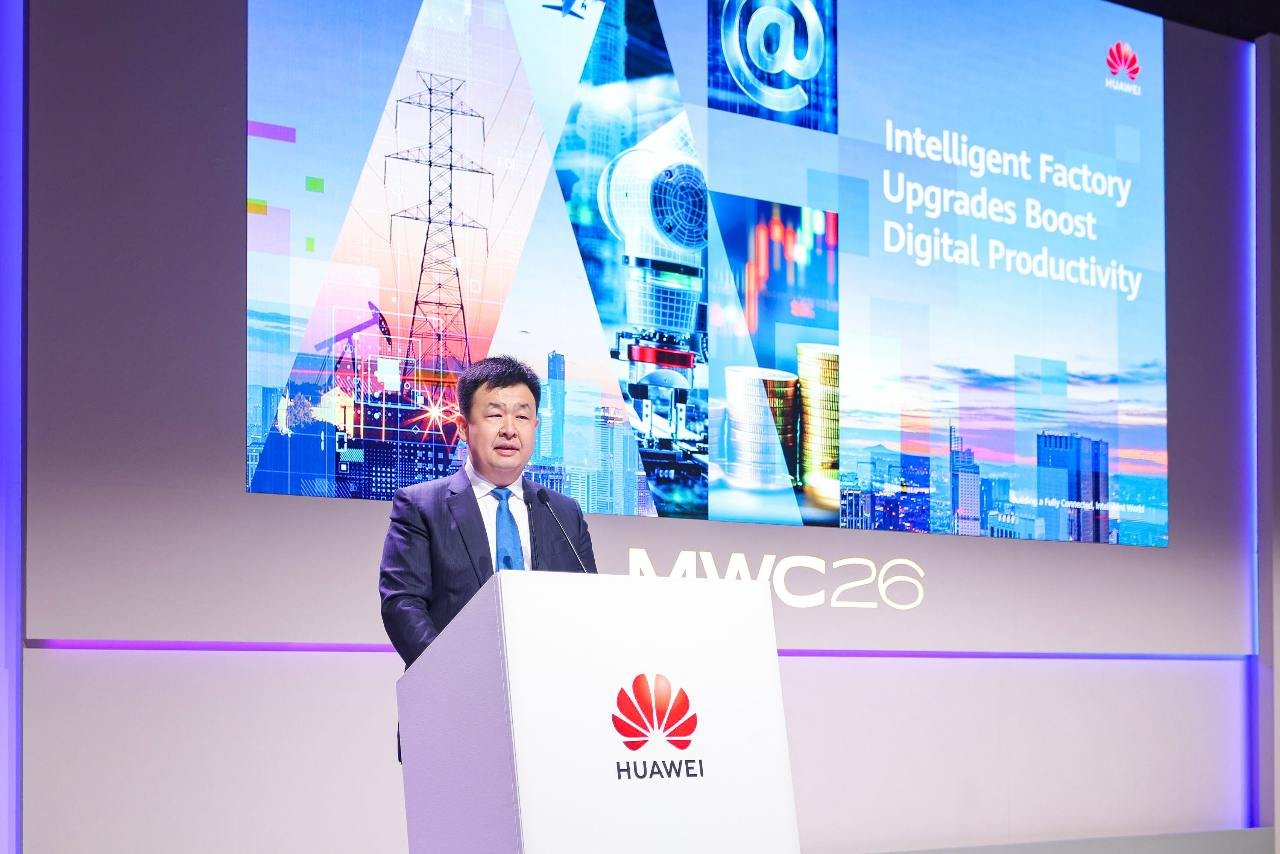
We spoke with Liu Chao, CEO of the Huawei’s Manufacturing & Key Enterprise Account business unit, about the seismic impact AI is having for the manufacturing industry
At Mobile World Congress 2026, AI finally appeared to be coming of age. From myriads of commercial AI agents to early demonstrations of physical AI, it was clear that AI was finally becoming
For Huawei’s Liu Chao, the era of treating AI as a high-tech accessory is over for the manufacturing sector.
“AI is now more than tools,” said Liu in an interview with Total Telecom. “It can be a unique distinguisher for manufacturers to set themselves apart from their competitors[…] AI is now becoming an important paradigm shift in innovation and in leadership.”
““This shift is being driven not only by the growing maturity of AI, but also by the urgent need for manufacturers to strengthen their competitiveness. Established leaders in traditional manufacturing sectors, such as automotive, are facing increasing pressure as more players actively embrace advance technologies.
Given the precision and high standards required in manufacturing, industrial players place a strong emphasis on proven reliability and predictable outcomes. This means they tend to wait for new technologies have demonstrated clear value and stability. For Liu, this urge to wait is a “trap”.
“Adoption of AI is not optional. It’s a mandatory choice you have to make. The question is not whether to do it or not, but how to do it,” he said.
Bridging the expertise gap
Perhaps the biggest hurdle to adoption, Liu explained, is the lack of cross-discipline expertise. Industrial experts are typically not AI experts, and vice versa,
“I think one of the key priorities for manufacturers adopting AI is deepening their understanding of the technology and its evolving trends,” said Liu. “This also means strengthening capabilities in data and digital infrastructure, while developing more talent with AI and IT expertise – both of which are essential to fully unlock the value of AI.”
For AI adoption to scale across industry, both manufacturers and tech companies need to cultivate multidisciplinary talent that combines both industrial and digital expertise.
“We need AI experts who have the knowledge and background in the manufacturing sector,” he said.
It is only with this shared expertise, Liu argues, that the industry will be able to develop AI models tailored to the manufacturing sector’s specific needs.
“General models like OpenAI answer questions based on public information. But when it comes to the data about a specific company, industry, or process, these models are not good at giving very specific answers,” said Liu. “In manufacturing companies, the data about operation management, production processes, and research and development is proprietary and private. So, they need specialised solutions.”
Practical first steps: Pilot projects and infrastructure foundations
With this in mind, what does early AI adoption look like for manufacturing companies?
For Liu, initial focus should be not on overall transformation, but on addressing specific challenges.
“When a manufacturing company comes to us and says they want to begin using AI, we first discuss their pain points in their business,” Liu said, noting that identifying the right use cases can generate early value.
“We have to find some typical cases where AI can be applied and give a quick win to our customers,” Liu said. These early projects often act as pilot programmes that help organisations build internal experience and refine their data strategies.
“In the first stage we identify scenarios as the first batch of AI adoption pilots,” Liu explained. “Then in the next step we review their more confidential or private data in production or R&D and help them standardise it, ready for use in AI models.”
Automotive taking a lead
One manufacturing industry leading the pack when it comes to AI adoption is the automotive industry.
“Each year in China, 50% of new cars are connected to the internet and are electric vehicles. The changes in the market are very fast. These days, auto manufacturers are launching their new car models almost as frequently as mobile phone makers are launching phones,” he said, adding that “autonomous driving and smart cockpit capabilities are all enabled by AI models.”
The most advanced carmakers are using AI across product development, factory operations, and quality inspection. This is allowing customers to enjoy a far greater level of personalisation as part of a C-to-M (Consumer-to-Manufacturer) framework.
“It is an end-to-end process that allows full customisation by the consumers,” explains Liu. “It’s how auto manufacturers in China are trying to win in such fierce competition.”
“In the assembly line, a fully assembled car is built every minute,” Liu continued. “When the customer chooses a specific configuration – say, for example, a yellow safety belt – you have to make sure that yellow belt arrives at exactly the right point in the assembly process. That needs AI-enabled scheduling with the data flowing from the order side directly to the production.”
Networks come first
Of course, a strong foundation of digital infrastructure is a critical requirement in this journey.
“The precondition is that you have very solid network connections and very good hardware,” Liu said. “Without this, putting AI into action is incredibly difficult.”
For Liu, the pace of change means manufacturers must continue learning and adapting as AI technologies evolve.
“You cannot wait for the latest technology for fear of being left behind because AI is changing so quickly,” he said. “You have to learn throughout the process of adoption.”
Keep up to date with all the latest telecoms news with the Total Telecom newsletter
Also in the news
World Communication Award Winners 2025
Ofcom clears the way for satellite-to-smartphone services
LG Uplus’s AI voice call app glitch leaks user data


