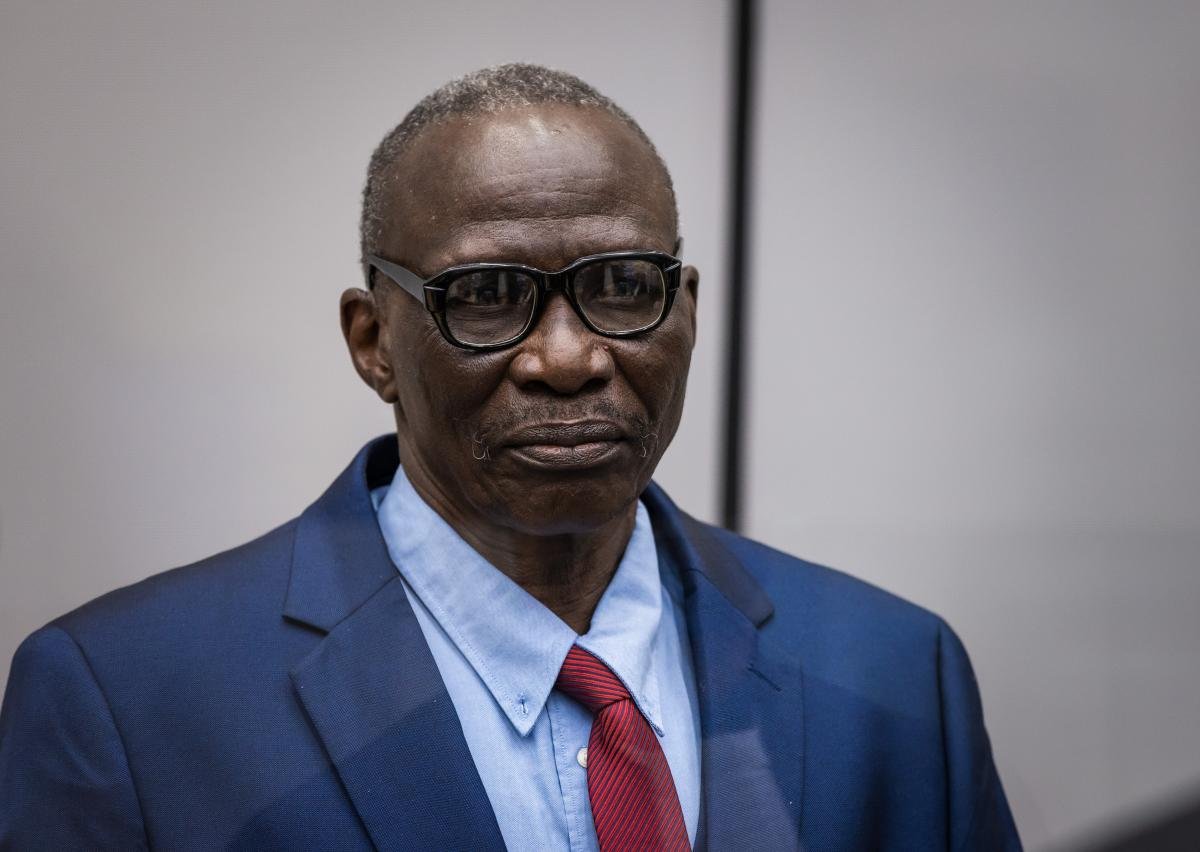

On 6 October, the International Criminal Court (ICC) convicted Ali Muhammad Ali Abd-Al-Rahman (known as Ali Kushayb) on 27 charges of war crimes and crimes against humanity. This was the ICC’s first conviction in the Darfur situation, referred to the court by the United Nations (UN) Security Council in 2005.
It is also the ICC’s first conviction in the two situations referred by the UN Security Council (Libya was referred in 2011), and its first conviction for gender-based persecution, including rape as a war crime and a crime against humanity.
‘The conviction of Abd-Al-Rahman is a crucial step towards closing the impunity gap in Darfur […] It sends a resounding message to perpetrators of atrocities in Sudan, both past and present, that justice will prevail, and that they will be held accountable for inflicting unspeakable suffering on Darfuri civilians,’ said ICC Deputy Prosecutor Nazhat Shameem Khan following the judgment. Yet, the impunity gap remains wide.
Ali Kushayb, a senior leader of the Janjaweed militia in Darfur, was charged in 2007 for international crimes committed in West Darfur between 2003 and 2004. He was one of the alleged perpetrators of a scorched-earth campaign that razed entire villages when the Khartoum government allied with local militias to quell a 2003 rebellion in Darfur.
That war lasted from 2003 to 2020 and was a grave humanitarian disaster, with allegations of genocide against the Fur, Zaghawa and Masalit people. Over 300 000 people were killed in Darfur, and roughly three million were forced to flee.
During his trial, the prosecution presented 1 521 items of evidence. Fifty-six of the 1 591 participating victims in the trial gave direct testimony. They told of horrific violence and profound loss, suffering and displacement – a vivid reminder of what millions of Darfuris endured for years.
After 20 years, they could finally confront one of their tormentors and create a public record of the horrors they faced. For them, the conviction is a victory – albeit late.
Many survivors still live with the physical, mental, emotional and socio-economic consequences of the crimes. Millions are displaced, with some facing secondary displacement without access to basic services, healthcare, education and livelihoods.
During Institute for Security Studies research in May this year, one internally displaced person told of repeated displacement since 2003: ‘This is the third time I have fled my home. Each time they tell us peace will come, but we return to more violence.’
The human rights community welcomed Ali Kushayb’s conviction, but the delay in achieving this outcome cannot be ignored – especially with Sudan in its third year of civil war, and Al Fasher (Darfur’s capital) one of the most affected regions.
Ali Kushayb’s Janjaweed is now part of the Rapid Support Forces (RSF) established in 2013 and headed by Mohamed Hamdan Dagalo (known as Hemedti). The RSF has been fighting against the Sudanese Armed Forces since April 2023.
The ICC’s 650-page judgment details the complexity of a case that proceeded with little to no cooperation from Sudanese authorities. Successive ICC prosecutors have lamented the authorities’ conduct, including restricting access to documents and witnesses, and ignoring requests for assistance and approval.
In 2021, there were hopes that the government would work with the ICC. A memorandum of understanding was signed and authorities committed to handing over former president Omar al-Bashir, who is charged with war crimes, crimes against humanity and genocide in Darfur.
However, tensions between the then civilian-led government and military (mostly still loyal to al-Bashir) halted any tangible cooperation with the court. This reflects the ICC’s key structural challenge – its reliance on the full cooperation of states. When countries are not party to the ICC’s Rome Statute and the situation follows a UN Security Council referral, as with Darfur, the interplay between law and politics is starkest.
The Darfur situation was always going to be a major test for the ICC and international justice. How can the international community advance justice for victims in a country where the state rejects international criminal jurisdiction, withholds support, and is unmoved by sanctions against it and its leadership? This fundamental question applies beyond Darfur – striking at the core of (universal) international criminal justice.
There are already signs of a retreat from global justice and accountability institutions, including recent withdrawals from the ICC by Burkina Faso, Niger and Mali. And with US sanctions on the court, one wonders if Ali Kushayb’s landmark conviction symbolises the last kicks of a dying horse. Support for the ICC remains, but it faces fierce headwinds.
When the court’s 125 member states meet this December for the 24th Assembly of States Parties to the Rome Statute, discussions will likely be tinged with panic. The ICC’s growing budget is testing members at a time when funding gaps for global institutions are widening. While calls for international criminal justice remain loud, the Ali Kushayb case shows that the response is slow, arduous and costly.
Victims of Sudan’s current civil war are no doubt wondering if they will ever see justice. After all, Ali Kushayb ended up in the dock only because he feared for his life in Sudan after al-Bashir’s fall. He surrendered himself in the Central African Republic and was transferred to the ICC’s custody in 2020.
The current war in Sudan shows that the court’s operational challenges have undermined its ability to act as a deterrent. The ICC has also struggled to bring to justice others it indicted for the Darfur conflict, including al-Bashir, former Sudanese government ministers Ahmad Muhammad Harun and Abdel Raheem Muhammad Hussein, and Abdallah Banda Abakaer Nourain, commander in chief of a militia group that fought against Sudan’s military in the 2000s.
Twenty years on, Darfur is again the site of death and destruction. There should now be even greater pressure for swift justice. Without it, as the recurrent violence shows, there can be no sustainable peace. For now, some survivors wait for meaningful reparations. Better late than never? Only time will tell.
Written by Ottilia Anna Maunganidze, Head of Special Projects, ISS.
Republished with permission from ISS Africa. The original article can be found here.