Mediclinic Southern Africa (MCSA) is a private healthcare group that operates 47 hospitals in South Africa and three in Namibia. Water scarcity remains one of the biggest challenges within the healthcare industry, and can have adverse implications by causing job losses, infection, or even loss of life.
Water shortages can bring many critical operations in a hospital to a halt, from laundry services, and equipment sterilisation in operating theatres, to routine cleaning. If sufficient measures are not taken in the event of an unexpected shortfall of water, hospitals risk creating an environment conducive to the spread of infections due to unclean linen and equipment.
In response to this, MCSA used innovative green technologies to ensure operational continuity under challenging conditions caused by water scarcity.
Laundry facilities
Laundry facilities in hospitals are water-intensive due to the large volumes of linen that need to be frequently washed to curb the spread of infectious diseases. It is a challenge to recycle wastewater from the laundries because of the chemicals that are used to remove stains.
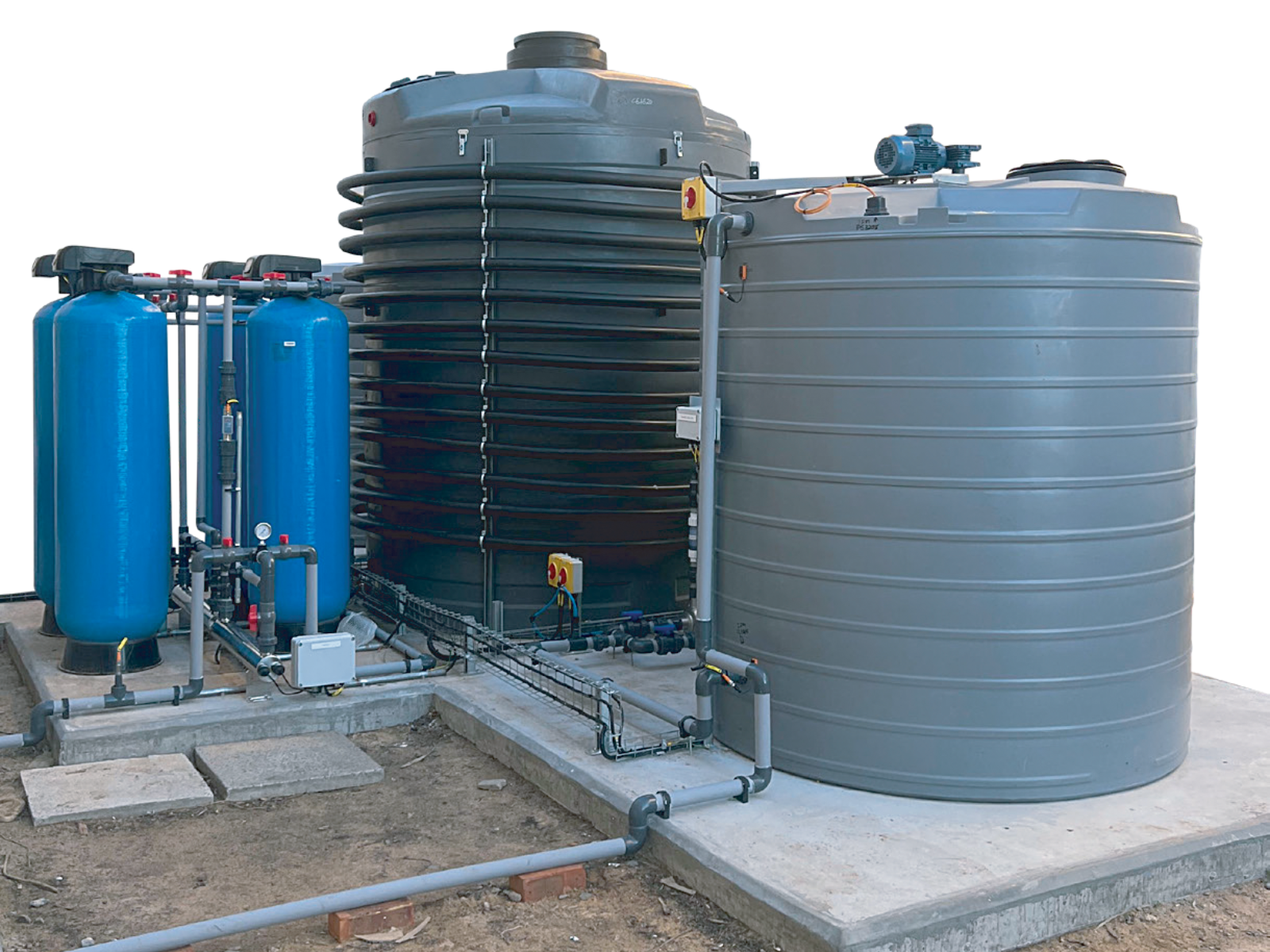
However, MCSA devised a water reduction strategy and found a way to build a recycling plant to recycle wastewater produced by the laundries. The laundry project started in 2022 with a pilot in Panorama Hospital, where all the laundry facilities were connected to a recycling plant. The plant recycled 75% back to the laundries and 25% that could not be recycled was used as greywater for toilets. Once the concept was successfully demonstrated, it was rolled out to other MCSA hospitals across the country.
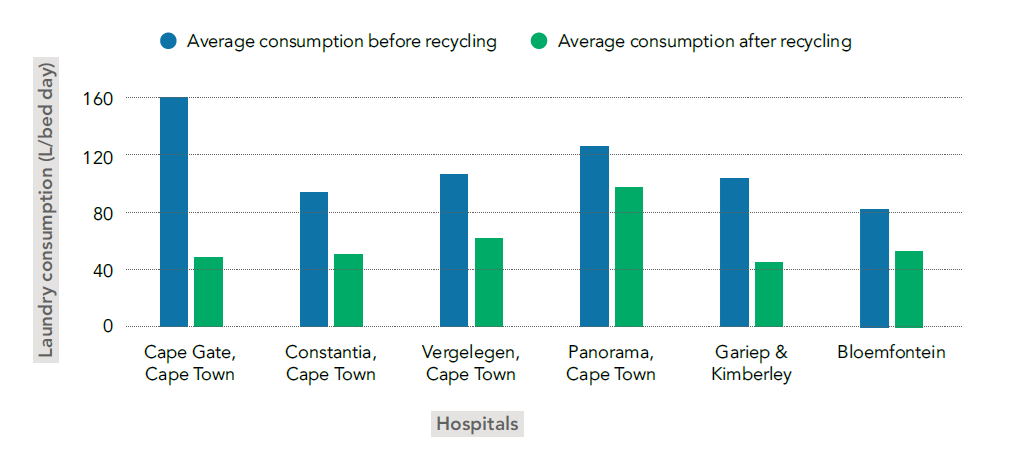
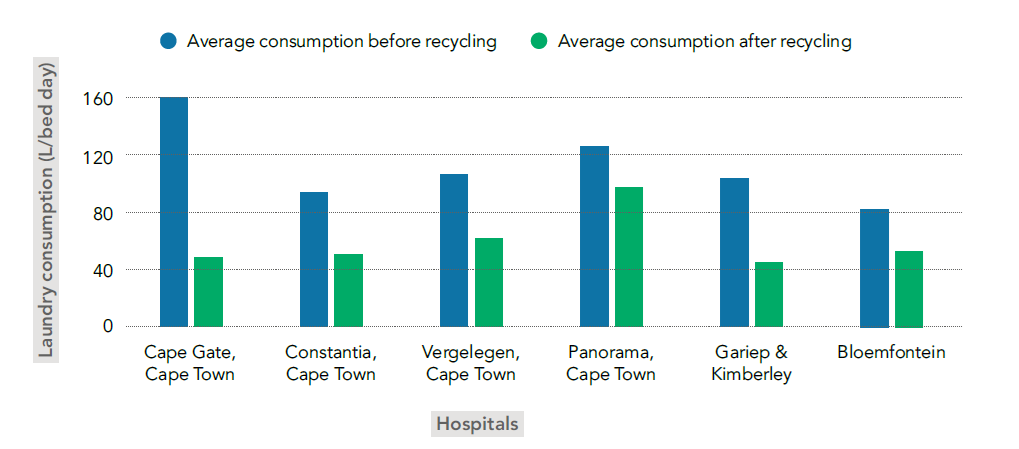
Figure 1 depicts how water consumption was reduced in laundries after recycling plants were installed in six different hospitals in 2024. The average water consumption before and after recycling is shown, the biggest reduction in water consumption was realised at Cape Gate Hospital (70%), followed by Gariep+Kimberley (56%) and Constantia (46%).
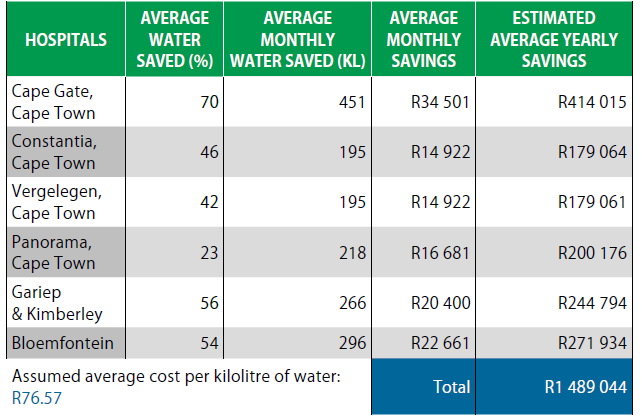
The yearly estimated savings in Rands for 2024 were thus calculated. The Cape Gate Hospital, Bloemfontein, and Gariep+Kimberley were top in savings having saved R414 015, R271 934, and R244 794, respectively. For all six hospitals, the total estimated saving was R1 489 044.

The recycling plants cost roughly R1.2 million each, and Cape Gate Hospital achieved the largest savings, reducing water consumption by 70% with a payback period of an estimated 3 years.
Additional water management initiatives
- Water consumption thresholds are set for all hospitals to abide by and smart meters are installed at strategic positions to measure consumption.
- A Supervisory Control and Data Acquisition (SCADA) system is used to monitor the consumption and daily reports are produced for hospitals to see if they are within the threshold.
- Water used by autoclaves in theatres is recycled.
- There is an experimentation with ozone as a substitute for the chemicals used in laundries to improve the recycling process.
- There are boreholes at some hospitals to augment the municipal water supply. They are looking into recycling sewage water to use for toilet flushing.
Insights and lessons learned
Building water resilience is a systematic journey that progresses from the easiest, least expensive initiatives, such as awareness raising, smart metering, and monitoring, towards more complicated, cost-intensive solutions.
For any business, it is important to tailor solutions for each facility, educate staff on sustainability goals, and invest proactively in green technologies. There is no ‘one size fits all’ solution. A solution that works in hospital A does not guarantee that it will work in hospital B. It is of paramount importance to educate the users about what is it that one is trying to achieve when a sustainability project is being implemented.
In order to build resilience, hospitals should be forward thinking and invest in sustainable practices early, not as a response to a shock, which is often too late.
Water-saving interventions have economic benefits, and the financial savings can often quickly offset the upfront capital costs associated with water-saving technologies.
Scan this QR code to explore more case studies