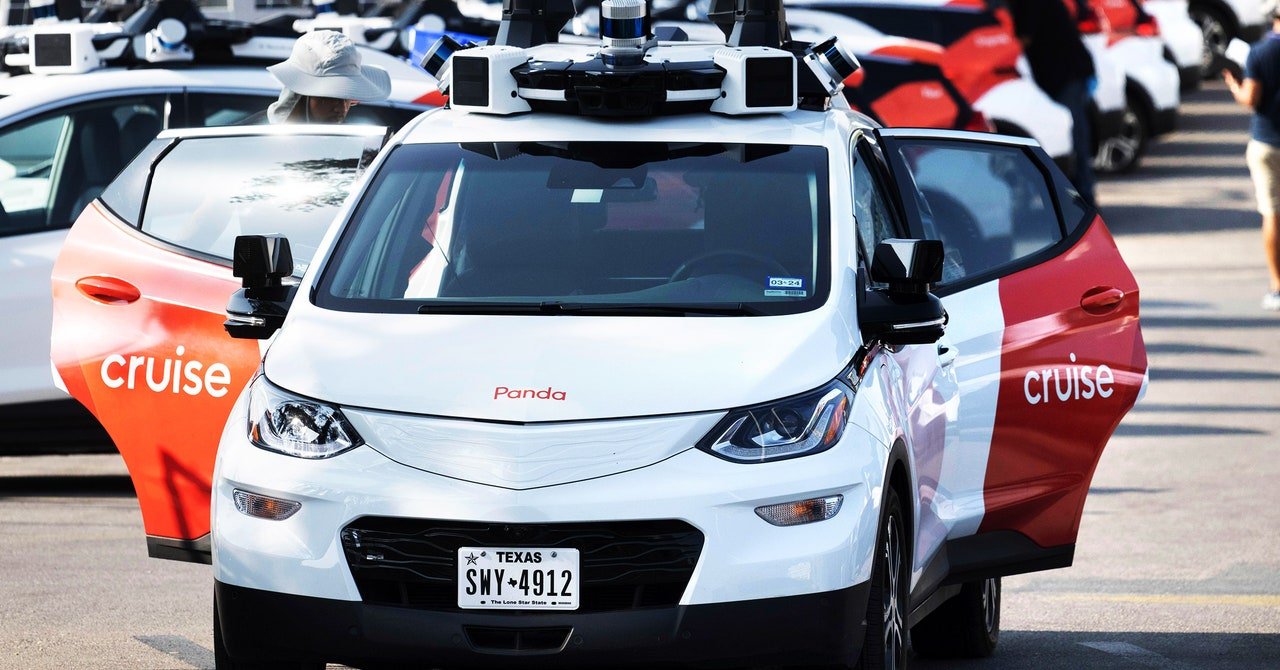
In August 2016, WIRED visited the San Francisco offices of a young startup recently snapped up by a surprising buyer. General Motors acquired three-year-old Cruise for a reported $1 billion in hopes the straitlaced Detroit automaker could coopt the self-driving technology tipped to disrupt the auto industry. Cruise CEO Kyle Vogt—a scrappy Twitch cofounder who competed as a teen in BattleBots—said he intended to stick around, but to keep running the driverless-car tech developer like a startup. He’d be out of a job, he predicted, if he couldn’t hack the self-driving thing in 10 to 15 years.
Is Vogt’s time up? GM’s financial reports show it losing $8.2 billion on Cruise since the start of 2017, and it has sunk at least $1.9 billion into the company this year. But last month, California regulators yanked its permits to operate self-driving vehicles in San Francisco, amidst allegations the company failed to disclose important details about a serious collision in which a pedestrian was trapped under a robot taxi. A few days later, the company said it would pause driverless operations across the US, in cities including Austin, Texas, and Phoenix, Arizona.
This week revealed new details of its technology’s failings during the San Francisco collision on October 2. On that night, a pedestrian was struck by a human-driven car and thrown into the path of a driverless Cruise vehicle that swerved but still hit the woman. Cruise said Wednesday that the car’s software then “inaccurately characterized” the collision as a side impact, not a front strike, and so automatically attempted to pull out of traffic, a maneuver that dragged her 20 feet along the ground. Cruise recalled all 950 driverless vehicles in its fleet, acknowledging that their software creates a safety risk, and says it will only resume driverless operations after updating it. (The person behind the wheel of the car that initially hit the woman has not been caught.)
GM now appears to have decided to tighten the leash on Cruise. As Forbes first reported Wednesday, layoffs have arrived. In an all-hands meeting Monday focused on Cruise’s response to its trouble in California, CEO Vogt told employees that a timeline for job eliminations would come in the next few weeks. The company began laying off contract workers in cleaning, charging, and maintenance roles today. GM also said this week it would temporarily halt production of the Origin, a purpose-built robotaxi vehicle that Cruise had been testing in San Francisco and Austin.
“We believe strongly in Cruise’s mission and the transformative technology it is developing,” GM spokesperson Aimee Ridella said in a statement. “Safety has to be our top priority, and we fully support the actions that Cruise leadership is taking to ensure that it is putting safety first and building trust and credibility.”
Second Thoughts
Cruise’s initial response to the October crash suggested it was a freak incident—one unavoidable by even a human driver. Its car “responded to the individual deflected in its path within 460 milliseconds, faster than most human drivers, and braked aggressively to minimize the impact,” the company said. This week’s recall and Cruise’s other recent actions seem to show the company conceding the possibility of systemic flaws in its strategy, technology, and communications with a nervous public.
Cruise said in a blog post Wednesday that it would increase transparency, and that it had retained a law firm to review the October crash and an independent engineering firm to review all of its safety and engineering processes. “As we build a better Cruise, we’re evaluating a variety of potential actions to ensure we operate at the highest standards of safety, transparency, and accountability,” Cruise spokesperson Navideh Forghani wrote in a statement.
And though the fallout from the San Francisco collision has led to Cruise’s most recent troubles, it’s becoming clear that the robotaxi operator faced pushback from other cities as well. Documents obtained by WIRED through a public records request from the city of Austin show that in the months before the company paused driverless operations at the end of last month, it had garnered complaints from the city’s fire, police, and emergency services departments, as well as residents—similar to criticism leveled by their counterparts in San Francisco.