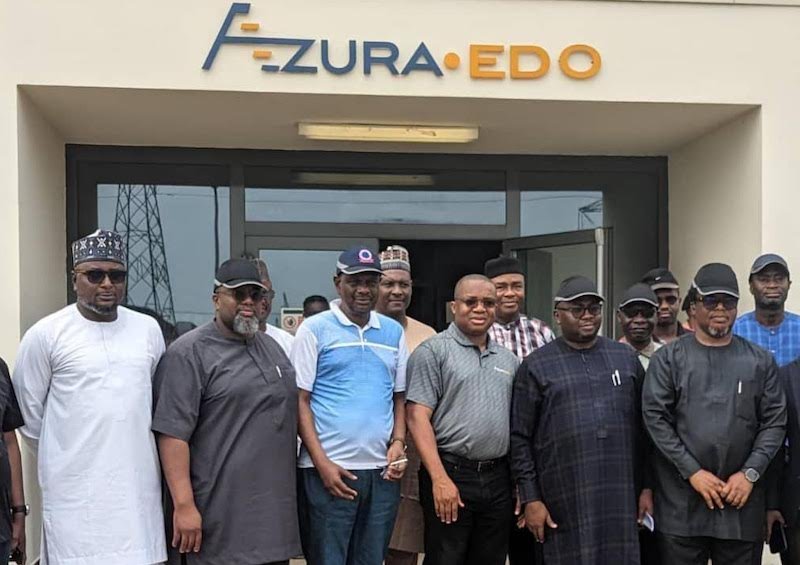
Nigeria's power sector suffers from one of the most documented and persistent capacity gaps in the world. The International Energy Agency's Africa Energy Outlook 2022 noted that Nigeria Africa's largest economy has an installed generation capacity of approximately 13,000 MW against an estimated demand of over 30,000 MW, with actual generation consistently far below installed capacity due to gas supply constraints, transmission bottlenecks, and distribution system losses. Against this backdrop, the Azura-Edo Independent Power Plant a 461 MW open-cycle gas turbine facility in Edo State, developed by Azura Power with financing from the International Finance Corporation, the World Bank's MIGA, and a consortium of development finance institutions represents not just a generation asset but a structural proof of concept for private power investment in Nigeria. CEO David Ladipo oversees an operation that the World Bank has publicly cited as one of the most successfully structured independent power transactions in Sub-Saharan Africa.
The Project Finance Structure
Azura-Edo's financial structure is the primary reason it succeeded where many Nigerian power projects have failed. The project used a World Bank Partial Risk Guarantee covering the risk of the Nigerian government failing to honour its payment obligations under the Power Purchase Agreement alongside IFC equity and senior debt, MIGA political risk insurance, and development finance institution loans from the Netherlands Development Finance Company (FMO), the German development bank (DEG), and others. This guarantee and insurance architecture addressed the fundamental investment barrier for private power in Nigeria: the creditworthiness of the offtaker, the Nigerian Bulk Electricity Trading company, which is ultimately backed by the Nigerian government.
The IFC's project documentation for Azura-Edo publicly available on the IFC website describes the total project financing at approximately $876 million, with the development finance institution participation providing the financial architecture that made international commercial bank participation possible. This blended finance model using DFI instruments to de-risk investment that private capital alone would not make is the template that the World Bank and AfDB have been attempting to replicate across multiple African power projects since Azura-Edo demonstrated its viability.
Gas Supply as the Operational Constraint
Azura-Edo operates on gas supplied from the Seplat Energy-operated Ovhor field under a long-term Gas Sale and Purchase Agreement. The reliability of this gas supply is the primary operational variable determining the plant's capacity factor. Nigeria's gas supply infrastructure characterized by pipeline vandalism, commercial disputes between producers and pipeline operators, and the underdevelopment of the midstream gas transport network creates a supply reliability risk that all gas-fired power plants in Nigeria must manage operationally.
Azura-Edo's gas supply arrangement includes contractual protections and backup provisions that improve its supply reliability relative to plants without dedicated upstream agreements, but the broader infrastructure constraints of Nigeria's gas transport network cannot be fully contractually managed at the plant level they require the systematic gas sector development that the Petroleum Industry Act's gas commercialisation provisions are designed to incentivise.
The Payment Chain and Its Vulnerabilities
Nigeria's electricity payment chain from consumers through distribution companies to the bulk trader to the generators has historically been characterized by payment shortfalls that accumulate as unpaid invoices throughout the system. The World Bank's Nigeria Power Sector Recovery Programme, which has provided financing and technical support for the sector since 2017, has documented the payment shortfall as one of the most persistent structural problems in Nigerian electricity sector economics. Azura-Edo's World Bank Partial Risk Guarantee is the mechanism that protects the project's revenue stream from this payment chain risk but the broader sector cannot attract the additional generation investment Nigeria needs without a systematic resolution of the payment chain problem that affects plants without guarantee protection.