

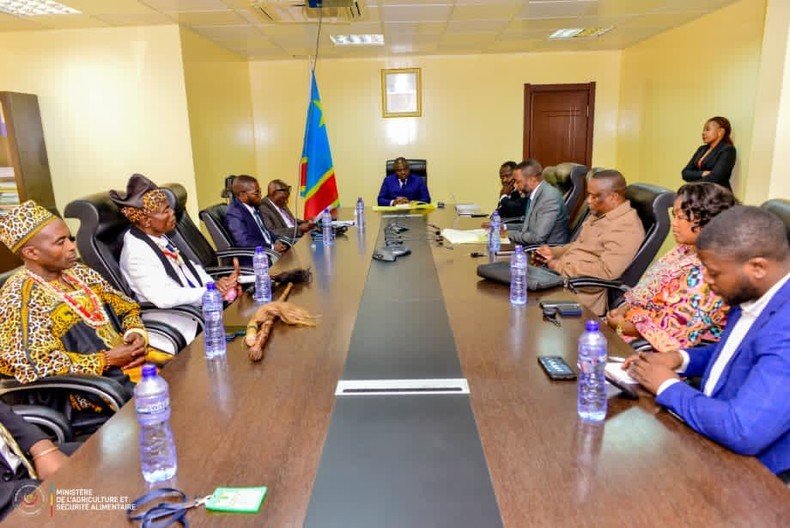
The government recently formalized the launch of the Sakania sugar refinery project in Haut-Katanga province through a memorandum of understanding signed between Minister of State Muhindo Nzangi Butondo and local customary authorities.
Elaborating on the concrete scope of this agreement, the Minister stated:
“We have just signed a memorandum of understanding to develop a sugar agro-food industry in the Sakania territory. This act marks the birth of a vast project that will henceforth be known as the Sakania sugar factory.”
The initiative, formalised on Wednesday, March 18, 2026, is part of a broader policy to strengthen national food security and reduce dependence on sugar imports, which cost the country hundreds of millions of dollars annually.
DRC’s push to end sugar imports
According to FAO data, the DRC imported over $150 million worth of sugar in 2025, reflecting a growing gap between domestic production and consumption.
“Today’s ceremony, beyond its symbolic value, represents an important step for the food security of the DRC. As part of our food sovereignty efforts, we want to reduce our dependence on foreign imports, particularly for products like sugar,” Minister Butondo said, emphasizing the dual economic and social impact of the project.
The Sakania refinery is designed as an integrated agro-industrial project, incorporating technical, economic, and environmental studies, as well as investment mobilization.
Diversifying beyond minerals
While the DRC dominates global supply chains for cobalt, copper, and other rare minerals, the government recognizes the importance of economic diversification.
The Sakania sugar factory illustrates a broader strategy to industrialize agriculture, create value chains, and generate jobs, demonstrating that the DRC is committed not only to mining but also to building a resilient and diversified economy.
For Haut-Katanga and the nation at large, this project signals a new chapter where agriculture plays a central role in economic growth and food sovereignty.


