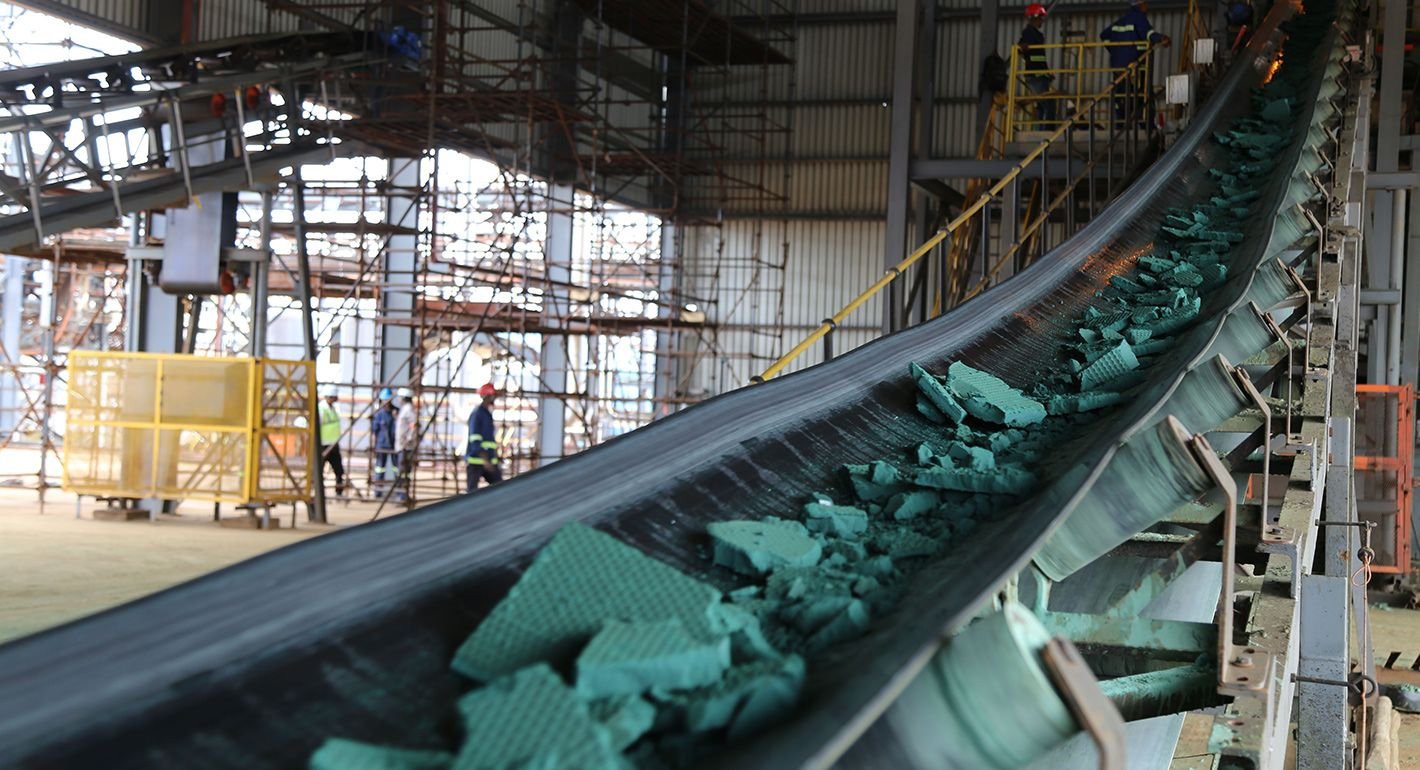
The Democratic Republic of Congo hemorrhaged $8.2 billion in potential mineral revenue in 2025 as foreign extraction companies captured three-quarters of the value chain in cobalt and lithium production, according to new analysis by the African Development Bank and Natural Resource Governance Institute.
Despite controlling approximately 70% of global cobalt reserves and emerging lithium deposits valued at $24 trillion by the US Geological Survey, the DRC’s domestic value capture remains constrained to raw ore extraction the lowest-margin segment of the critical minerals supply chain.
Chinese Dominance Across Processing Infrastructure
Chinese companies now control 80% of cobalt processing capacity within DRC borders through firms including China Molybdenum Co. (CMOC), which operates the Tenke Fungurume mine, and Zhejiang Huayou Cobalt, which processes 40% of DRC’s refined cobalt output. These operations generated $12.1 billion in revenue during 2025, with only $3.3 billion retained domestically through taxes, royalties, and local employment.
“The fundamental issue is that we export concentrate at $18,000 per ton while refined cobalt trades at $65,000 per ton in London Metal Exchange,” stated Sama Lukonde Kyenge, DRC’s Minister of Economy. “This $47,000 differential represents lost economic sovereignty.”
The processing gap extends to lithium, where DRC’s emerging deposits in Katanga province estimated at 3.2 million tons of lithium carbonate equivalent face similar value leakage. Current extraction agreements with Australian-listed AVZ Minerals and Chinese consortium Zijin Mining allocate 85% of refined lithium revenue to foreign partners.
Institutional Capital Flows Favor Offshore Processing
International development finance institutions have inadvertently reinforced this extraction model. The World Bank’s $200 million Private Sector Development Support Project and International Finance Corporation’s $180 million mining sector facility primarily fund upstream extraction rather than domestic processing infrastructure.
In contrast, China Development Bank has committed $3.8 billion specifically for integrated mine-to-battery supply chains, but with processing concentrated in Chinese facilities. This financing structure effectively locks DRC into raw material supplier status while China captures an estimated $2.40 of value for every $1 of DRC cobalt exports.
Standard Chartered’s commodities research indicates that establishing domestic processing could increase DRC’s revenue per ton of cobalt from $4,200 to $18,600 a 343% improvement in value capture.
Regional Competition Pressures Value Chain Integration
The competitive landscape is shifting as other African producers advance downstream integration. Ghana’s lithium processing facility, backed by $600 million from Atlantic Lithium and Piedmont Lithium, began operations in January 2026, capturing 60% of refined product value domestically.
Similarly, Nigeria’s partnership with Morocco’s OCP Group for phosphate-based battery materials demonstrates alternative models where African nations retain majority ownership in processing ventures.
“The DRC faces a strategic inflection point,” notes Dr. Hippolyte Fofack, Chief Economist at the African Export-Import Bank. “Without policy intervention, the current extraction model will persist regardless of demand growth.”
Policy Framework and Investment Implications
President Félix Tshisekedi’s administration has proposed mandatory 40% domestic processing by 2028, though implementation mechanisms remain undefined. The policy faces resistance from existing foreign operators who argue that DRC lacks sufficient power infrastructure the country’s 2,500MW generation capacity falls short of the 4,200MW required for integrated cobalt refining.
For institutional investors, the DRC presents a paradox: massive resource wealth constrained by infrastructure deficits and policy uncertainty. Mining equity valuations reflect this dynamic, with DRC-focused funds underperforming broader emerging market commodities indices by 180 basis points in 2025.
Forward-Looking Investment Framework
The critical question for fund managers is whether DRC can transition from price-taker to value-creator in the global battery supply chain. Key indicators include: infrastructure investment commitments exceeding $2 billion annually, policy consistency across electoral cycles, and partnerships that prioritize domestic processing over raw exports.
Chinese firms’ $15 billion committed investment through 2030 suggests confidence in current extraction models. However, growing African Union pressure for beneficiation requirements and US/EU critical minerals diversification strategies could accelerate downstream development funding, potentially reshaping value capture dynamics by 2028.