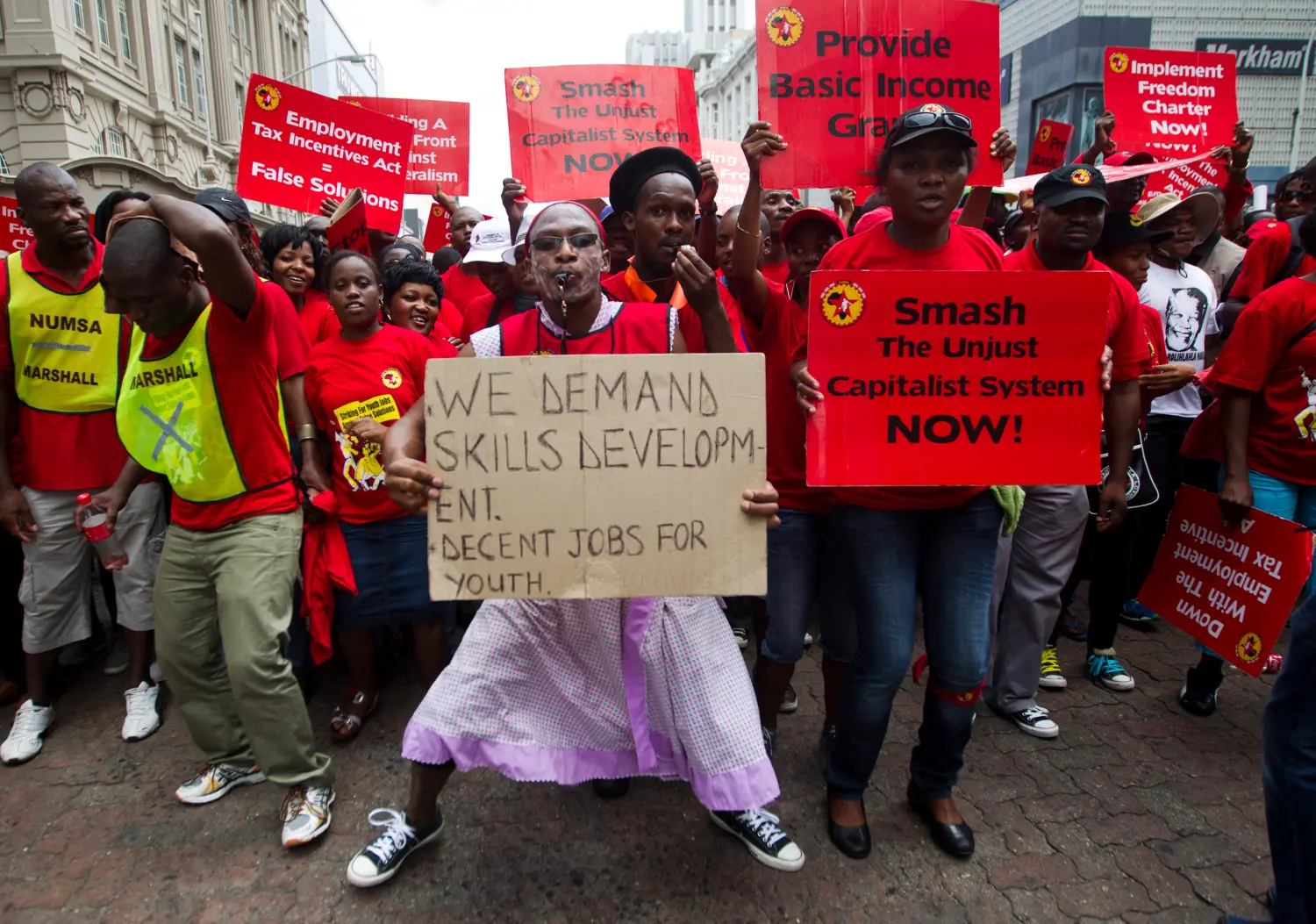
Africa’s youth unemployment rate has reached a staggering 67% in early 2026, according to the African Development Bank’s latest quarterly report, effectively transforming what economists had projected as a $2.6 trillion demographic dividend into a potential economic crisis that could destabilize the continent’s growth trajectory through 2035.
Demographic Mathematics Behind the Crisis
With 420 million Africans aged 15-35 currently unemployed or underemployed, the continent faces an unprecedented labor market failure. The International Labour Organization’s March 2026 data reveals that youth population growth of 2.7% annually continues to outpace job creation by a factor of 4:1, creating approximately 12 million new job seekers annually while formal sector employment expands by only 3.2 million positions.
Nigeria leads absolute numbers with 38 million unemployed youth, followed by Ethiopia (22 million), and Democratic Republic of Congo (18 million). However, relative to population, South Africa maintains the highest youth unemployment at 73%, while Rwanda demonstrates the lowest at 31%, according to the Africa Union’s Employment Observatory.
Formal vs Informal Employment Dynamics
The crisis extends beyond simple unemployment statistics into structural employment quality issues. The World Bank’s 2026 Africa Labor Survey indicates that 78% of employed African youth work in informal sectors, earning an average of $1.20 per day compared to $8.40 in formal employment.
Ghana’s National Development Planning Commission reports that informal sector expansion has accelerated to 4.1% annually, absorbing displaced youth but perpetuating low productivity cycles. Meanwhile, formal sector job creation has contracted by 12% since 2024, primarily in manufacturing and financial services.
Wage Suppression Mechanisms
Youth wage suppression has intensified across the continent, with entry-level formal sector wages declining 23% in real terms since 2023. The Economic Commission for Africa attributes this to labor supply-demand imbalances, where abundant youth labor enables employers to maintain depressed wage structures.
Kenya’s Central Bank of Kenya reports that graduate starting salaries have fallen to $180 monthly, down from $290 in 2023, while productivity per worker has increased 15% over the same period, indicating significant labor market inefficiencies.
Education-Employment Mismatch
Skills misalignment compounds the employment crisis. The African Union’s Skills Development Report 2026 reveals that 62% of university graduates lack competencies required by available formal sector positions, while technical and vocational education enrollment remains at only 8% of secondary school completers.
Morocco’s Ministry of Education data shows that engineering and technology programs produce 45,000 graduates annually, while market demand stands at 12,000 positions, forcing 73% of graduates into informal employment or emigration.
Regional Variations and Policy Responses
Employment outcomes vary significantly across regions. East Africa demonstrates the strongest formal job creation at 2.1% annually, led by Rwanda’s targeted manufacturing policies and Ethiopia’s industrial park initiatives. West Africa shows the weakest performance at 0.8% formal job growth, hampered by political instability and limited industrial diversification.
South Africa’s Expanded Public Works Programme has created 1.2 million temporary positions since 2024, though sustainability concerns persist given fiscal constraints. Botswana’s Youth Employment Scheme provides direct wage subsidies for private sector hiring, achieving 34% youth unemployment compared to regional averages.
Investment and Capital Formation Impacts
High youth unemployment correlates with reduced domestic investment rates across the continent. The African Development Bank reports that domestic savings rates have declined to 14.2% of GDP in 2026, down from 18.1% in 2022, as households prioritize immediate consumption over investment.
Foreign direct investment flows have shifted toward automation-intensive sectors, reducing labor absorption capacity. Manufacturing FDI, traditionally labor-intensive, declined 28% in 2025, while technology and extractive sectors increased 31%.
Economic Time Bomb Indicators
Multiple indicators suggest the demographic dividend window is closing rapidly. The dependency ratio, currently at 0.73, is projected to worsen as youth unemployment persists. Social security systems face mounting pressure, with informal sector workers contributing minimally to pension funds while requiring increased social assistance.
Political stability risks are escalating, with youth-led protests increasing 340% since 2024 across 18 African countries, according to the Armed Conflict Location and Event Data Project.
Forward-Looking Implications
For policymakers, immediate intervention requires coordinated fiscal and monetary responses. Technical education expansion, manufacturing incentives, and labor market flexibility reforms represent critical policy levers. International development finance institutions should prioritize labor-intensive infrastructure projects and small enterprise development.
For investors, African markets present complex risk-reward profiles. Consumer market potential remains substantial given demographic scale, but political and social stability concerns warrant careful country specific analysis. Sectors positioned for youth employment absorption particularly technology services, light manufacturing, and renewable energy offer strategic opportunities for patient capital with development impact mandates.