

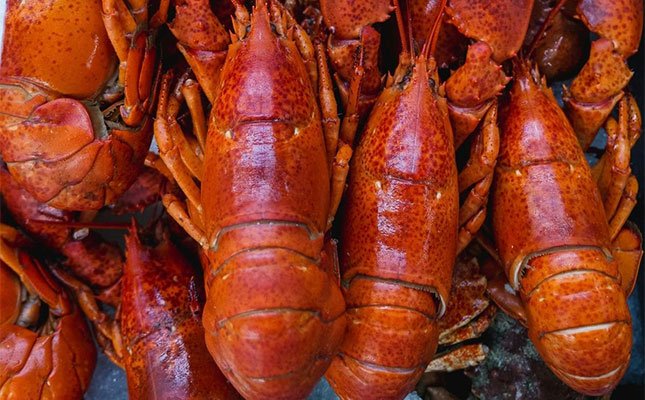
The Eastern Cape Development Corporation is investing R2,8 million in seven lobster-farming co-ops under the Tsweleni Rock Lobster Project in Port St Johns. The funds are aimed at enhancing product quality, scaling up production, and improving export competitiveness.
– ADVERTISEMENT –
The Tsweleni Rock Lobster Project, which produced 1,8t of lobster in the 2025 season, is targeting 7t for the 2026 fishing season from March to October, with a long-term plan to increase output to between 10t and 12t.
Fikile Mzinyati, acting manager for financial incentives and business support at the Eastern Cape Development Corporation (ECDC), told Farmer’s Weekly that the R2,8 million investment is aimed at strengthening infrastructure and operational capacity.
“Approximately R1,7 million has been dedicated to establishing a lobster holding and processing facility in Port St Johns,” she explained.
She added that the facility includes seawater tanks that replicate the natural marine environment, ensuring lobsters remain alive and healthy until they are sold or exported. It also has freezing capabilities, which allow processed lobster to be stored for frozen export, extending shelf life and enabling co-ops to access distant markets without immediate sale pressure.
The remaining R1,1 million has been allocated to operational requirements, including salaries for co-op staff, security, electrical upgrades for the facility, transport logistics for lobster delivery, and the acquisition of fishing permits required under South African fisheries regulations.
“These investments collectively enable the co-operatives to increase harvest volumes, improve product quality, and participate more effectively in both local and international seafood markets,” Mzinyati added.
Preparing for international markets
According to Mzinyati, the ECDC is also actively supporting the co-ops in securing export certifications necessary for live lobster sales to European markets.
Following a visit to South Africa in February this year by a German seafood-sourcing delegation to assess export readiness, the ECDC facilitated a partnership between the co-ops’ aggregator, seafood enterprise Rekaseed, and PUM, an international NGO supporting small and medium-sized enterprises.
PUM has connected the co-ops to a network of more than 1 200 global experts who provide guidance on operational systems, certification processes, and compliance with international market standards.
“These collaborative efforts are designed to progressively build the systems, certifications, and market linkages needed for sustainable access to higher-value international export markets,” Mzinyati said.
Overcoming challenges in export compliance
Duncan Sejosengoe, managing director of Rekaseed, said the primary challenge for the co-ops is adapting from traditional small-scale handeling to professional standards required by Germany’s Import Promotion Desk.
“Co-operative members have extensive local fishing knowledge, but exporting requires strict quality control, traceability, and handling protocols,” he explained.
To address these gaps, Rekaseed is implementing hands-on training for co-op members, including manual record-keeping systems, improved handling procedures, and upgraded on-site lobster holding facilities. These measures ensure full traceability, tracking exactly where and when each lobster is harvested, which is a key requirement for European export compliance.
Building a sustainable ocean economy
The Tsweleni Rock Lobster Project plans to expand into seafood processing and diversify into other marine species while ensuring sustainability and local economic benefits.
“Our long-term strategy is to establish a year-round ocean economy for the Port St Johns community,” Sejosengoe said.
The project prioritises responsible harvesting practices, strict compliance with South African fisheries regulations, skills development, and local participation across the value chain.
“By keeping value generated from marine resources within the community, we aim to create jobs, develop skills, and provide economic opportunities for future generations while protecting ocean resources,” he added.


