

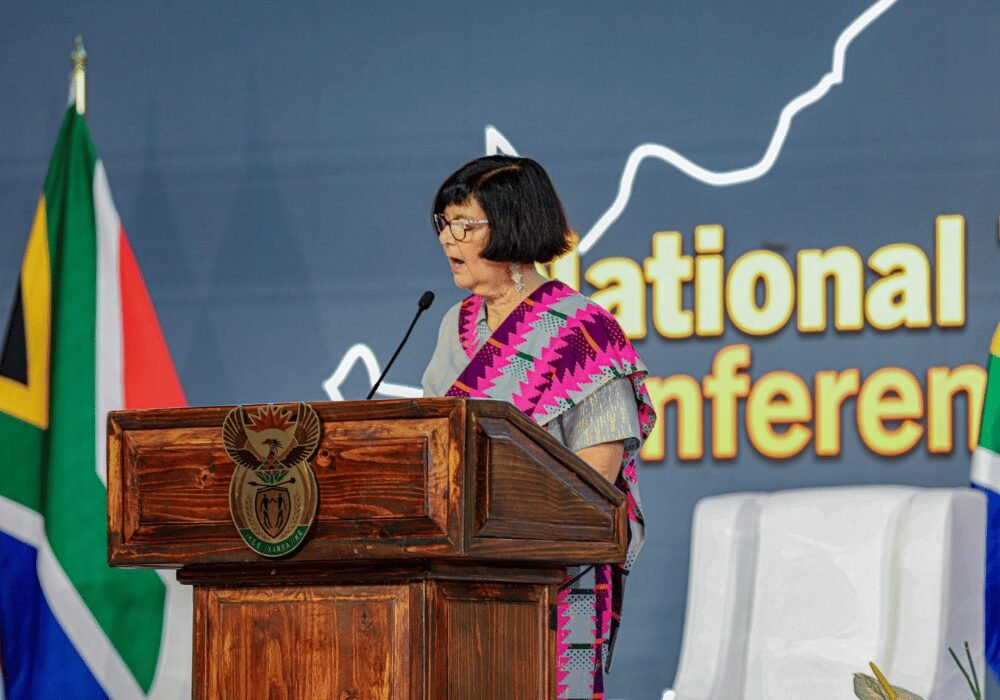
South Africa urgently needs to tackle its transport-related emissions, where road transport alone accounts for 97 percent of the sector’s emissions. The inaugural National Transport Conference 2026 in Johannesburg focused on the effective transformation of transport as a catalyst for growth, job creation, inclusivity and sustainability.
The Electric Mission Executive Director, Hiten Parmar, participated in a panel session at the National Transport Conference, providing key input on what South Africa needs to accomplish on the pathway to decarbonise road transport.
“Specific actions are being taken to decarbonise transport in every region, where countries across the world are already making progress. This is not unique to South Africa.” says Parmar.
President Cyril Ramaphosa, in his keynote address for this event, noted that “South Africa needs a modern, inclusive and efficient transport system, but it should also reduce the cost of transport to the economy.”
“On the technology front, zero-emission vehicles are an immediate solution to eradicating tailpipe emissions. South Africa already has a positive ratio across the country of electric vehicle charging stations to the fleet of electric vehicles,” says Parmar. While there have been no developments to date in the market for fuel cell electric vehicles, battery electric vehicles have seen progressive developments in recent years across passenger vehicles, heavy-duty vehicles, and public transport, particularly buses.
“A key regulatory reform for the transport sector is on the supply side mechanisms, which may include a fleet mandate, fuel efficiency or vehicle emissions standards. These allow fleet-wide performance benchmarks, encouraging vehicle manufacturers to innovate,” says Parmar.
“In the context of geopolitics and conflicts, an overreliance on fossil fuel imports cannot achieve the aims of decarbonisation. South Africa will remain at the mercy of global dynamics until it achieves energy sovereignty,” says Parmar. “Greater action from government and an agile, enabling environment for the private sector will reduce sole reliance on the global oil supply.”

Minister Barbara Creecy
The Minister of Transport, Barbara Creecy, delivered the opening remarks for the conference, commenting that road transport in South Africa is an enabler for job creation and sustainability, but has to be managed in alignment with environmental changes.
The current conflict in the Middle East and the uncertainty it’s created, has global implications on the oil industry and inflation. These circumstances will have an ongoing impact on South African consumers, with potential for deepening an economic crisis.
“A transition to electric mobility can mitigate the impact of geopolitical shocks, while also strengthening the local economy, creating resilience and attracting investment,” says Parmar. “With key energy transition minerals, size of the labour force, and potential for growth, South Africa can be an investment haven in Africa, with key socio-economic benefits.”


