

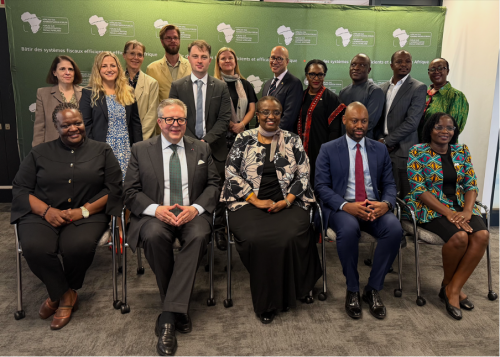
On 26 February, the ATAF Executive Secretary Ms Mary Baine led and hosted a high-level delegation from the African Development Bank (AfDB), led by Executive Director Mr Pirkka Tapani Tapiola, representing Denmark, Finland, India, Ireland, Norway and Sweden, to advance strategic cooperation on domestic revenue mobilisation across Africa and reaffirm the existing Partnership between the two institutions.
The discussions come at a critical time, as African countries face rising debt pressures, narrowing fiscal space and increasing demand for sustainable sovereign financing solutions. Both institutions reaffirmed that sustainable, modern and technology-driven tax administrations are central to strengthening fiscal sovereignty, economic resilience and public service delivery on the continent.
For more than 12 years, the ATAF–AfDB partnership has delivered concrete institutional reforms through Phase I and Phase II programmes. The collaboration has supported legislative and administrative reforms, strengthened audit and compliance risk management systems, enhanced taxpayer education frameworks, tax capacity building initiatives review of the global financial architecture, and expanded digital transformation efforts in tax administrations.
The impact has been measurable. AfDB-supported initiatives have helped generate over 6 billions in additional revenue assessments and collections, while building long-term institutional capacity through training thousands of tax officials and deploying technical experts across the continent.
Looking ahead, discussions explored expanding digital compliance tools, strengthening data governance and analytics, enhancing results measurement frameworks, curbing illicit financial flows, and reinforcing Africa’s coordinated voice in global tax standard-setting processes.
The strengthened partnership is expected to further enhance compliance systems, scale digital capabilities, and expanded service delivery for sustainable domestic revenue outcomes for ATAF’s member countries — reinforcing Africa’s ability to finance its own development agenda.


