

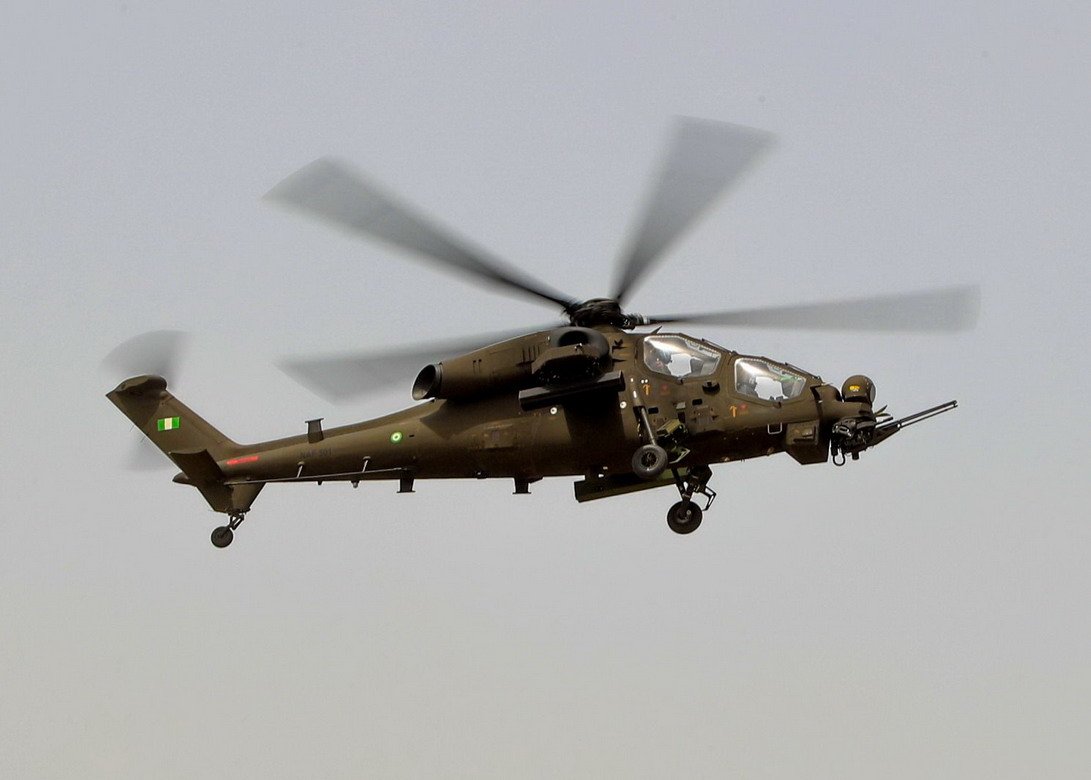

While the volume of arms imports by states across Africa overall decreased by 41% between the 2016-2020 and 2021-2025 periods, West African arms transfers rose sharply as the security situation in the region deteriorated.
This is according to the Stockholm International Peace Research Institute (SIPRI), which released new reports on global arms transfers this month. The Institute noted that the combined arms imports of West African states almost doubled (+82%) between 2010–14 and 2020–24. Nigeria accounted for by far the biggest share (34%) of arms imports to West Africa in 2020–24.
“The growth in arms imports to West Africa has been striking. While the volume of imports remains relatively small, it has important geopolitical implications,” said Katarina Djokic, Researcher with the SIPRI Arms Transfers Programme.
“States like Burkina Faso, Mali and Senegal seem to be rapidly increasing their imports. Arms suppliers are using arms exports to boost their influence in this part of the world, including emerging suppliers—primarily Türkiye—alongside more established actors such as China, France, Russia and the USA.”
The main suppliers to Africa in 2021–25 were the USA (accounting for 19% of African imports of major arms), China (17%), Russia (15%) and France (8.3%).
Morocco (rank 28 globally) and Algeria (rank 33) are by far the largest recipients of major arms in Africa. Their long-running tensions with each other are a major driver of their arms imports. Morocco increased its arms imports by 12% between 2016–20 and 2021–25. As of the end of 2025, it had pending imports from several states, including Spain and the USA. Algeria’s arms imports decreased by 78%, having reached a peak in 2016–20. While the latest SIPRI data indicates that Morocco’s arms imports surpassed those of Algeria in 2021–25, Algeria is often secretive about its arms imports, and there were several unverified reports about arms deals with Russia in 2021–25, suggesting that SIPRI’s estimates may be on the low side.
States in sub-Saharan Africa increased their arms imports by 13% compared with 2016–20 and accounted for 2.2% of total global imports of major arms in 2021–25, according to SIPRI. The three largest recipients were Nigeria (receiving 16% of subregional imports), Senegal (8.8%) and Mali (8%). China, which supplied major arms to 23 states and accounted for 22% of subregional imports, was the largest supplier to sub-Saharan Africa. Russia was the next largest supplier (accounting for 12% of imports), followed by Türkiye (11%).
There were several large-scale armed conflicts in sub-Saharan Africa during 2021–25, including the Sudanese civil war that broke out in 2023. “Tracking arms transfers to conflicts, especially in Africa, is difficult as they often involve high levels of secrecy,” SIPRI said. The Sudanese armed forces and the opposing Rapid Support Forces (RSF) received transfers of major arms during 2021–25. Transfers to the RSF included four pieces of artillery and at least one air defence system from unknown suppliers. Transfers to the Sudanese armed forces included armed uncrewed aerial vehicles (UAVs, or drones), armoured vehicles and transport aircraft from at least five known suppliers—Belarus, Iran, Kyrgyzstan, Türkiye and the United Arab Emirates (UAE)—and one combat aircraft from an unknown supplier.
Global arms transfers up by nearly 10%
SIPRI found that globally, the volume of major arms transferred between states increased by 9.2% between 2016–20 and 2021–25. States in Europe more than trebled their arms imports, making it the biggest recipient region. Total exports by the United States, the world’s largest supplier of arms, increased by 27%. This included a 217% increase in US arms exports to Europe.
The increase in global arms flows was the biggest since 2011–15. It was overwhelmingly due to the growth in transfers to Ukraine (which received 9.7% of all arms transfers in 2021–25) and other European states. Besides Europe and the Americas, arms imports to all other world regions decreased.
“While tensions and conflicts in Asia and Oceania and the Middle East continue to drive large-scale arms imports, the sharp increase in arms flows to European states pushed global arms transfers up almost 10%,” said Mathew George, Director of the SIPRI Arms Transfers Programme. “Deliveries to Ukraine since 2022 are the most obvious factor, but most other European states have also started importing significantly more arms to shore up their military capabilities against a perceived growing threat from Russia.”
USA increases its dominance of arms exports
The United States supplied 42% of all international arms transfers in 2021–25, up from 36% in 2016–20. The USA exported arms to 99 states in 2021–25, including 35 states in Europe, 18 in the Americas, 17 in Africa, 17 in Asia and Oceania and 12 in the Middle East. For the first time in two decades, the largest share of US arms exports went to Europe (38%) rather than the Middle East (33%). Nevertheless, the top single recipient of US arms was Saudi Arabia (12% of US arms exports).
“The USA has further cemented its dominance as an arms supplier, even in an increasingly multipolar world,” said Pieter Wezeman, Senior Researcher with the SIPRI Arms Transfers Programme. “For importers, US arms offer advanced capabilities and a way of fostering good relations with the USA, while the USA views arms exports as a tool of foreign policy and a way of strengthening its arms industry, as the Trump administration’s new America First Arms Transfer Strategy once again makes clear.”
France was the second largest supplier of major arms in 2021–25, accounting for 9.8% of global exports. Its arms exports increased by 21% between 2016–20 and 2021–25. France exported to 63 states, with the largest shares going to India (24%), Egypt (11%) and Greece (10%). France’s arms exports within Europe rose more than fivefold (+452%), but almost 80% still went outside the region.
Russia was the only top 10 supplier to see its arms exports fall (–64%). Its share of global arms exports shrank from 21% in 2016–20 to 6.8% in 2021–25. Russia supplied major arms to 30 states and one non-state actor in 2021–25. Nearly three quarters (74%) of Russian arms exports went to three states in 2021–25: India (48%), China (13%) and Belarus (13%).
Germany overtook China to become the fourth largest arms exporter in 2021–25, with 5.7% of global arms exports. Almost a quarter of all German arms exports (24%) went to Ukraine as aid (and another 17% went to other European states).
Arms exports by Italy increased by 157%, pushing it from the tenth largest exporter in 2016–20 to the sixth largest in 2021–25. Over half of Italy’s exports went to the Middle East (59%), while 16% went to Asia and Oceania and 13% to Europe.
Israel, the seventh largest arms supplier, increased its share of global arms exports from 3.1% in 2016–20 to 4.4% in 2021–25, and for the first time ever overtook the United Kingdom (3.4%).
“Despite conducting the war in Gaza and attacks in Iran, Lebanon, Qatar, Syria and Yemen, Israel still managed to increase its share of global arms exports,” said Zain Hussain, Researcher with the SIPRI Arms Transfers Programme. “The Israeli arms industry focuses on air defence systems for which there is high global demand, while the Israeli military depends on imports for several types of key equipment.”


