

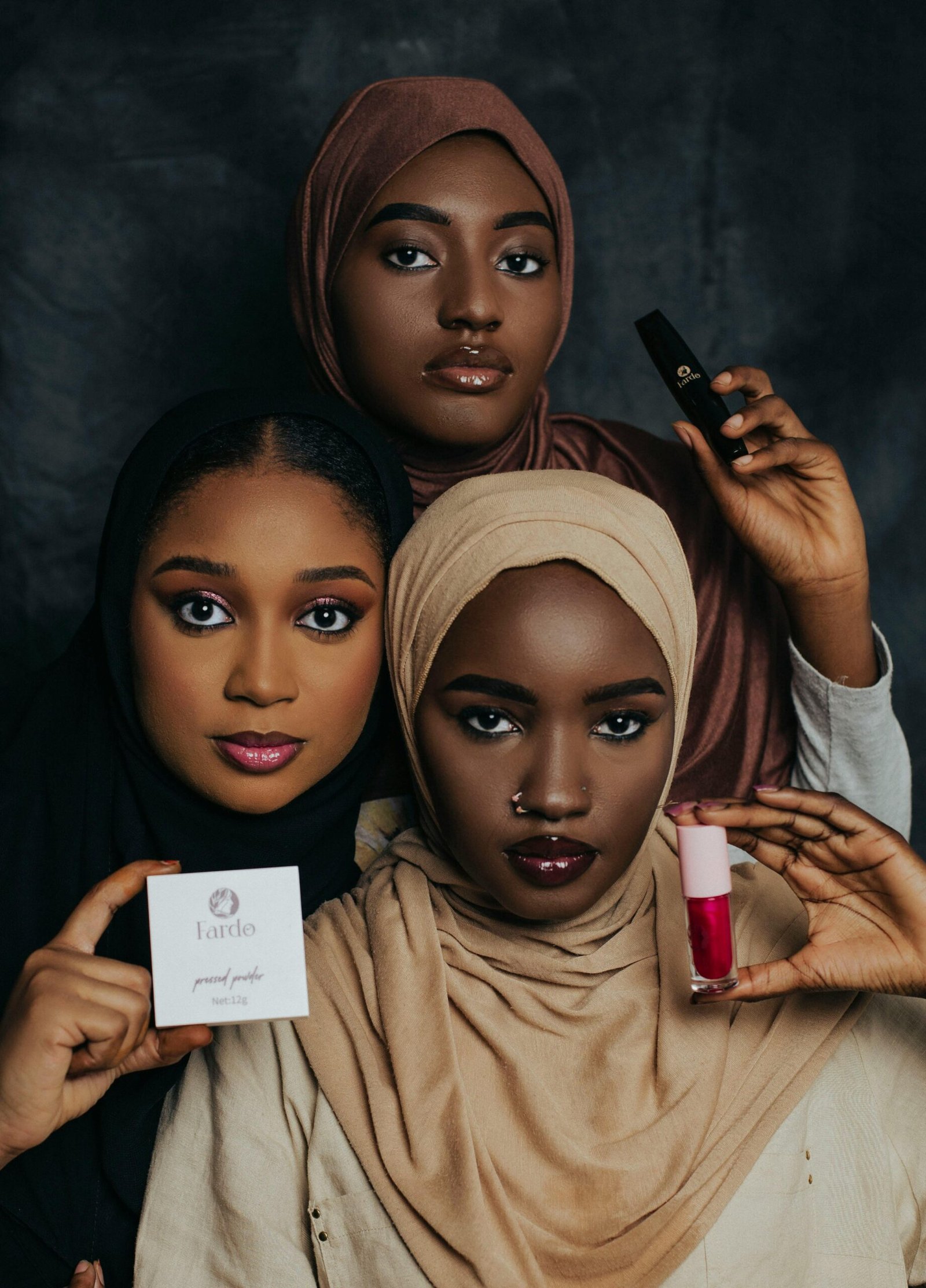
Africa’s beauty industry generated $15.2 billion in revenue during 2025, marking a 12.8% year-over-year increase that significantly outpaced the global beauty market’s 8.4% growth rate. Independent African brands captured an unprecedented 23% market share, up from 18% in 2023, directly challenging the dominance of L’Oréal and Unilever across key segments.
Market Share Redistribution Accelerates
L’Oréal’s African operations reported $3.1 billion in regional revenue for 2025, representing a 8.2% increase but a declining 20.4% market share compared to 22.1% in 2024. The French beauty giant’s growth lagged behind the overall market despite significant investments in local manufacturing facilities across Nigeria, Kenya, and South Africa.
Unilever’s beauty division maintained stronger positioning with $2.8 billion in African revenue and 18.4% market share, benefiting from established distribution networks for brands like Dove and Vaseline. However, the Anglo-Dutch conglomerate’s 9.1% growth rate still trailed independent competitors by substantial margins.
“The narrative of multinational dominance in African beauty is fundamentally shifting,” said Dr. Amina Hassan, senior analyst at Lagos-based Africa Capital Markets Research. “Independent brands are demonstrating superior understanding of local consumer preferences while building more agile supply chains.”
Independent Brand Performance Surge
Indigenous beauty companies achieved remarkable financial performance, with combined revenues reaching $3.5 billion across the continent. Nigeria’s Zaron Cosmetics reported 34% revenue growth to $180 million, while South Africa’s Indlela Cosmetics expanded operations to 12 countries, generating $95 million in annual sales.
The success stems from targeted product development addressing specific African skin tones and hair textures, areas where international brands historically underserved consumers. Independent manufacturers also leveraged lower operational costs, with average gross margins of 67% compared to 52% for multinational subsidiaries.
Private equity firms recognized this potential, deploying $890 million into African beauty brands during 2025. Development Partners International led a $120 million Series B round for Ghana-based Kaeme Beauty, while Helios Investment Partners acquired a controlling stake in Kenya’s Sunlit Beauty Products for $75 million.
Manufacturing and Supply Chain Advantages
Local production capabilities emerged as a critical competitive factor. Independent brands sourced 78% of raw materials locally, reducing input costs by an average of 31% compared to imported alternatives. Nigeria’s shea butter industry alone supplied ingredients worth $420 million to domestic cosmetics manufacturers.
Supply chain efficiency translated into pricing advantages, with local brands offering comparable products at 25-40% lower price points than international competitors. This positioning proved particularly effective in price-sensitive segments, where independent brands now hold 31% market share.
Infrastructure investments supported this growth trajectory. The African Development Bank approved $180 million in funding for cosmetics manufacturing facilities across West Africa, while Ethiopia’s new Industrial Parks Development Corporation allocated 1,200 hectares specifically for beauty product manufacturing.
Channel Innovation Drives Distribution
Independent brands revolutionized distribution through mobile commerce and direct-to-consumer strategies. Mobile beauty sales generated $1.2 billion in revenue across Africa, with local brands capturing 67% of this emerging channel.
Traditional retail remained important, but independent brands negotiated more favorable terms with regional distributors. Average retail margins for local products reached 35%, compared to 28% for multinational brands, incentivizing broader shelf placement.
Investment and Expansion Outlook
Market projections indicate continued momentum for independent brands, with McKinsey forecasting 15-18% annual growth through 2028. This trajectory could position local manufacturers to capture 30% market share by decade’s end, fundamentally altering competitive dynamics.
Multinational corporations are responding with acquisition strategies and increased local investment. L’Oréal allocated $250 million for African brand acquisitions in 2026, while Unilever expanded its Lagos innovation center with $80 million in new funding.
For investors and policymakers, Africa’s beauty industry represents a compelling case study in import substitution and economic diversification. The sector’s growth trajectory suggests significant potential for job creation, export revenue generation, and regional value chain development across the continent’s emerging markets.


