

Local fuel supply during February is said to have met 92% of Nigeria’s fuel demand.
As seen in an official factsheet on Nigeria’s midstream and downstream petroleum operations, the overall petrol supply fell from 64.9 million litres per day in January to 39.6 million litres per day in February.
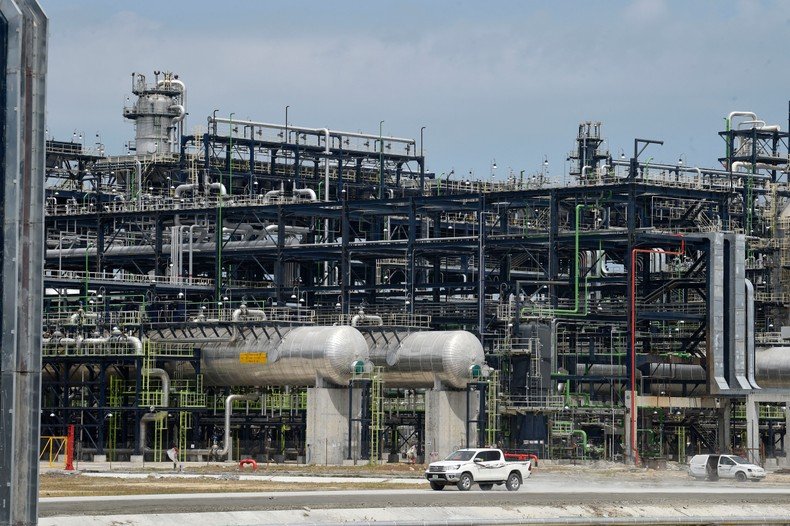
Nigeria reported its lowest petrol imports ever, with the Dangote refinery, Africa’s largest oil refinery, controlling the majority of the month’s supply.
The decrease amounted to a 39.1% decrease in the overall supply, or 25.4 million liters per day, during the period under review.
This figure indicates that locally refined petrol constituted approximately 92% of the overall product supply for the month.
Consequently, as seen on Arise, only about 3.1 million liters of gasoline were imported daily, making up approximately 8% of the total supply.
Furthermore, as highlighted in the factsheet, domestic refining activity exceeded gasoline production.
Last month, local refineries supplied an average of 8.2 million liters of fuel per day; several facilities had operational problems.
Additionally, three modular refineries contributed modest but consistent volumes to the domestic fuel supply, averaging 0.368 million liters per day.
Despite a decline in overall fuel supply, the West African country maintained a 31-day petrol sufficiency level during the month, indicating that the nation has adequate fuel reserves to cover demand for around a month.
For context, per the factsheet, the average daily consumption of gasoline was 36.6 million litres, slightly below the total daily supply of 39.6 million litres.
Nonetheless, broader consumption data showed a sustained high level of overall petrol demand within the country.
Measured against the national consumption standard of 50 million litres per day, the actual petrol usage, quantified by truck-out volumes, averaged 56.9 million litres per day, representing an excess of approximately 13.8% over the established benchmark.
The steady increase in domestic refining capacity, particularly from the Dangote refinery, is progressively reducing the nation’s dependence on imported petroleum, indicating an impending structural transformation within the downstream sector.
Nigeria’s recent shift to local fuel supply
Oil marketing companies, including a unit of TotalEnergies SE, Conoil Plc, and MRS Nigeria Plc, which together accounted for about 25% of the country’s gasoline imports in January, had their import licenses suspended.
According to the new policy, gasoline import licenses will be provided only when local supply cannot meet demand. According to NMDPRA spokesperson George Ene-Ita, such a situation does not now exist.


