

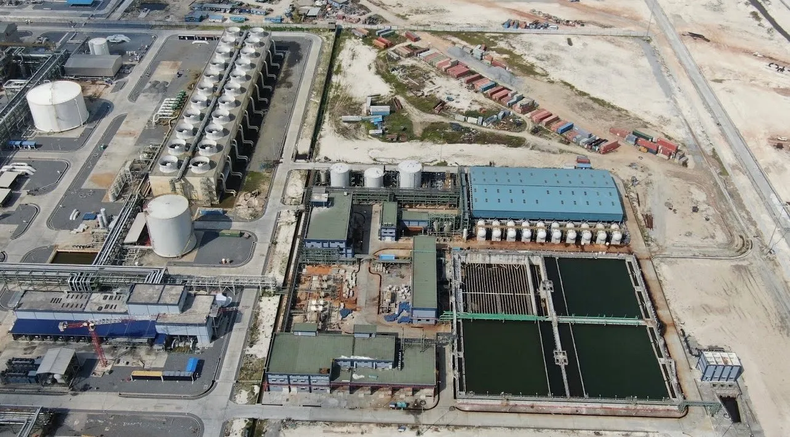
Africa’s largest industrial conglomerate, Dangote Industries Limited, has secured a $4.2 billion, 25-year natural gas supply deal with China’s GCL Group to power a major fertilizer expansion project in Ethiopia, highlighting one of the most ambitious China–Africa industrial partnerships in recent years.
The agreement will provide long-term gas supply for Dangote’s planned 3-million-tonne-per-year urea fertilizer complex, a facility expected to transform fertilizer production across East Africa.
The fertilizer plant, valued at $2.5 billion, is being developed through a joint venture between Dangote Group and Ethiopian Investment Holdings, which hold 60% and 40% stakes respectively. Construction is scheduled to be completed by 2029.
The landmark agreement, finalized in Lagos, highlights the strategic nature of the partnership and the growing role of Chinese-African industrial collaborations across the continent.
Dangote expands industrial footprint across Africa
The Ethiopia fertilizer project highlights the growing continental influence of Aliko Dangote, Africa’s richest person and founder of Dangote Industries, whose businesses now span multiple strategic sectors including cement, energy, petrochemicals and food processing.
Over the past two decades, Dangote has built Africa’s largest cement manufacturing network through Dangote Cement, with operations across more than a dozen African countries. The group has also expanded aggressively into energy and petrochemicals, most notably through the Dangote Refinery, the world’s largest single-train oil refinery located in Nigeria.
Speaking on the partnership, Dangote said Africa must move beyond exporting raw materials while importing finished goods.
Chairman of GCL Group Zhu Gongshan said the project represents a new model of China–Africa industrial cooperation that integrates upstream gas production, pipeline infrastructure and downstream fertilizer manufacturing.
Industry analysts say the fertilizer complex could help Ethiopia achieve fertilizer self-sufficiency, create thousands of jobs and stimulate industrial development in the Somali Region while strengthening East Africa’s agricultural productivity.


