

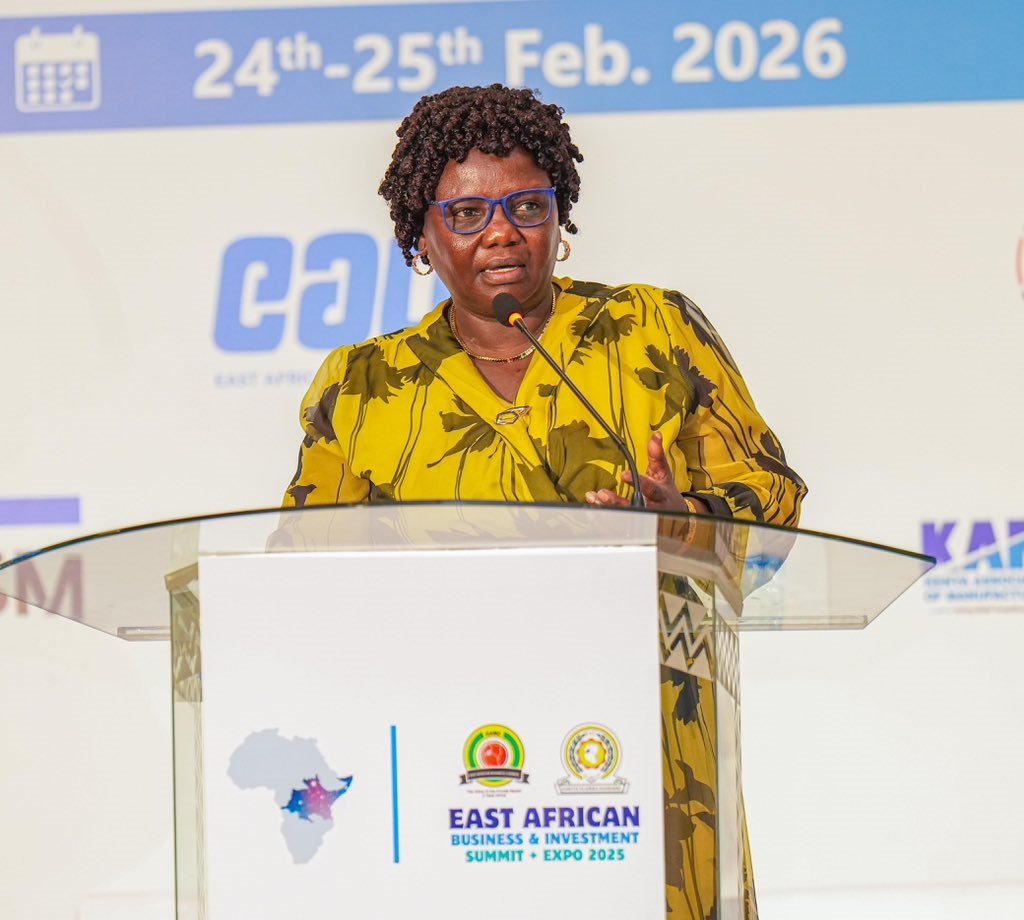
Behind the closed doors of a Nairobi summit late February, the future of East African trade was being redrawn. Against a backdrop of unmet targets and frustrated potential, the East African Business Council, alongside the East African Community and the Kenya Private Sector Alliance (KEPSA), gathered nearly 500 delegates to tackle a stubborn problem: how to make regional trade actually work.
The theme was aspirational: “Promoting Private Sector-Driven Regional Integration.” Beatrice Askul Moe, Chairperson of the EAC Council of Ministers, opened the proceedings with a hopeful tone, speaking of a region “united by enterprise” and noting the “slight growth” in intra-regional trade. It was a glass-half-full perspective.
But for the delegates on the ground, the optimism was tempered by a hard truth. The region is still miles away from its targets. This gap between aspiration and reality is what drove the summit’s most critical outcomes.
Frustration turned into action, culminating in a slate of new resolutions, including a push for new leadership, designed to finally jolt the EAC’s economic engine to life.
First, Chairperson of the EABC, Mr. John Lual Akol Akol, bluntly pointed out that despite the increased intra-EAC trade mentioned by Hon. Moe, growth remains below 15 percent of total EAC trade.
He decried the fact that the reported growth is considerably below the set target of 40 percent growth by 2030.
East Africa experiencing ‘slow growth’ that is well below targets
Based on this fact, he called upon the EAC stakeholders to move from reform and aim to bring about tangible results; a call that underlines the summit motto.
Seconding the disapproval of ‘slow growth’ that is well below the set targets, Vice-Chair of the EABC Jas Bedi, said intra-trade growth across the EAC is hampered by persistence of non-tariff barriers, inconsistency of regulations, and what he described as, unpredictable tax regimes.
“Without lowering the cost of doing business and strengthening investor confidence…growth will not meet the target,” he cautioned.
Offering solutions, the Vice-Chair insisted increased investment in trade-enabling infrastructure, digital connectivity, and paperless customs systems, all of which he said will help enhance regional competitiveness.
In the long run, the Summit urged EAC Partner States to “…fully implement agreed commitments under the Customs Union and Common Market Protocols.”
The commitments include a renewed drive for effective operationalization of the Single Customs Territory (SCT), harmonization of domestic taxes, and the elimination of non-tariff barriers that still persist.
Speaking on behalf of the EAC Secretary General, Ms. Annette Ssemuwemba Mutaawe, the Deputy Secretary General for Customs, Trade and Monetary Affairs at the EAC, emphasized acceleration and strengthening of stakeholder coordination if the EAC is to fully realize the coveted regional integration objectives.
She reiterated the Secretariat’s commitment but underscored need for tangible action, to remove trade barriers, enhance competitiveness, build regional value chains, and leverage technology.
Read also: Shadows of conflict loom large over EACOP as construction nears end
East Africa business summit resolutions
Insight Exchange: Enhancing Intermodal Transport and Infrastructure Connectivity
- Digitalized, interoperable, and automated customs processes, and centralized cargo declarations to facilitate seamless cross-border trade.
- 24/7 border operations and harmonization of transport and logistics levies to improve efficiency along corridors and reduce cargo delays.
- Continue enhancing investments in rail, pipelines, cold chain systems, industrial parks, and other strategic infrastructure to lower logistics costs and facilitate the movement of cargo.
- to mobilize private capital for regional industrialization in selected strategic regional value chains, including pharmaceuticals, motor vehicles, textiles, leather, and agro-processing.
- EAC Partner States should expeditiously harmonize domestic taxes (excise duties and VAT), levies, fees, and other charges of equivalent effect on goods and refrain from applying discriminatory fiscal measures to EAC-originating goods.
- infrastructure, and weak road networks. Governments should prioritize industrial infrastructure corridors and reliable power supply to enhance productivity and regional value chains.
- Develop regional financing mechanisms and blended finance instruments to provide affordable, long-term capital for firms investing in expansion, technology upgrading, and research and development (R&D).
- Streamline taxes, sanitary and phytosanitary (SPS) measures, and technical requirements through harmonized regional frameworks. Promote mutual recognition of standards within the East African Community to reduce duplication, compliance costs, and trade delays.
- Enhance accessible and efficient dispute resolution systems at regional and continental levels to protect investors and traders, ensuring predictability and confidence in cross-border commerce.
- Invest in interoperable digital trade facilitation systems, including customs, cargo tracking, and single window platforms, to reduce logistics bottlenecks and lower the cost of doing business.
- Support the development and regular updating of user-friendly digital market access tools to help businesses navigate tariff schedules, rules of origin, SPS requirements, and regulatory procedures across African markets.
- Improve economies of scale and access to finance.
- Harmonize cross-border trade procedures, simplify documentation requirements under the Simplified Trade Regime (STR), and improve access to real-time market information to enable SMEs to trade competitively within the region.
- Strengthen collaboration between development finance institutions and commercial banks to provide medium- and long-term concessional financing for SMEs.
- Develop and regularly update digital market access tools providing information on tariffs, taxes, SPS requirements, and documentation procedures across Partner States.
- Establish emergency financial support and recovery measures for SMEs during economic shocks such as pandemics.
- Identify priority regional and international standards and provide targeted capacity-building programs to help SMEs meet conformity requirements.
value chains, including pharmaceuticals, motor vehicles, textiles, leather, and agro-processing.
EAC Partner States should expeditiously harmonize domestic taxes (excise duties and VAT), levies, fees, and other charges of equivalent effect on goods and refrain from applying discriminatory fiscal measures to EAC-originating goods.


