

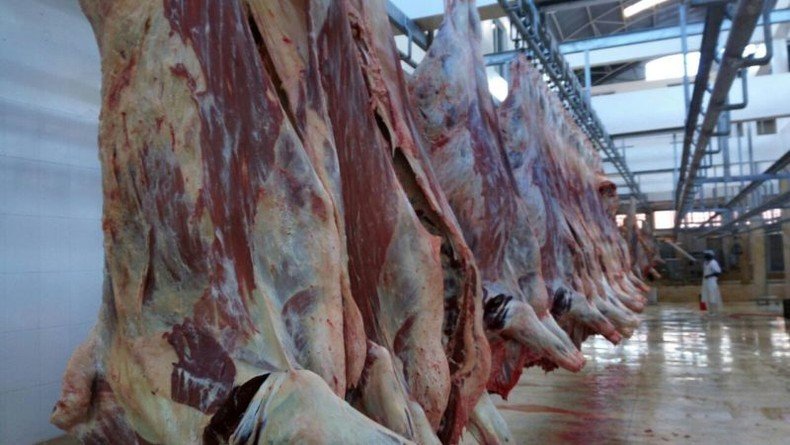
Experts have cautioned that other sectors across the continent may also experience repercussions, a projection precisely mirrored by Kenya’s meat market.
A recent report indicates that Kenya’s meat export to the Middle East has declined to below five percent of its typical level.
This reduction is particularly noteworthy as this export generally peaks during the Ramadan period, a decline attributed to increased air freight costs.
Dennis Muraya, director of Konza Clearing Agency, emphasized that a reduction in regional flights has compelled exporters to depend on expensive cargo charters to the UAE.
“We usually pay $1 to $1.50 per kilo,” Muraya said. “But at the current moment, we’re even paying up to $3 to $3.50 per kilo.”
Nicholas Ngahu, chief executive of the Kenya Meat and Livestock Exporters Industry Council, noted that the United Arab Emirates (UAE) typically constitutes 40% to 60% of shipments, positioning the Middle East as Kenya’s principal market for meat exports.
However, this market has received limited supplies of beef, lamb, mutton, and goat.
Other Middle Eastern markets that have experienced disruptions include Oman, Kuwait, Bahrain, and Jordan.
“We are doing below 15% of our normal exports, and now that it’s Ramadan, we are doing less than 5% of what we are supposed to be doing,” the CEO stated.
As seen on Reuters, Kenya’s meat market is responsible for $2.3 million worth of meat headed to the Middle East each week.
The market, according to Ngahu, typically ships around 200 metric tons of beef daily during the holy month, but current shipments range only from 5 to 15 tons.
Shipments since Sunday, March 8, were projected to reach one million kilograms, Ngahu stated. “We have not done even 50,000.”
Muraya reported that Konza incurred a $5,000 charge for handling, storage, and cold-room fees when a shipment of approximately 20 tons, destined for Sharjah, was forced to return on February 28 due to an airspace closure.


