

Partner Content
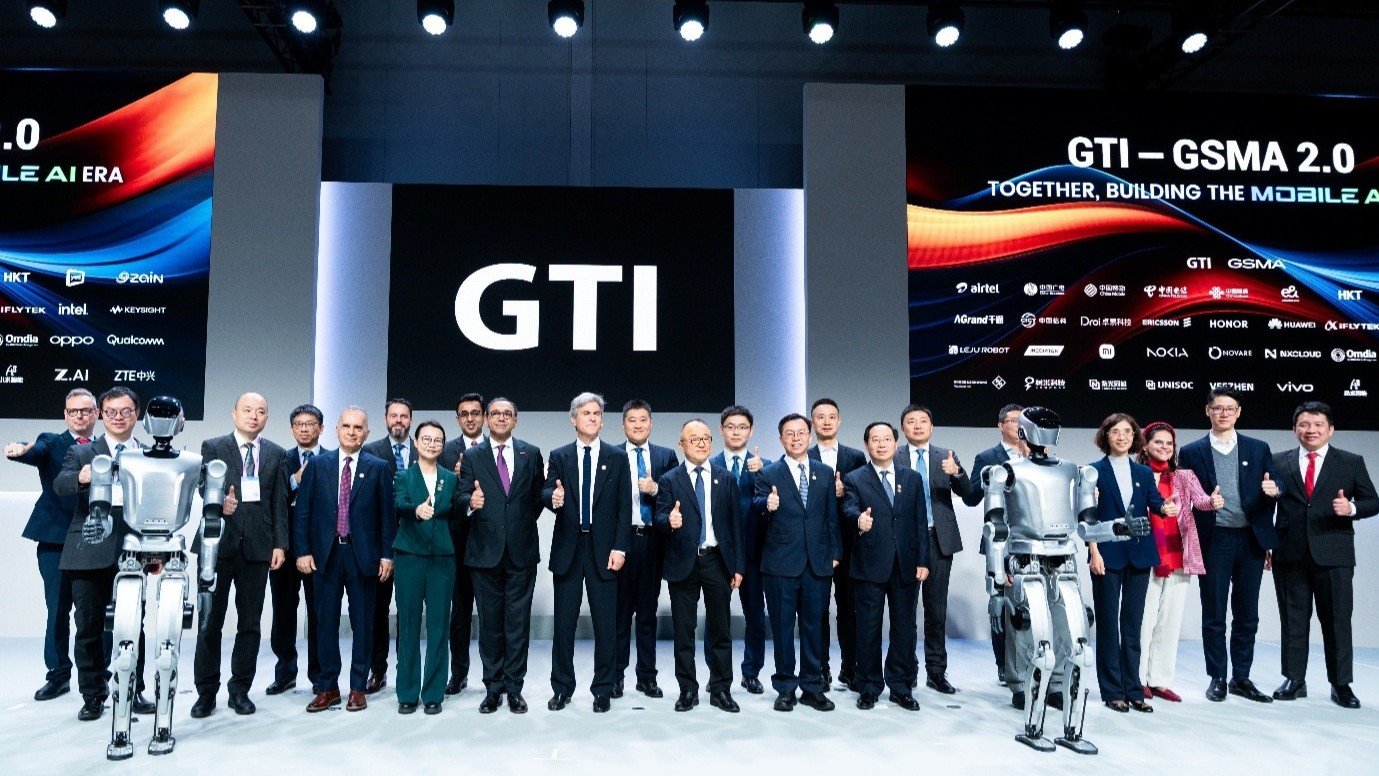
The Agentverse is no longer a distant concept, but the trajectory of our society. We are moving toward a future where intelligent agents are as pervasive as electricity or water. Embedded across individuals, organisations and homes – and, act as the core engine of a new productivity. The explosion in mobile AI usage is accelerating the arrival of Agentverse. This very synergy—where intelligence meets network—took centre stage at the GTI Summit during Mobile World Congress Barcelona, held recently under the theme “Hello Mobile AI.” The event, which brought together operators, vendors, and ecosystem partners from across the globe, also marked the launch of the joint GSMA-GTI 2.0 cooperation and the Mobile AI White Paper.
Agents Are Already Reshaping Demand
The scale of what is coming is already evident. AI-related mobile traffic is projected to grow at a Compound Annual Growth Rate (CAGR) of 73% between 2025 and 2033, with the crossover point, where AI traffic surpasses conventional traffic, arriving as early as 2031. Edge-bound AI traffic is growing even faster, at a projected CAGR of 130% over the same period, as lightweight models and agent-driven applications push intelligence out of the cloud and closer to users.
On the consumer side, the shift is already visible. Approximately 75% of consumers globally now use generative AI applications in daily life, with smartphones emerging as the primary access point, with nearly half using mobile GenAI apps for search, while 14% are already conversing directly with mobile AI agents. The device ecosystem is expanding rapidly beyond smartphones, with AI phones, wearables, AI glasses, and humanoid robots all entering the picture. Shipments of general-purpose embodied intelligent robots are forecast to hit 2.6 million units by 2035, representing a CAGR of 85%.
On the enterprise side, the AI agent applications market is on an extraordinary growth trajectory, scaling from $159 million in 2024 to a projected $41.77 billion by 2030. More than 90% of enterprises across 32 countries surveyed by GSMA consider generative AI critically important to their digital transformation. The question is no longer whether AI agents will become ubiquitous — it is whether mobile networks will be ready when they do.
The Network’s New Role: From Pipe to Platform
For decades, mobile networks operated on a best-effort model, primarily for human-centric traffic—browsing, streaming, and messaging. However, Agentverse demands something fundamentally different: continuous, machine-to-machine interactions that are real-time, multimodal, and extremely latency-sensitive.
Agent services impose a new set of demands on mobile network, including large uplink bandwidth, ultra-low latency, high reliability and high-concurrency connections. The uplink requirement is particularly significant. Unlike traditional broadband, where traffic flows primarily downward to users, AI-driven services generate substantial upstream data, such as video streams, sensor inputs and model inference requests, that must reach the network without delay.
To address these requirements, the industry is accelerating the deployment of 5G-Advanced (5G-A) technologies. 5G-A represents the next stage in the evolution of 5G networks and is a crucial step to 6G. It comes with capabilities to enable extremely low latency and high uplink capacity, critical to support both AI-driven applications and intelligent network operations.
Technologies such as Uplink Carrier Aggregation (CA) and Supplemental Uplink (SUL) address the uplink bottleneck directly, bundling spectrum resources to deliver ultra-large bandwidth and low latency for intelligent devices operating in real time. Flexible slot allocation and multi-band coordination further enhance uplink capacity in high-demand scenarios. 5G-A commercialisation is accelerating globally, and the white paper is unambiguous: it is the foundational layer on which Mobile AI will be built.
Network for AI, AI for Network
The white paper introduces a framework that captures the bidirectional nature of this transformation: Network for AI and AI for Network. While Network for AI addresses the connectivity requirements of intelligent services, AI for Network focuses on embedding intelligence into network operations.
Agent services require networks that can identify and differentiate multimodal traffic types, be it audio, video or sensor data, and apply the right quality-of-service treatment to each. For instance, a remote surgery application and a background data sync have fundamentally different requirements and the network must understand the difference and respond accordingly. This demands modal-level service awareness, cross-layer collaboration between devices, edge, network, and cloud, and a shift from the traditional one-size-fits-all connectivity model to what the white paper calls “scenario-customised connectivity.”
On the other hand, AI for Network applies AI deeply into the network itself to drive network planning, operations, optimisation, and ultimately autonomy. The goal is a network capable of closed-loop “Perception–Cognition–Decision–Execution” across its entire chain, which can predict failures before they occur, dynamically allocate resources in real time, and self-optimise without human intervention.
Two technologies are particularly relevant here. The Wireless Network Agent enables autonomous closed-loop operations within the radio access domain, using real-time analysis and inference to support network self-management. The A2A-T protocol — Agent-to-Agent for Telecommunications — is being standardised to build a unified, cross-domain, cross-vendor framework that enables networks to parse natural language business intents into network-wide collaborative tasks, moving toward genuinely intent-driven network management.
Spectrum: The U6GHz Imperative
From a spectrum perspective, as service providers prepare the networks for the booming AI traffic, the U6GHz (6425-7125 MHz) band has emerged as a critical resource for 5G-A. It offers a combination of wide, contiguous channels and the capacity to support high uplink and downlink bandwidth that Mobile AI services demand. Following WRC‑23, U6GHz has been formally recognized as a key mobile communications band. Around the world, momentum is building: China, the UAE, Brazil, and several European countries are actively promoting spectrum identification, allocation, and testing. Today, 5G-A already offers full support for U6GHz, with mainstream terminal chipsets and the broader industry chain now mature—paving the way for large-scale commercial deployment. Along with U6GHz band, millimetre wave (mmWave) bands can serve high-density hotspot environments where ultra-large capacity and ultra-low latency are required for immersive and real-time applications. AI-driven dynamic spectrum management, enabling intelligent aggregation and flexible scheduling across bands, will be essential to maximise efficiency as AI terminal density increases.
AI-MOS: Measuring What Actually Matters
As Mobile AI matures, the industry faces a challenge that goes beyond building the right infrastructure: how do you measure whether it is actually working? Traditional network KPIs [Key Performance Indicators], including throughput, latency and coverage, are not adequate for assessing the quality of a multimodal AI interaction.
To address this, the industry is developing AI Mean Opinion Score (AI-MOS), built on the foundation of ITU-T Recommendation Q.4072. It is an evaluation framework designed to establish quantifiable, objective standards for multimodal interactive experience across the full value chain.
The Road to the Agentverse
While Mobile AI imposes new requirements on the network, it also offers incredible revenue opportunities, from enterprise AI services to new digital ecosystems built around intelligent agents. The operators who move earliest to upgrade network infrastructure and build AI-centric networks, establish ecosystem partnerships and develop new service models will be best positioned to capture that value. Those who treat Mobile AI as a future concern risk finding themselves relegated to the role of dumb pipe in a world where the network is supposed to be the intelligence layer.


