

Nigeria expands air power
Nigeria emerged as the largest arms importer in sub-Saharan Africa, accounting for 16% of the region’s imports, according to the Stockholm International Peace Research Institute.
The country has increased defence procurement as it confronts insurgency, banditry and maritime security threats.
About six months ago, the United States Department of State approved a $346 million arms sale to Nigeria, including precision-guided bombs and rockets, with contracts involving Lockheed Martin, RTX and BAE Systems.
The Nigerian military has also deployed Bayraktar TB2 drones from Türkiye in counter-insurgency operations.


Senegal strengthens defence capabilities
Senegal ranked as the second-largest arms importer in sub-Saharan Africa, accounting for 8.8% of regional imports.
The country has increased defence spending to modernise its armed forces and address instability across the Sahel.
Recent acquisitions include Puma M36 armoured personnel carriers from South Africa and three offshore patrol vessels; Walo, Niani and Cayor, to strengthen maritime security and protect offshore energy infrastructure.
In 2025, according to Africa Intelligence, Dakar approved a €317 million defence agreement with a Turkish supplier to improve operational readiness.
Senegal has also opened its first military vehicle assembly plant in Diamniadio, part of efforts to build a domestic defence industry.
Mali diversifies military suppliers
Mali ranked as the third-largest arms importer in sub-Saharan Africa, accounting for about 8% of the region’s imports, according to the Stockholm International Peace Research Institute.
According to defence reports, Mali has strengthened defence ties with Russia, receiving Sukhoi Su-25 ground-attack jets, L-39 trainer aircraft, Mi-35M attack helicopters and Mi-8 transport helicopters.
Russia has also supplied T-72 tanks, infantry fighting vehicles and other armoured systems, with reports indicating that a convoy of more than 100 military vehicles arrived in Bamako in early 2025.
At the same time, Mali has expanded cooperation with China, receiving mine-resistant armoured vehicles and other ground equipment from Chinese defence manufacturer Norinco.
The country has also strengthened its aerial capabilities through Bayraktar TB2 drones from Türkiye, while defence reports indicate Mali has reportedly acquired Akinci long-range combat drones to improve surveillance and strike operations.
Conflicts reshape arms demand
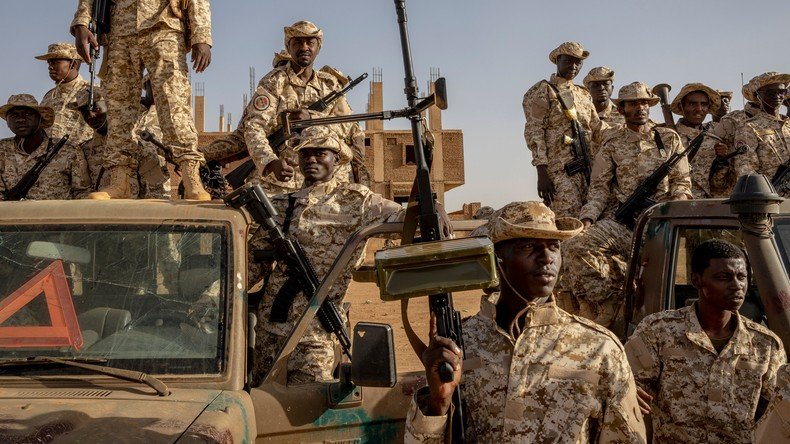
Several conflicts have influenced arms flows into Africa, including the civil war in Sudan, which erupted in 2023 between the Sudanese Armed Forces and the Rapid Support Forces.
During the 2021–2025 period, the RSF reportedly received artillery systems and at least one air-defence system from unidentified suppliers.
At the same time, Sudan’s armed forces received drones, armoured vehicles and transport aircraft from several countries, including Belarus, Iran, Kyrgyzstan, Türkiye and the United Arab Emirates, along with a combat aircraft from an unidentified supplier.
SIPRI notes that tracking arms transfers to active conflict zones is often difficult because many military deals remain secret.
China leads suppliers to sub-Saharan Africa
The data also highlights growing competition among global powers seeking defence partnerships across Africa.
SIPRI data shows that China has become the largest arms supplier to sub-Saharan Africa, accounting for 22% of the region’s imports.
Russia follows with 12%, while Türkiye accounts for 11%.



