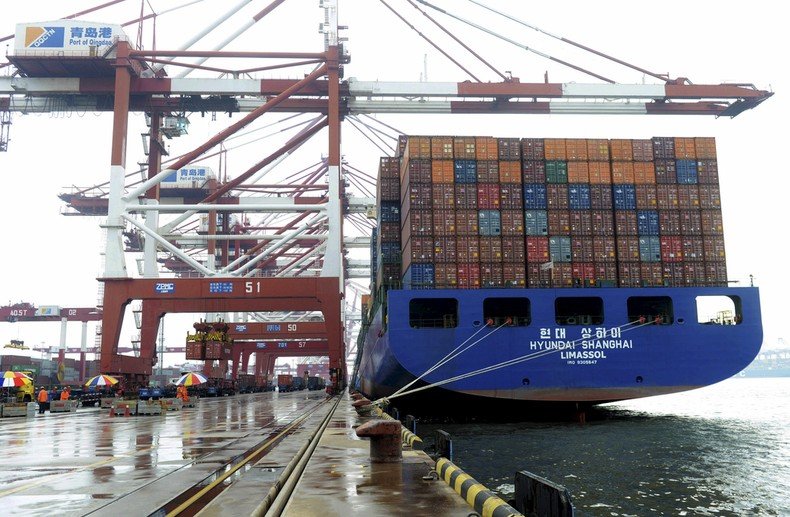
The Eastleigh Voice reports that Trade Cabinet Secretary Lee Kinyanjui warned during an event in Nairobi that the delays could begin to affect the availability and cost of goods in the near term if the situation persists
“The situation points towards supply constraints in the coming two to three weeks, which eventually will have an impact on prices,” he said.
The measures are already increasing freight costs and complicating delivery schedules, with knock-on effects for import-dependent nations like Kenya.

Global supply chains under pressure
Major international shipping lines have responded with steep surcharges. French shipping giant CMA CGM has imposed an Emergency Conflict Surcharge of $2,000 for a 20-foot container, $3,000 for a 40-foot container, and $4,000 for refrigerated or special containers.
Similarly, German carrier Hapag-Lloyd introduced a War Risk Surcharge of $1,500 per standard container and $3,500 for refrigerated or special equipment, citing the volatile security situation around the Strait of Hormuz.
In a recent interview, David Bird, CEO of the Dangote Refinery, said freight costs have jumped sharply, with tanker shipping rates rising from about $800,000 to around $3.5 million per shipment amid the current Middle East tensions.
The increment and surcharges are expected to drive up the cost of fuel, fertilisers, industrial chemicals, and other essential imports from the Middle East, directly affecting Kenyan businesses and consumers.
Analysts warn that prolonged delays could also strain agricultural supply chains, raising food prices and limiting access to key inputs for farmers.
Kenya’s dependence on the Middle East for energy and industrial goods highlights its vulnerability to geopolitical shocks. “Higher freight and insurance premiums will inevitably translate into increased consumer prices,” CS Kinyanjui added.
As the crisis continues, both shipping companies and import-dependent economies are bracing for weeks of disruptions that threaten to amplify costs across sectors from fuel to agriculture, underlining the fragile interconnectivity of global supply chains.