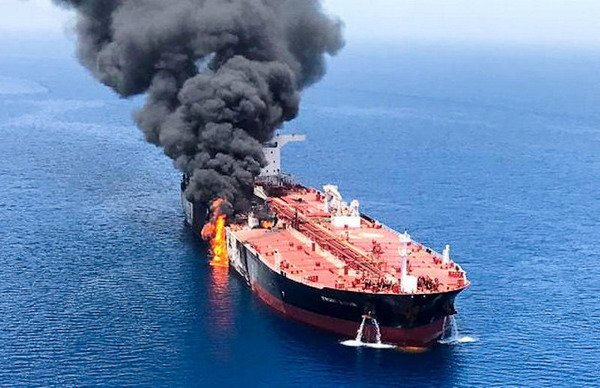

The ongoing war between the United States (US), Israel and Iran in the Middle East has continued into its second week, raising the economic threat this conflict poses to South Africa. Iran has responded to the 28 February US/Israel attack by targeting oil-producing states in the Persian Gulf that are allied with the US and host American forces. These include Saudi Arabia, the United Arab Emirates (UAE), Bahrain, Kuwait, and Oman, which have all been subject to attacks on their oil infrastructure. Iran’s response has effectively shut down the Strait of Hormuz, suspending the majority of Gulf oil exports. The continued disruption to oil production and refining in the Gulf is set to deliver a sharp shock to South Africa’s economy and potentially threatens a fuel cliff, leading to severe fuel shortages in the economy.
South Africa is heavily dependent on fuel imports; the country imports approximately 90% of its crude oil and petroleum products. Fortunately, Nigeria is the country’s largest source of crude oil, contributing 47% of crude oil imports; Saudi Arabia is the second largest provider, accounting for 17% if imports. However, the majority of South Africa’s refined petroleum products are imported from Persian Gulf countries, which are experiencing conflict-related disruptions. Oman, the UAE, and Bahrain provide 34%, 12%, and 11% of South Africa’s diesel imports for a combined 57%; notably, diesel makes up around 66% of total fuel imports. The UAE and Saudi Arabia provide 46% of South Africa’s petrol imports (35% and 11% respectively), while around 93% of jet fuel imports come from Gulf countries, most notably the UAE (47%) and Saudi Arabia (24%).
The current conflict has disrupted shipments to South Africa as tankers are unable to safely leave the Strait of Hormuz, and oil wells and refineries have been shut down in several Gulf States after being targeted by missile and drone strikes. At present, Saudi Arabia is still able to export via its southern coast on the Red Sea, but this is potentially short-lived as the Iranian-affiliated Houthi Movement militant group in Yemen are still expected to enter the war. The Houthi Movement has the proven capacity to disrupt shipping in the Red Sea, especially the Bab-el-Mandeb strait that connects the Red Sea and the Gulf of Aden (through which any exports to South Africa will travel).
South Africa is ill-prepared to weather a sustained disruption to its oil and petroleum supplies. The country’s Strategic Fuel Fund (SFF), which manages the state’s strategic oil reserves, only maintains around 21 days’ worth of oil. Furthermore, this is primarily crude oil that still needs to be refined. South Africa’s refining capabilities have nearly halved in recent years due to three of the country’s six refineries either closing or suspending operations. As such, South Africa is unable to refine sufficient quantities of petroleum products to meet its demand. This is particularly unfortunate as crude oil imports from Nigeria remain unaffected.
A sharp economic shock in the coming weeks is unavoidable. The price of Brent crude oil has spiked from around US$87.44 on 26 February to US$108.18 on 9 March. Prices have moderated on reports that major global economies are considering releasing their substantial strategic reserves onto the global market. However, this is a short-term solution, and the possibility of oil prices exceeding US$150 cannot be discounted. Even at the current price levels, South Africa is set to experience a surge in inflation related to the oil price that will last several weeks, if not months. This will undermine consumer spending and economic growth and could even stall the country’s economic recovery and lead to an economic recession or stagflation.
However, that is arguably the best-case scenario. In the worst-case scenario, the continued deterioration of the situation in the Persian Gulf could lead to a fuel supply cliff. The lack of sufficient refining capacity, combined with the suspended imports from the Gulf and South Africa’s limited strategic reserves, could result in fuel shortages in the economy. Such shortages will be exacerbated by panic buying as consumers seek to store up reserves in preparation for expected shortfalls.
Diesel shortages are particularly possible given South Africa’s dependence on diesel from Oman, the UAE, and Bahrain. This is a critical economic threat given that the country’s economy runs on diesel. In addition to the reliance on diesel by major industries such as mining and manufacturing, South Africa’s logistics sector is primarily dependent on road freight. Furthermore, the state-owned power utility Eskom is still procuring electricity from two diesel-powered open-cycle gas turbine (OCGT). Consequently, any diesel shortages will increase the threat of the reintroduction of loadshedding.
Such a catastrophic economic situation will likely be avoided due to the planned intervention by major economies in the short term. This should allow time for the realignment of global supply chains; South Africa will likely seek to increase its diesel and petroleum imports from India and scale up domestic synthetic fuel production. However, this will still result in a steep and prolonged increase in fuel costs in the country, which will present an existential threat to numerous economic sectors, including the mining, aviation, and logistics industries. The current threat of a catastrophic fuel supply shortfall has further underscored the governance failures that allowed the country’s domestic refinery capabilities to decline. The failure to address this will leave South Africa vulnerable to future such shocks, especially given the rising geopolitical instability.
Written by Executive Research Associates and republished with permission. The original article can be found here.