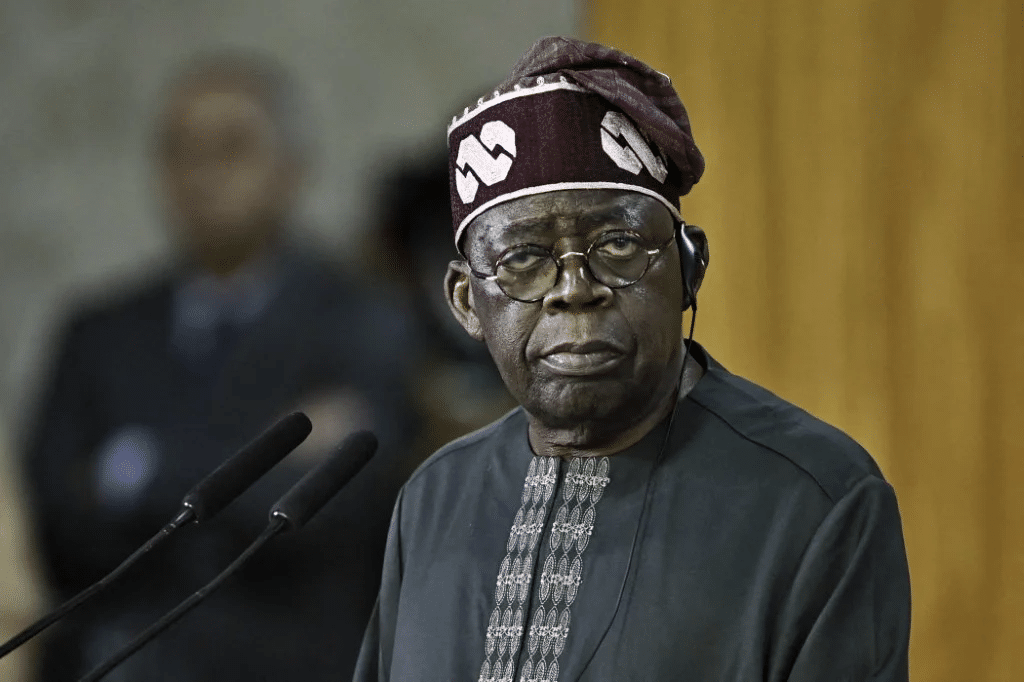
If there is ever any memorable event that stands out so far in the presidency of Nigeria’s Bola Ahmed Tinubu, none rivals the abrupt removal of petrol subsidy during his inaugural speech as president.
Speaking with bold assertion to a bewildered audience on May 29, 2023, Tinubu declared “subsidy is gone.” With that statement, Nigeria’s fifth democratically elected leader ended a four-decade practice of government control over the price of petrol at the pump.
Since then, prices have gone both up and down, sometimes in dramatic fashion that makes consumers wonder whether a long period of sustained fuel price stability would ever again be the norm.
For Tinubu, the policy remains one of his signature reforms aimed at ending the illegal diversion of petroleum products to neighbouring countries, as well as the endemic corruption that beleaguered the subsidy regime.
But with the absence of price control, the government now faces the delicate implications of an uncontrollable upswing in product prices driven by global oil shocks.
Oil price surge on Middle East crisis
In the past few days, the price of crude oil has risen drastically, climbing from about $72 per barrel to over $90 last Friday.
Brent crude, the international benchmark, neared an intraday trade of $98 per barrel before normalising to around $94 by the close of the market.
The rising prices are driven primarily by the ongoing conflict in the Middle East involving Iran, Israel and the United States.
Iran, a major player in the global oil industry, has cut significant supply of its crude to the global market as key oil infrastructure in Tehran and elsewhere come under attack.
Apart from the disruption to Iran’s supply, the conflict has also destabilised the wider oil-rich Gulf region, with missiles from Iran directed at neighbouring countries including Bahrain, Kuwait, Qatar, Saudi Arabia and Iraq.
For instance, Iraq’s crude production dropped on Sunday from about 4.3 million bdp to less than 2 million bdp, according to those familiar with the matter.
However, the chief effect of the crisis, however, is the shutdown of the Strait of Hormuz, a narrow shipping route in the Persian Gulf responsible for the movement of about 20 million barrels of crude oil daily, roughly 20% of global crude supply.
The closure of the route means cargoes and ships must find alternative routes to ensure supply continues. None of these alternatives come without significant cost, all of which are now reflected in the price of crude oil.
Impact on Nigeria’s petrol prices
For an import dependent country like Nigeria, the rise in crude prices means only one thing: additional costs for petrol at the pump.
Even the privately owned Dangote Refinery is not immune to global price shocks, as about two thirds of its feedstock comes from the United States.
The refinery raised its ex gantry price by over ₦200 ($0.13) to ₦995 per litre ($0.65) earlier on Friday.
Petrol importers have done something similar, raising their pump prices to over ₦1,000 per litre ($0.66).
According to reports, the price of petrol rose by over 43% across different states in Nigeria in the last few days.
With the absence of subsidy, Nigerians now have little buffer to cushion the adverse effects of rising global energy costs.
The grim reality of the downside of the policy is becoming visible as consumers and commuters grapple with the rising cost of the commodity.
On Sunday, there were reports that the refinery held back the sale of petroleum products to marketers as it waited to see where prices would settle once the market opened on Monday.
The other side of subsidy-free Nigeria
None of these indicators are good for a subsidy-free country like Nigeria. There are already speculations that fuel queues may return without some form of government intervention.
What that intervention would look like remains unclear.
Following the passage of the Petroleum Industry Act in 2021, Nigeria’s key oil law, the government has scaled back its involvement in the downstream sector.
Even the state owned oil company, NNPC Limited, now operates as a commercial entity, making it difficult for it to subsidise products without running losses.
Nigeria currently operates a naira-for-crude programme targeted at the Dangote refinery.
The initiative allows the government to supply state owned crude oil to the refinery at local currency prices.
While the policy is expected to reduce the refinery’s exposure to foreign exchange shocks, limited crude supply from NNPC Limited has made it difficult for the programme to have any meaningful effect.
Energy economist and partner at SBM Intelligence, Cheta Nwanze, said Nigeria’s dependence on imported refined products continues to expose the country to global shocks.
According to him, until domestic refining reaches sufficient scale, global oil price volatility will continue to influence petrol prices in Nigeria.
Should fuel subsidy return?
Politically, the bigger question is whether the current spike in oil prices will prompt the government to introduce an ad hoc subsidy to mitigate high energy costs.
Capital market analyst Olumide Adeshina, for instance, said in a statement that the rise in prices may present a temporary justification for a return to intervention.
According to Adeshina, if oil prices rise above $150 per barrel, Nigeria may struggle to bear the consequences on petrol pump prices.
“I am not a supporter of petrol subsidy but what happens when petrol hits ₦1,200 per litre ($0.79)? You have to make contingency plans and protect the Nigerian populace,” Adeshina wrote.
As of Monday, oil prices climbed above $100 per barrel as the Middle East escalation dragged on. This is the highest level since 2022.
For Nigeria, the possibility of petrol hitting ₦1,200 per litre ($0.79) is no longer a distant thought but an increasingly realistic scenario.
High energy costs also carry significant political consequences.
The issue of subsidy or no subsidy has long been politically contentious in Nigeria and remains so today.
Rising petrol prices are therefore likely to become a major talking point for the opposition, especially as the next election cycle begins to approach.
The World Bank has previously praised the Tinubu administration for taking the bold decision to remove petrol subsidy.
The question now is whether, as political pressure mounts, the president will remain committed to allowing market forces determine fuel prices or reconsider his decision amid surging global oil prices.