Indigenous ownership in major mining and other resource projects could help accelerate permitting timelines in Canada while improving economic outcomes for First Nations, according to a national group.
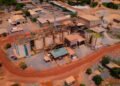
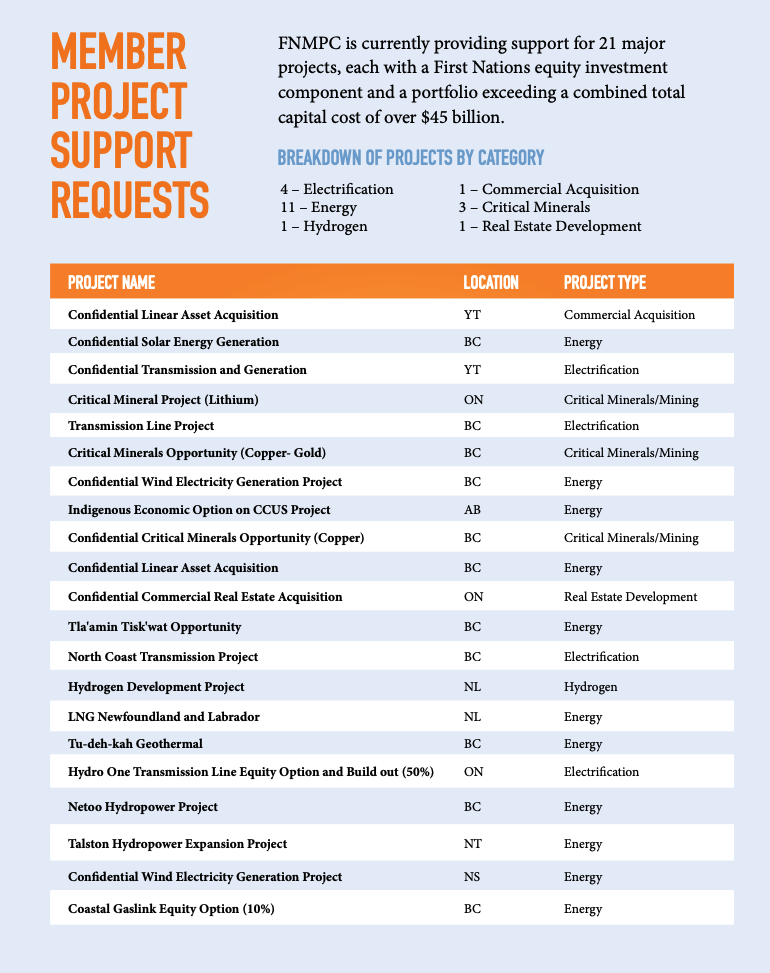
The First Nations Major Projects Coalition, a non-profit group that represents 186 First Nations across the country, says it’s advising on equity participation in 21 major projects that are valued at about $45 billion and range from energy and electrification to critical minerals and real estate.

“If you bring a First Nation in as a partner, they bring capital and they bring rights that will have to be addressed anyway,” coalition CEO Mark Podlasly said in an interview this month with The Northern Miner Group. “It’s not nations asking for grants anymore,” Podlasly said. “Nations want to co-invest.”
For decades, Indigenous participation in major projects largely focused on consultation and impact-benefit agreements. But the coalition says the landscape is shifting towards direct equity ownership that can give communities a long-term revenue stream while aligning their interests with project developers. It’s an important ingredient as Ottawa scrambles to shorten timelines for major developments in mining and energy to meet goals of domestic metals output.
Lead the G20
As global demand for critical minerals grows and governments move to secure in-country supply chains, Canada has increasingly focused on accelerating project approvals. Canada will lead the Group of 20 nations with the fastest permits — less than two years– federal Energy and Natural Resources Minister Tim Hodgson vowed in a March 3 interview at the Prospectors and Developers Association of Canada annual convention in Toronto.
The government’s Major Projects Office, formed last year, is advancing five projects by removing federal/provincial approvals duplication. They range from Newmont’s (NYSE: NEM; TSX: NGT) Red Chris copper and gold mine expansion in British Columbia to Northcliff Resources’ (TSX: NCF; US-OTC: NCFFF) tungsten proposal in New Brunswick.
The coalition says Indigenous participation could be key to quickening permits.
“If you have an Indigenous partner with an economic stake who wants the project to succeed, are they going to oppose it?” Podlasly said. “Probably not.” In that sense, equity partnerships can help reduce regulatory delays, Podlasly pointed out. “Indigenous ownership can actually shorten permitting timelines,” he said.
But the coalition also cautions that projects imposed without Indigenous participation could still face strong opposition.
“If projects are dropped in the way they were done in the past, Nations will fight,” he said.
Instead, the coalition advocates what it calls “smart projects” — developments that incorporate Indigenous environmental values, economic participation and community consent.
“As long as Indigenous environmental and economic interests are built into the project — and the nation wants it — we support it,” Podlasly said.
Coalition origins
The conversation around Indigenous participation in major projects has evolved significantly over the past decade.
Founded 11 years ago in B.C., the coalition emerged after a group of First Nations missed out on a major investment opportunity tied to a $5-billion natural gas pipeline project. Eleven Nations had negotiated a 30% equity stake, but when they approached banks for financing they were treated as high-risk borrowers.
“First Nations went to the bank to finance their equity and discovered they had no collateral,” Podlasly said. “They were offered credit-card level interest rates — 30% or 35%.”
Unable to secure affordable financing, the Nations lost the investment opportunity — an inflection point that led to the creation of the coalition to help Indigenous communities overcome structural barriers to capital and commercial participation in resource projects.
Today the coalition provides technical support to its members project economics and commodity markets, environmental assessments and regulatory processes. The organization employs about 35 staff across Canada, roughly 70% of whom are Indigenous, including economists, lawyers and finance specialists.
“You can’t make an informed decision unless you have the information,” Podlasly said. “That’s what we do — technical, regulatory and financial.”
Podlasly is of the Nlaka’pamux Nation, whose traditional territory is in the southern interior of British Columbia and extends into the state of Washington. The Nation is actively involved in protecting Nlaka’pamux traditional cultural properties related to the Seattle City Light Hydro Project.
“We’re a capacity service group. We help Nations get to the table.”
From consultation to ownership
The Coalition has advised on or supported several projects that include Indigenous ownership.
In Ontario, First Nations have secured about 50% equity stakes in electricity transmission projects. In B.C., multiple coalition members collectively hold a 10% stake in the Coastal GasLink, a 670-km natural gas pipeline connecting Dawson Creek to the LNG Canada facility in Kitimat.
Other initiatives include the North Coast transmission line project in northern B.C., where First Nations are expected to hold roughly 50% equity, and a 100% Indigenous-owned geothermal project in Fort Nelson, Podlasly said.
The coalition has also begun advising on mining projects, including an early-stage lithium development in northern Ontario. Some projects listed on the coalition’s website remain confidential while negotiations are ongoing.
Partnership and permitting
“It’s not just an Indigenous issue anymore,” Podlasly said. “It’s about national economic competitiveness.”
With Canada seeking to develop critical minerals and energy infrastructure in an increasingly uncertain geopolitical environment, collaboration between Indigenous communities, governments and industry will be essential, the coalition says.
Rather than being seen solely as stakeholders or rights holders, Podlasly said First Nations can become partners in projects that take place on their territories.
“Indigenous people are Canadians. We’re going to sink or swim together.”
The 9th annual First Nations Major Projects Coalition Conference will take place April 29 to May 1 at the Sheraton Centre Toronto. Information is here.