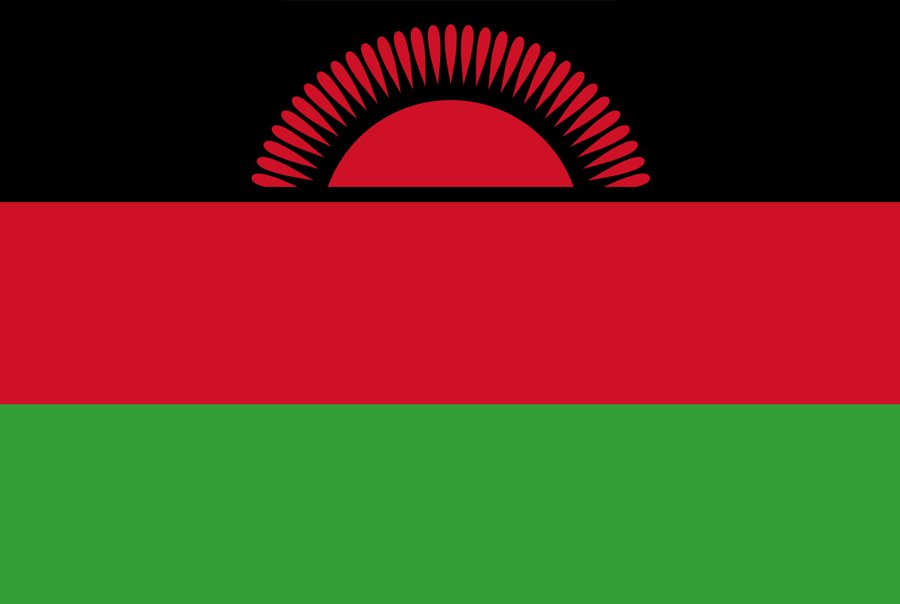

The Malawian Defence Force (MDF) is modest in terms of size and capability; it is constitutionally mandated to uphold Malawi’s sovereignty and territorial integrity. The MDF has also been tasked with supporting the country’s economic development through infrastructure and engineering projects. Additionally, like other regional militaries, the MDF is tasked with supporting civil authorities in cases of natural disasters or civil unrest, with recent tasks including the management and suppression of illegal deforestation. Unlike many other post-colonial militaries in the region, the MDF has remained largely apolitical since Malawi gained its independence in 1964, never having committed a coup d’état. Notably, during the 2012 political crisis, the military publicly intervened to support the proper and constitutional transfer of power to the country’s Vice-President following the then President’s untimely death.
While the MDF is generally considered to be a professional, disciplined, and effective force, its operational effectiveness is constrained by consistently low levels of defence spending and extremely low levels of equipment serviceability. While there has been a marked increase in domestic defence spending over the past decade, this has led only to a modest increase in capabilities. Efforts to modernise the MDF have also been significantly hampered in recent years by the onset of one of the deepest financial crises to hit the nation since independence. Despite its resource constraints, the MDF has regularly participated in UN, AU, and SADC peace operations, providing support and humanitarian assistance in operations across Africa and the wider world.
The Army is by far the MDF’s largest service branch; it is primarily organised around several light infantry brigades, with access to only a limited number of light armoured vehicles. Though the country has acquired several new armoured personnel carriers in the 2010s (including Marauder APCs from South Africa), much of the inventory is either obsolete or non-operational. Government reports have described the MDF as lacking “some critical equipment” and having significant infrastructure shortfalls. In recent years, the Army has been operational in a range of theatres, most notably as part of SADC (SAMIDRC) and UN (MONUSCO) peace operations in the Democratic Republic of the Congo.
The Malawi Air Force (formerly the Army Air Wing) is small, with extremely limited flight capacity. Much of its fleet has been retired or is inoperable. Presently, it has no combat aircraft and can only call upon a handful of light transport and utility helicopters, two Dornier 228 utility aircraft, and two more recently received Chinese MA600 aircraft (which have significantly improved the force’s overall mobility).
While Malawi is a landlocked nation, the country does maintain a naval element to patrol its waterways, including Lake Malawi (the ninth-largest lake by area). Although the fleet has historically been neglected, efforts have been made to modernise and expand its capabilities. For example, in 2019 Malawi commissioned two new medium-sized patrol vessels alongside four smaller fast interceptors, all from China. The Navy’s primary duties include patrolling the maritime border, as well as conducting anti-poaching and anti-human trafficking operations.
In sum, the Malawian Defence Force is a small, underfunded yet professional force. It lacks any real capability to sustain large-scale deployments beyond its own borders.