In the middle of South Africa’s escalating foot-and-mouth disease (FMD) crisis, a consignment of 1,5 million urgently needed vaccine doses had already been in the country. However, the vaccines are not yet in the system meant to get them to farmers, exposing a gap between government assurances and the operational reality of the national vaccination roll-out.


– ADVERTISEMENT –
Documents, statements and a detailed timeline reviewed by Farmer’s Weekly indicate that the vaccines had been in the country since 28 February, yet had not been delivered to Onderstepoort Biological Products (OBP) six days later while vaccination programmes were already under way in outbreak areas.
The stakes extend far beyond a single vaccine shipment. FMD is one of the most economically devastating livestock diseases in the world, capable of shutting down export markets, disrupting meat and dairy supply chains and inflicting billions of rand in losses on the agricultural economy.
With outbreaks already reported across all nine South African provinces, the speed at which vaccines move from international suppliers into the national vaccination programme has become critical for South Africa’s livestock industry and food security.
The timeline that raises questions
Farmer’s Weekly received information on 5 March that the 1,5 million doses of the Dollvet FMD vaccine imported from Turkey had arrived at OR Tambo International Airport six days earlier but had not yet been transferred to OBP, from where the national vaccine distribution is coordinated.
The delay might have been caused by a payment dispute between government bodies and the supplier. Dr David Gerber, CEO of Dunevax, the importer of the Dollvet vaccines, explains that he had a contractual agreement requiring payment upon the vaccines’ arrival in South Africa before delivery to OBP.
With communal herds and commercial farmers awaiting vaccination, the situation raised immediate concerns about whether administrative processes were delaying the national disease response.
Government statement contradicts timeline
On the morning of 6 March, Agriculture Minister John Steenhuisen’s office responded to questions from Farmer’s Weekly, stating that the department was already in possession of the vaccines and preparing them for distribution to provinces.
The statement included a detailed allocation plan:
• KwaZulu-Natal: 560 000 doses
• Gauteng: 213 000
• Free State: 195 000
• Eastern Cape: 152 000
• Western Cape: 100 000
• Mpumalanga: 95 000
• North West: 50 000
• Northern Cape: 35 000
• Limpopo: 25 000
A further 75 000 doses were to be reserved for emergency vaccination needs, according to the minister’s office.
However, at the time the department’s response was sent, the vaccines had not yet reached OBP. The vaccines were only transported to Onderstepoort later that morning.
Delivery finally confirmed
At around 10.30am on 6 March, Dunevax posted on social media that the first 1,5 million Dollvet vaccine doses were on their way to OBP.
By the afternoon, the company confirmed the consignment’s successful delivery and handover to the state vaccine facility. Gerber clarified in a video that the vaccines had been delivered before payment.
This was due to government procurement rules preventing advance payment as per a previous arrangement.
Dunevax decided to proceed with delivery after receiving assurances from Steenhuisen, Mooketsi Ramasodi, director-general of the Department of Agriculture, and Dr Jacob Modumo, CEO of OBP.
These assurances included a promise of payment once the vaccines were received and verified.
A structural bottleneck
The episode exposes the fragile architecture of South Africa’s FMD vaccine supply chain.
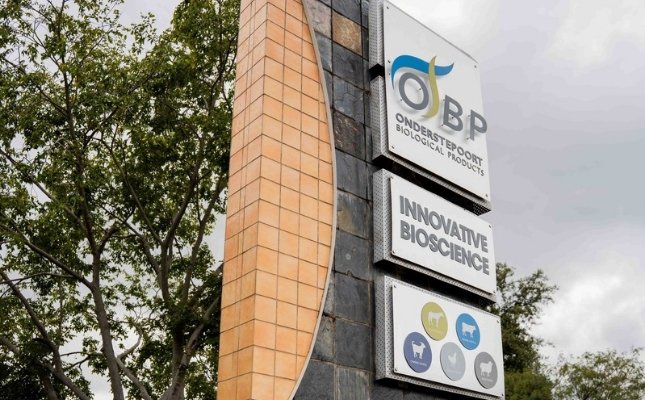
All imported vaccines must pass through OBP as importer of record, financial intermediary and distribution hub, effectively making it a single clearing point for both logistics and payments.
Supply chains structured around a single financial node are inherently vulnerable: if payments stall, the entire pipeline can slow or stop.
Industry stakeholders have warned that unpaid suppliers can quickly halt future shipments, creating further risks for the national vaccination campaign.
Vaccination capacity exists — vaccines remain the constraint
The delay is particularly significant because South Africa has already demonstrated the capacity to vaccinate animals at scale.
In KwaZulu-Natal alone, 34 private veterinarians vaccinated roughly 90 000 animals in two days, showing that the country’s veterinary sector has the manpower and infrastructure required for rapid vaccination.
The main constraint is not the vaccinators, but the vaccine flow through the distribution system.
Every dose must pass through a multi-step process before reaching an animal:
1. Import into South Africa
2. Transfer to OBP
3. Allocation to provinces
4. Storage at provincial depots
5. Provincial release approval
6. Collection by veterinarians
7. Vaccination in the field
Each step introduces potential delays.
Bigger questions for the FMD campaign
The controversy also arrives at a sensitive moment in the government’s FMD strategy. Steenhuisen has previously outlined plans to secure more than 13 million vaccine doses in the near term as part of a broader national vaccination campaign aimed at protecting the national cattle herd.
With FMD outbreaks reported across all nine provinces, speed has become the most critical variable. Even short delays in moving vaccines through the system allow the virus to establish new transmission chains.
Questions that remain unanswered
Despite repeated enquiries, Ramasodi and Modumo had not responded to several questions at the time of publication.
These questions include:
• Whether a contractual payment agreement existed for the Dollvet shipment;
• Whether payment has been made to the supplier;
• Why vaccines already in the country were not delivered immediately to OBP;
• What steps government is taking to prevent similar delays in future consignments.
For farmers facing the spread of FMD, these questions are not administrative details; they determine how quickly vaccines move from cargo holds to cattle.
South Africa now has vaccines in the country, veterinarians ready to administer them and a national campaign to stop the spread of FMD.
What the events surrounding this shipment raise is a far more uncomfortable question: whether the real bottleneck in South Africa’s FMD response is no longer vaccine supply, but the system responsible for getting those vaccines from cargo holds into cattle before the virus moves again.