

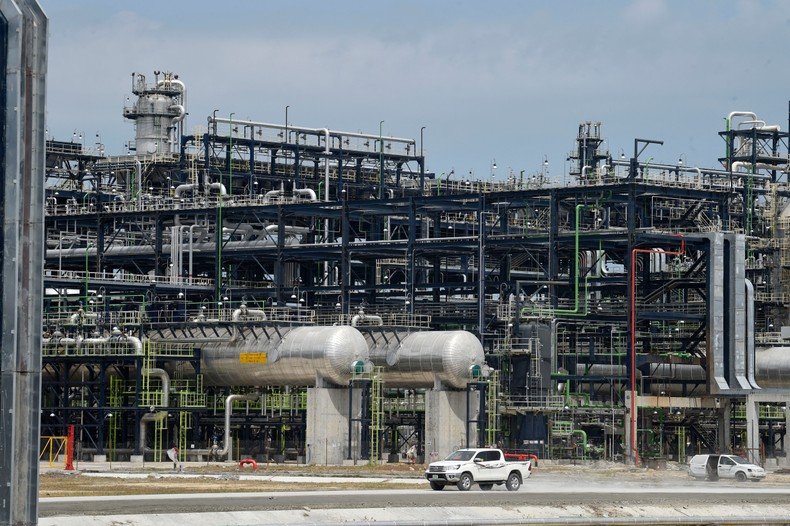
At the centre of the plan is the East–West Offshore Gas Gathering System (EWOGGS), a subsea pipeline project expected to stretch roughly 1,100 kilometres from Rivers State to Lagos, according to industry data.
The system will consist of two offshore pipelines of about 550 kilometres each, with a diameter of 38 inches, designed to operate independently so that gas supply can continue even if one line is disrupted.
Industry sources say the dual-pipeline structure is meant to prevent the complete shutdowns that have previously affected gas supply to industries in Lagos when a single pipeline fails.
“This project is one of the most critical gas infrastructures Nigeria urgently needs,” a source familiar with the development said.
“The idea is to create supply assurance so industries and energy producers can rely on steady gas flow.”
Unlike many existing pipelines that run on land and are vulnerable to disruptions, the new system will be built largely offshore, a design that industry players believe will reduce risks and give producers greater confidence that gas from their fields will reach the market.
Major oil companies operating in Nigeria, including Shell, Chevron and ExxonMobil, produce large volumes of natural gas in the Niger Delta but often face infrastructure bottlenecks that limit domestic utilisation.
The offshore pipeline network could transport gas for multiple uses including liquefied natural gas exports, electricity generation, petrochemical manufacturing, fertiliser production, compressed natural gas and cooking gas.
Industry sources say the network is also being designed as an open-access system, allowing different companies to connect at designated points and pay for the volume of gas they transport rather than leaving control in the hands of a single operator.
Construction of the project is already advancing.
Most of the pipeline materials have been ordered from manufacturers in China, according to people familiar with the project, and some shipments of pipes have already arrived in Nigeria.
Pipeline linked to export hub
The gas infrastructure is expected to support a wider industrial complex planned for the Olokola Free Trade Zone, a coastal industrial area located between Ogun State and Ondo State.
Contrary to the impression often created in public discussions, Olokola is not a small coastal settlement but a designated free trade zone established during the administration of former Nigerian president Olusegun Obasanjo to host large industrial projects and export infrastructure.
Dangote is planning to develop a major deep-sea port in the zone, which is expected to support exports from his growing industrial operations.
The port, located roughly 100 kilometres from the Dangote refinery and fertiliser complex in Lekki, could become one of Nigeria’s deepest seaports and is designed to handle cargo ranging from fertiliser and petrochemicals to liquefied natural gas.
The industrial zone is also expected to host manufacturing operations including steel, aluminium and petrochemical plants, creating a cluster of heavy industry linked to gas supply from the Niger Delta.
Engineering design work and environmental impact assessments for the Olokola development have already been completed, although the project still requires final government approvals before full construction begins.

Building an integrated energy network
Together, the gas pipeline and port plans point to a broader strategy by Dangote to build an integrated industrial ecosystem spanning gas production, processing, manufacturing and export logistics.
His group already operates the Dangote Refinery in Lagos, the largest oil refinery in Africa, alongside one of the world’s biggest urea fertiliser plants.
Reliable gas supply is critical for these operations, as well as for future petrochemical and LNG developments that could emerge from the expanding industrial corridor along Nigeria’s southern coast.
Industry analysts say large private investments in gas infrastructure could play an important role in helping Nigeria monetise its vast gas reserves, which remain among the largest in Africa but are still significantly underutilised due to infrastructure gaps.


