
South Africa’s latest crime statistics again show high violence levels, with some communities carrying a greater burden of insecurity than others. Many of these are affected by both traditional embedded gangs and newer organised criminal networks involved in extortion, robbery, the drug trade and illegal mining.
South African Police Service (SAPS) figures released on 20 February for the October to December 2025 quarter show a drop of between 3.1% and 6.7% in ‘contact’ (violent) crimes reported since April 2024. But persistently high violence levels linked to organised crime suggest that current responses aren’t delivering sustained improvements.
On average, 69 people were murdered daily during the quarter. Arguments and misunderstandings still accounted for the largest share of cases (44%) where motives were identified. Gang-related killings represented 10.5%, vigilante killings 13%, and other intergroup violence – including retaliatory, taxi-related and illicit mining killings – a further 13%. Robbery-linked murders accounted for 15%.
Armed robberies and kidnappings, commonly associated with organised criminal networks, remain widespread, with 338 robberies and 52 kidnappings reported daily in the quarter. For the first time, the statistics provided a breakdown of 539 reported extortion cases, of which half were attributed to protection rackets.
Together, these categories show the diversity of violence linked to organised criminal networks. But many such activities are underreported, and the statistics are not designed to track criminal networks directly.
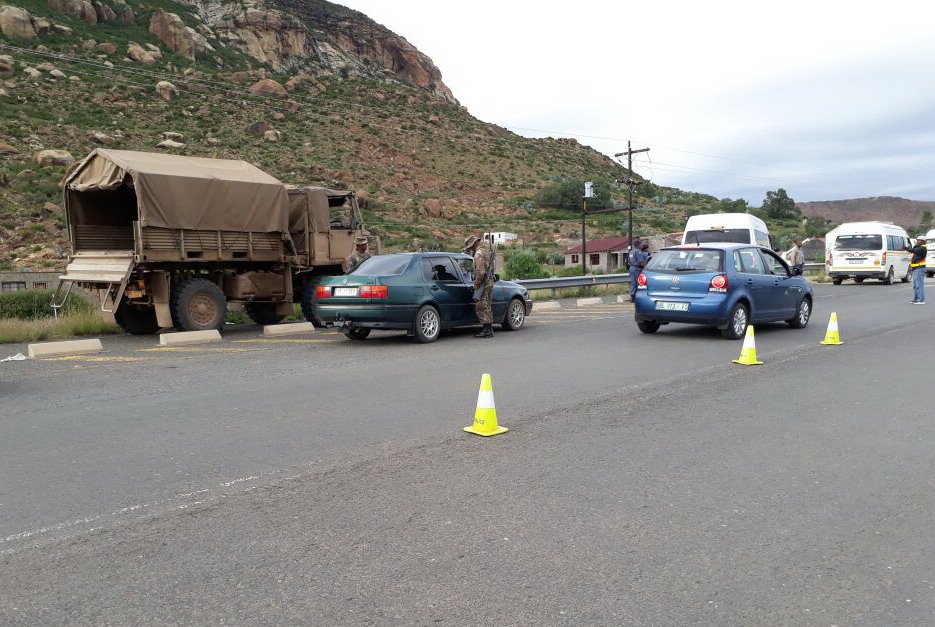
President Cyril Ramaphosa’s call to use the South African National Defence Force (SANDF) to support the SAPS in tackling ‘gang violence and illegal mining’ is understandable. Communities want immediate relief and a visible state presence.
Previous deployments suggest that military support may contribute to short-term stabilisation by reinforcing police operations, expanding area control and allowing police to work in a safer environment and at greater scale. These interventions can temporarily suppress violence and provide breathing space for affected communities.
However, these positive effects are rarely sustained, research shows. The drivers of gangsterism and organised crime are deeply embedded and highly adaptive, and enforcement surges alone don’t alter the conditions that allow violence to persist.
There is also a structural mismatch between military capabilities and the requirements of civilian policing. Soldiers can assert immediate state authority, but legitimacy and the rule of law depend on sustained investigations, effective intelligence systems, and functioning local policing.
Soldiers and police are not interchangeable – they operate on different logics. Soldiers aim to defeat an adversary and are trained to assume hostile actors may be legitimate targets. Police (should) seek to preserve life and evidence. They operate within constitutional constraints where force must be proportionate, necessary and justified in each case.
Government says the army will operate in a supportive role under police command, and the process will be led at national level by the SAPS National Commissioner and the SANDF Chief. However, timelines and operational details are still unclear.
Military deployments in civilian areas carry operational and legitimacy risks if not carefully managed. In 2020, during the COVID-19 lockdown enforcement, there were widely reported incidents and litigation involving excessive force by the SANDF and SAPS. Given that excessive use of force is already a policing problem, unclear command, rules of engagement and accountability can heighten the risk and undermine public trust.
Heavy-handed enforcement could even play into gang dynamics as criminal groups exploit security deployments, presenting themselves as alternate local sources of protection, dispute resolution or economic support.
South Africa’s recurring use of soldiers for policing tasks reflects a broader pattern: persistent violence is managed as a series of emergencies rather than addressed as a long-term governance challenge. Exceptional responses are designed for short, time-bound crises, whereas gang violence is structural and ongoing.
Framing violence as an emergency risks focusing on symbolic or extraordinary interventions rather than the difficult work of improving everyday policing and prevention measures that make a lasting difference.
South Africa has a policy framework that recognises violence as structural and multi-sectoral. The Integrated Crime and Violence Prevention Strategy, adopted by cabinet in 2022, describes violence as a complex, long-term governance challenge requiring coordinated interventions across policing, social services, urban management and community institutions.
Repeated reliance on once-off enforcement operations such as calling in the army sits uneasily with this prevention-oriented approach. It also highlights the gap between long-term policy commitments and crisis-driven responses.
Recognising that violence prevention requires a holistic approach doesn’t reduce the importance of law enforcement. The immediate priority is to develop an operational plan to use the deployment to kickstart more coordinated, intelligence-led investigations against organised crime networks. Illegal firearms must also be removed from circulation.
This means using the stabilisation period as a starting point to strengthen investigative and intelligence capacity, improve coordination across the criminal justice system, and embed more targeted deployments in the worst-affected areas.
Serious violence concentrates in specific places, times and criminal networks, and sustained reductions come from targeted, evidence-based policing, not broad surge deployments.
So the challenge is less about increasing force and more about improving how criminal justice resources are directed, coordinated and supervised in everyday operations. That includes having stronger intelligence-led and prosecutor-guided investigations aimed at permanently dismantling organised criminal networks and gangs.
This aligns with Ramaphosa’s statement in the 2026 State of the Nation address that the SAPS will identify ‘priority syndicates’ and deploy ‘hand-picked, multidisciplinary intervention teams focused on dismantling criminal networks.’
Success should be judged not by short-term declines in crime during the military deployment, but by whether these changes produce sustained gains after the soldiers leave.
Targeted social and economic interventions should also be prioritised in these communities to weaken their economic dependence on gangs and rebuild trust in the state. Without this, disrupted networks are quickly replaced.
Ultimately, making communities safer depends on strengthening routine policing practices and embedding evidence-based approaches – not crisis management and the repeated deployment of the military.
Written by Anine Kriegler, Senior Researcher, Justice and Violence Prevention, ISS Pretoria, and Lizette Lancaster, Head, Justice and Violence Prevention, ISS Pretoria.
Republished with permission from ISS Africa. The original article can be found here.