

By John Kourkoutas
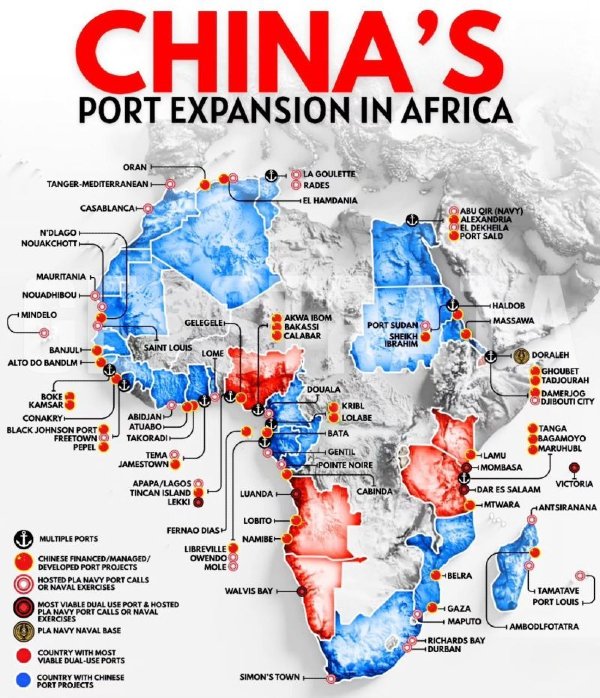
Everyone, it seems, is talking about China’s ports in Africa. Policymakers, investors, and analysts have spent years debating Beijing’s coastal ambitions – the deep-water terminals, the billion-dollar concessions, the strategic footprints along the Atlantic and Indian Ocean shores.
It is a consequential story, and it deserves the attention it receives.
But almost nobody is talking about what happens 500 kilometers (310 miles) inland. And that omission is costing European companies – and Africa’s broader economic potential – dearly.
Having spent the past decade helping European businesses expand into Sub-Saharan Africa, I have seen the ports up close. I have also seen the broken roads behind them.
The gap between those two realities is not merely an infrastructure problem. It is the defining business opportunity of the coming decade.
The Port Is Not the Product
The uncomfortable truth that rarely surfaces in boardroom presentations or trade ministry briefings is this: a brand-new deep-water port means very little if the railway connecting it to the capital is still colonial-era single gauge. A state-of-the-art terminal in Dar es Salaam does not resolve a three-week customs delay for a landlocked country like Zambia.
And a billion-dollar investment in coastal infrastructure does not automatically reach the farmer, the miner, or the manufacturer operating 800 kilometers (500 miles) from the shore.
China is building ports. That is a fact, and it is genuinely reshaping trade routes across the continent.
But ports are entry points, not solutions. They are the headline, not the story. The real opportunity in Africa is not at the coastline. It is in the last mile.
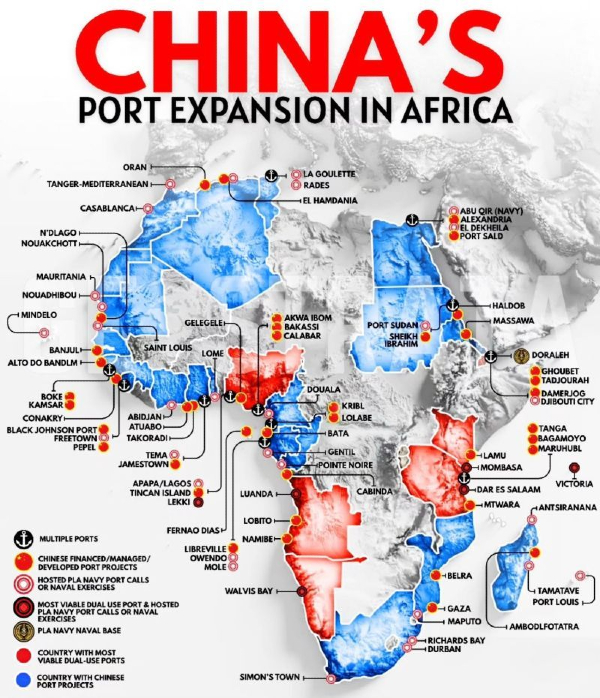
Africa’s Real Trade Opportunity Is Inland, Not at the Port
Where the Real Work Begins
The companies that will win in Africa over the next generation are not those routing containers through the shiniest new terminals. They are the ones solving the logistics gap between the port and the end market – the sprawling, complex, chronically underserved space where goods either reach people or don’t.
Cold-chain infrastructure for agricultural exports. Warehousing positioned near production zones rather than distant coastal hubs.
Regional distribution networks capable of functioning reliably across borders that, on paper, are open but, in practice, remain formidable obstacles.
These are not glamorous investments. They don’t generate the kind of geopolitical commentary that a new deep-water terminal does.
But they are where margin lives, where competitive advantage compounds, and where the structural transformation of African commerce will actually be decided.
The Assumption That Keeps Failing
In my experience, European companies do not typically fail in Africa because of weak demand. Demand across Sub-Saharan Africa is substantial and, in many sectors, growing faster than anywhere else on earth.
They fail because they enter with a foundational assumption that consistently proves wrong: that the infrastructure works the way it does at home.
It doesn’t. Not yet. And that gap – frustrating as it is for logistics managers and CFOs – is precisely where durable business cases are constructed.
The companies that treated India’s infrastructure deficits as a reason to wait in the 1990s largely missed one of the century’s most significant growth stories. The same dynamic is now unfolding across Sub-Saharan Africa, and the same mistake is being made by those who confuse present-day friction with permanent limitation.
Reframe the Risk
The next wave of African economic growth will not be built at the port. It will be built between the port and the people – in the cold-storage facilities, the regional trucking corridors, the cross-border customs partnerships, and the last-mile distribution networks that turn coastal connectivity into continental commerce.
For any European company currently looking at Africa and concluding that the infrastructure isn’t ready: the framing is wrong. The infrastructure gap is not the barrier to the business case. It is the business case.
Those who recognize that distinction early enough will have a significant head start on those who are still waiting for the roads to be finished before they decide to move.
John Kourkoutas is business development expert that specializes in helping companies, export teams, and business leaders succeed in Africa’s dynamic and emerging markets.