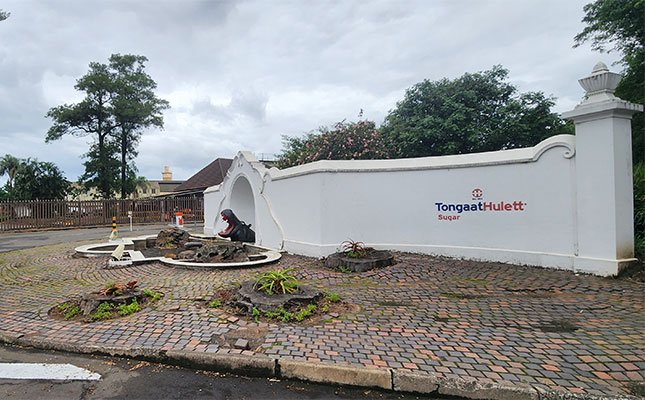
The South African Canegrowers Association has written to President Cyril Ramaphosa and several Cabinet ministers, requesting urgent action to prevent the liquidation of Tongaat Hulett and stabilise the wider sugar industry.


– ADVERTISEMENT –
Growers warn that the potential collapse of Tongaat Hulett could trigger widespread job losses, worsen rural poverty, and increase the country’s reliance on sugar imports.
Ahead of the company’s 27 February provisional liquidation hearing, the letters were addressed to Ramaphosa and the ministers responsible for finance; trade, industry and competition; agriculture; and public works and infrastructure.
Speaking to Farmer’s Weekly, South African Canegrowers Association (SA Canegrowers) CEO Dr Thomas Funke said an unfunded liquidation of Tongaat Hulett would have immediate and severe consequences on the ground.
“It would mean that Tongaat Hulett’s three KwaZulu-Natal mills [Maidstone, Amatikulu, and Felixton] would stop operating as normal, be unable to sell the refined sugar already produced, and therefore generate no income, severely constraining cash flow,” he explained.
According to Funke, 18 000 of the country’s 28 100 cane growers rely solely on Tongaat Hulett’s mills to process their cane.
“The majority of [the 18 000] are small-scale growers, who will have no alternative milling options and will not earn any money for their sugar cane,” he added.
SA Canegrowers estimates that around 40 000 workers employed directly by these growers will face immediate unemployment, with rural communities in KwaZulu-Natal and Mpumalanga in particular exposed to economic and social instability.
Concerns over import dependence and food security
Funke warned that losing Tongaat Hulett’s milling capacity would push South Africa towards long-term dependence on sugar imports.
“Tongaat Hulett is the largest producer of white sugar in South Africa, which is used by confectionery, biscuit, and beverage manufacturers,” he said, adding that if these manufacturers are forced to import white sugar, local demand will fall sharply, destabilising the entire industry.
He explained that while global sugar prices are currently low, they are highly volatile.
“The world sugar price fluctuates and is vulnerable to droughts, floods, climate shocks, and global supply chain disruptions.”
Funke cautioned that reliance on imports would expose South Africa to unpredictable price increases and inflationary risk over time.
SA Canegrowers has stressed that stabilising existing operations would be far cheaper than rebuilding a collapsed value chain.
“If the liquidation goes ahead, it must be funded, meaning sugar will continue to be crushed and milled, keeping 18 000 growers in business,” Funke said.
“The underlying value of the company rests in functional, operating assets – mills that are running, cane being processed, and sugar flowing to the market,” he added.
He also noted that the Department of Trade, Industry and Competition (DTIC) is currently opposing the liquidation.
SA Canegrowers has also called for a renewed commitment to the Sugar Value Chain Master Plan 2030, which aims to protect local production and unlock diversification opportunities.
“Saving Tongaat Hulett is essential for saving the sugar industry,” Funke said.
“If the sugar industry is not saved, there will be no opportunities for diversification, such as sustainable aviation fuels.”
Warning ahead of hearing
Funke said policymakers need to understand that the value of Tongaat Hulett lies in its continued operation rather than its liquidation.
“If this operational continuity is not secured, the consequences will extend far beyond one company.”
He warned that liquidation would destabilise the entire sugar value chain, affecting growers, workers, transporters, and downstream industries and would impact all of South Africa’s 27 000 small-scale and 1 100 large-scale growers.
He added that the industry is already under pressure from rising deep-sea sugar imports and the Health Promotion Levy (HPL).
“In such a fragile environment, the loss of three of South Africa’s 12 remaining sugar mills will be a death knell for the industry,” Funke said.
In a formal statement, SA Canegrowers said the crisis is not just about one company but about the survival of a strategic value chain.
“What may appear to be a contained corporate failure would, in reality, trigger dire cascading economic consequences across KwaZulu-Natal, Mpumalanga, and the national food and beverage system,” it said.
SA Canegrowers Chairperson Higgins Mdluli is quoted in the statement as saying: “The cost of stabilising and preserving these operations is materially lower than the long-term social, fiscal, and industrial cost of rebuilding a collapsed value chain, if rebuilding proves possible at all.”
He called on Ramaphosa to coordinate a response to protect rural jobs and livelihoods.
Calls for specific government action
SA Canegrowers has called on government to act swiftly by:
- Reviewing and amending the sugar import dollar-based reference price through the DTIC and International Trade Administration Commission of South Africa to reflect global realities;
- Ensuring, through the DTIC and the Industrial Development Corporation (IDC), that Tongaat Hulett’s mills and refinery remain operational;
- Scrapping the HPL, which SA Canegrowers says cost the industry 16 000 jobs and R2 billion in revenue in 2018 alone, without proven health benefits; and
- Recommitting to the master plan, including support for local procurement, regional sugar supply coordination, and green industrial projects such as sustainable aviation fuels.
Government response
The DTIC said it recognises the seriousness of the situation and the pressure facing the sugar industry.
The department said in a statement that Tongaat Hulett is a systemically important player, and its liquidation would have “far-reaching and devastating consequences”, especially in KwaZulu-Natal.
“Government remains firmly of the view that liquidation should be a measure of last resort, particularly where there are reasonable prospects of rescuing a strategically important enterprise in a manner that protects jobs, sustains productive capacity, and preserves value for the broader economy.
“In this context, the DTIC believes that Tongaat Hulett remains capable of being stabilised and restructured through a sustainable solution that balances the interests of workers, growers, communities, creditors, and the country,” it added.
According to the statement, the DTIC, along with other state bodies, will challenge the liquidation of Tongaat Hulett and continue backing all lawful measures to secure a sustainable solution.
“Government will intensify its engagements with all stakeholders, including the [IDC], labour, growers, financiers, investors, and affected communities, to explore solutions that ensure the survival of the company and the long-term sustainability of the sugar [industry].”
The department added that its actions will follow government policy, focusing on safeguarding jobs and livelihoods, backing small and emerging sugar farmers, maintaining industrial and agricultural capacity vital for food security and regional economies, and ensuring transparency, accountability, and good governance at every step.
Minister of Agriculture John Steenhuisen said in a statement that the Department of Agriculture (DoA) is engaging with relevant government departments and financial stakeholders to support a practical solution that will preserve production capacity and prevent long-term damage to the industry.
He added that the sugar industry is crucial to rural economies and the broader food value chain, warning that a collapse in production would bring wide-ranging economic and social effects.
“Our objective is not to intervene in commercial negotiations but to ensure that a viable path forward exists so that growers can deliver cane, mills can operate, and workers can earn an income. The immediate priority must be keeping the season alive.”
Steenhuisen said the DoA will continue monitoring the situation and is ready to help ensure production remains uninterrupted.
Get trusted farming news from Farmers Weekly in Google Top Stories.
➕ Add Farmers Weekly to Google
✔ Takes 10 seconds · ✔ Remove anytime