

The agreements were concluded during the latest session of the Permanent Joint Commission for Cooperation, which both sides revived after six years of inactivity.
Officials say the reset builds on earlier high-level engagement between John Mahama and Ibrahim Traoré in 2023 that reopened channels of cooperation between Accra and Ouagadougou.
Security concerns drive rapprochement
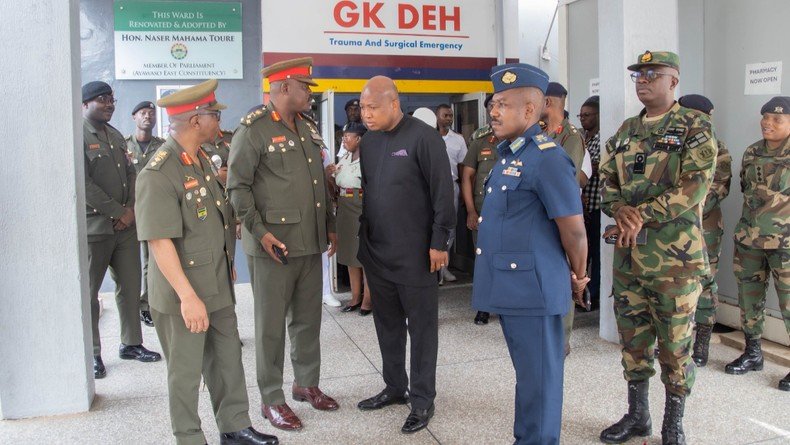
Rising insecurity across the Sahel formed the backdrop to the renewed partnership. Ahead of the talks, Ghana’s Foreign Minister, Samuel Okudzeto Ablakwa, visited victims of the 14 February terrorist attack in Titao at the 37 Military Hospital in Accra. The assault reportedly killed several civilians, including Ghanaian traders.
During the joint session, both governments “jointly condemned recent terrorist attacks in the sub-region and expressed sympathy to the affected families.”
Beyond security, the two countries addressed a recurring humanitarian issue linked to the Bagré Dam, whose periodic spillage has historically triggered flooding in downstream communities in northern Ghana.
Officials said the new cooperation mechanism would improve disaster preparedness and coordinated response.
Seven agreements to unlock trade and border coordination
The Ghanaian delegation held meetings with Rimtalba Jean Emmanuel Ouédraogo and Foreign Minister Karamoko Jean-Marie Traoré before finalising seven legal frameworks designed to ease movement and tighten security.
Among the most commercially significant is the mutual recognition of national driver’s licences, expected to remove long-standing bottlenecks along the Tema to Ouagadougou trade route. A separate agreement on transport and road transit aims to harmonise regulations that have slowed regional commerce.
The two sides also adopted a framework on cross-border cooperation and established a mechanism for periodic consultations between local border authorities. Officials say these measures will strengthen governance and improve coordination in frontier communities.
To address sovereignty concerns, both countries agreed to form a joint commission to reaffirm their shared boundary. Another pact formalises cooperation on disaster prevention and humanitarian crisis management.
In a move aimed at youth protection and regional security, the governments also signed an agreement targeting illicit cultivation, manufacture, and trafficking of narcotic drugs and psychotropic substances, effectively positioning both countries as a joint “no drug zone.”
Implementation in focus
Despite the breadth of the agreements, Ghana’s foreign minister stressed that delivery, not symbolism, would define success.
Ablakwa said the accords “are not going to be decorative pieces”, signalling plans for rapid operationalisation.
Both delegations described the talks as “open, forward-looking and impactful,” reaffirming what they called long-standing cordial relations and shared development ambitions.
The Ghanaian side also expressed appreciation for the hospitality of the Burkinabè authorities, describing the PJCC session as “extremely successful.”
Strategic implications
Persistent militant activity in the Sahel, coupled with cross-border crime and climate-related flooding, has heightened the urgency for coordinated action.
If effectively implemented, the seven agreements could improve trade flows, strengthen border security, and enhance humanitarian coordination across one of West Africa’s most strategically important corridors.
For two neighbouring states facing shared security and economic pressures, the reset signals a pragmatic shift towards deeper functional integration.


