

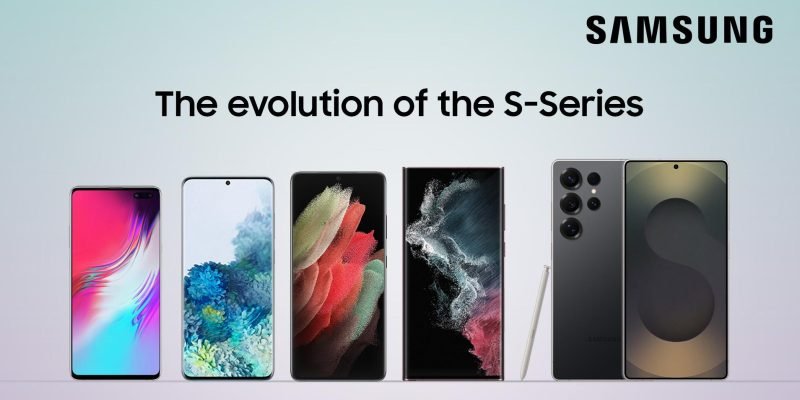

Sixteen Years Of The Galaxy S Series Making History


It’s hard to believe the Galaxy S series has been with us for 16 years. The original launched in 2010. Remember when a phone felt like a polished river stone? Slippery, shiny and elegant. That was the Galaxy S series in its early days.
Today’s models tell a different story. Over the years, Samsung’s flagship line has evolved in design, camera performance and now AI integration. Each change has felt practical. Bigger sensors, better low-light photos, tougher builds and smarter everyday features now define the series.
The journey began with the original Galaxy S (2010). It featured a rounded plastic body that felt light and grippy. Its bright Super AMOLED display stood out at the time. The 5MP rear camera was basic, but it delivered solid results and marked Samsung’s entry into serious smartphone photography.
Samsung refined the formula quickly. The Galaxy S II (2011) became slimmer with a curved plastic design that felt more premium. The camera jumped to 8MP and added better low-light performance and Full HD video.
By the Galaxy S III (2012) and S4 (2013), the pebble-inspired shapes remained. Screens grew larger. Cameras improved from 8MP to 13MP. The Galaxy S5 (2014) introduced 4K video and enhanced autofocus. It also maintained practical features like a removable back and water resistance.
A major design shift arrived with the Galaxy S6 and S6 Edge in 2015. Samsung replaced plastic with glass and metal. The Edge introduced curved displays for a more immersive look. The 16MP camera added optical image stabilization for sharper images.
The Galaxy S7 and S7 Edge (2016) kept the curved elegance. They introduced dual-pixel autofocus, delivering faster focus and stronger low-light performance.
The curved design peaked with the Galaxy S8 (2017) and S9 (2018). Infinity Displays reduced bezels dramatically. The Galaxy S10 (2019) introduced hole-punch cameras and ultra-wide lenses.
Prismatic glass backs added a shifting colour effect. These phones looked luxurious but were often slippery and prone to fingerprints.

Sixteen Years Of The Galaxy S Series Making History
From Curves to Clean Lines: Function Takes the Lead
As camera systems grew larger and more advanced, design had to adapt. The Galaxy S20 (2020) introduced a prominent rectangular camera bump. It marked a visible shift from seamless backs.
The Galaxy S21 (2021) blended the camera module into the side frame. Matte finishes improved grip. Neutral colours replaced flashy gradients. Camera hardware advanced with higher-resolution sensors and improved zoom.
The Galaxy S22 (2022) completed the move to flat screens and boxy aluminium frames. The design improved durability and made screen protectors easier to apply.
It also reduced accidental edge touches. Separate metal camera rings created a clean, modern finish.
The Galaxy S23 (2023) refined the look further. Bezels became slimmer. Materials felt more consistent across the lineup. The Ultra model featured a built-in S Pen for seamless integration.
The Galaxy S24 (2024) polished the flat design. It introduced titanium on the Ultra model for strength and reduced weight. Displays became brighter. Earthy tones replaced glossy finishes. Camera processing improved to deliver more natural colours and finer detail.
In 2025, the Galaxy S25 series built on that foundation. Flat screens remained. The Ultra model gained softer, rounded corners for better comfort. The S25 and S25+ became slightly thinner and lighter.
The 50MP ultra-wide camera replaced the previous 12MP sensor on the Ultra. The 200MP main sensor stayed. Nightography and image vibrancy improved further.
These changes happened gradually and for clear reasons. Larger camera systems required sturdier frames. Flat displays improved usability.
Phones had become essential tools, not just fashion statements. Samsung responded by prioritising durability, comfort and consistent performance.
The result is a lineup that feels unified and purposeful. Each generation builds on user feedback. From a 5MP shooter in 2010 to today’s AI-powered titanium devices, the Galaxy S series has matured into a daily essential.
And if the past 16 years are anything to go by, the next chapter is already quietly taking shape.
Source: Samsung Newsroom – The History of the Galaxy S Series


