
IHRM and EACC Sign MoU to Strengthen Ethics in Kenya’s Workplaces


IHRM and EACC Sign MoU to Strengthen Ethics in Kenya’s Workplaces
The Institute of Human Resource Management (IHRM) and the Ethics and Anti-Corruption Commission (EACC) have formalised a landmark partnership aimed at embedding ethics and integrity within Kenya’s workplaces.
Speaking during the signing ceremony, IHRM National Chairman, CHRP Odero Philip Dalmas, described the Memorandum of Understanding (MoU) as a bold and timely step toward strengthening preventive governance across institutions.
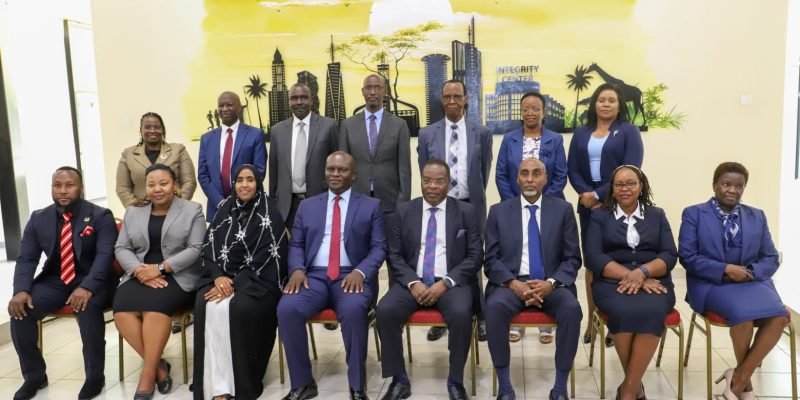
The event brought together the Chairperson and Chief Executive Officer of EACC, the Executive Director of IHRM, technical teams from both institutions, and distinguished guests from across sectors.
A Timely and Strategic Collaboration
In his address, the Chairman noted that the partnership signals more than institutional cooperation. Rather, it represents a declaration that the human resource profession is ready to play a central role in promoting ethical conduct across both public and private sectors.
He observed that Kenya continues to face complex governance and integrity challenges. Therefore, enforcement alone cannot resolve these issues. Investigations and sanctions remain important, but sustainable change must begin within systems, structures, and organisational culture.
At the centre of those systems sits the Human Resource function.
“If we get HR right, we significantly strengthen integrity across institutions,” he emphasised, adding that the collaboration recognises HR as a strategic driver of ethical practice.

IHRM and EACC Sign MoU to Strengthen Ethics in Kenya’s Workplaces
Aligning with IHRM’s Vision and Core Values
The Chairman further explained that the MoU aligns directly with IHRM’s vision of fostering ethical, people-centred HR professionals.
According to him, ethics is not an optional addition to the profession. Instead, it forms the foundation of HR practice. Without integrity, the profession loses its moral authority and regulatory legitimacy.
Integrity, he noted, remains one of IHRM’s core values. The Institute promotes honesty, transparency, accountability, and fairness in professional engagements. Through this partnership, those values now move from principle to structured action.
Launch of the Ethics in Human Resource Management Curriculum
A key component of the MoU is the implementation of the Ethics in Human Resource Management Curriculum, jointly developed by IHRM and EACC.
The Chairman commended the technical teams, working under the leadership of the two CEOs, for developing a curriculum that is practical, comprehensive, and responsive to current governance realities.
The curriculum covers critical areas such as ethics in strategic human resource management, ethical issues in training and career development, and corruption reporting mechanisms. In addition, it addresses workplace integrity, ethical leadership, conflict of interest management, disciplinary procedures, and the integration of anti-corruption frameworks within HR systems.
He described the curriculum as an example of preventive governance in action. By equipping HR professionals with structured ethical frameworks, institutions can detect risks early and build stronger compliance cultures.
Commitment from the IHRM Council
On behalf of the IHRM Council, the Chairman affirmed full commitment to implementing the MoU’s provisions.
The Institute will roll out the ethics curriculum across its membership. It will also integrate ethics training into Continuous Professional Development programmes and sensitise practitioners in both public and private sectors.
Furthermore, IHRM will strengthen compliance monitoring and enhance enforcement of ethical standards under its regulatory mandate. The Council, he assured stakeholders, will provide the policy and institutional support necessary to ensure measurable impact.
Building a Culture of Integrity
In conclusion, the Chairman expressed appreciation to EACC for the collaboration. He emphasised that ethics is not an abstract ideal but a professional obligation.
Through the partnership, both institutions aim to strengthen workplace systems, elevate professional standards, and contribute to building a Kenya defined by integrity, accountability, and people-centred leadership.
The signing of the MoU marks the beginning of structured implementation. More importantly, it signals a shared commitment to embed ethics at the heart of human resource practice and, by extension, at the core of Kenya’s institutional governance.