
Welcome to Foreign Policy’s Africa Brief.
The highlights this week: Ethiopia relaxes foreign exchange controls as it is projected to experience significant growth, U.S. troops arrive in Nigeria to support counterterrorism efforts, and China announces a zero-tariff policy for imports from 53 African countries.
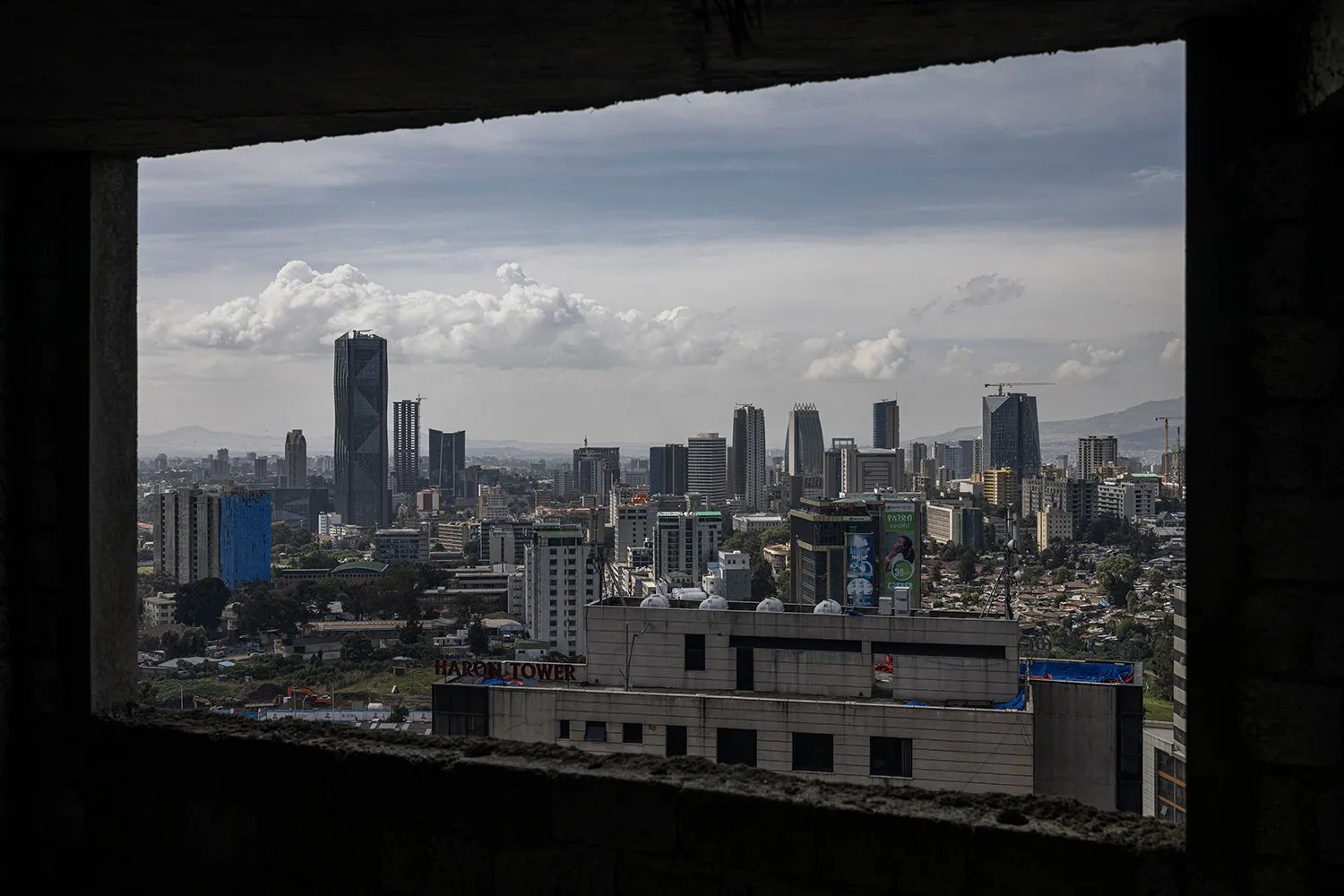
Last week, the Ethiopian Central Bank announced a major relaxation of foreign exchange controls in a bid to further liberalize the economy, attract foreign direct investment, and make it easier to do business in Ethiopia. The move comes shortly after Prime Minister Abiy Ahmed said that the country is projected to grow 10.2 percent this fiscal year.
Ethiopia was one of Africa’s fastest-growing economies, with average annual growth of around 11 percent, until 2020, when a two-year civil war broke out in its northern Tigray region. The war cost more than $28 billion in damages and economic losses, and more than 1 million people in northern Ethiopia still rely on humanitarian aid.
The country’s current economic rebound has been driven by reforms demanded by the International Monetary Fund, leading to stronger performances in agriculture, mining, and exports. An extensive reform program, which launched in July 2024, floated the birr, Ethiopia’s currency, and opened up key industries such as banking, telecommunications, and real estate to foreign competition.
The decision to let the market—rather than the state—determine the birr’s exchange rate severely devalued Ethiopia’s currency, leading to higher inflation rates and cost of living. Yet these reforms, as expected, boosted Ethiopian exports.
For instance, in its 2024-2025 fiscal year, Addis Ababa reported coffee export earnings of more than $2.6 billion, up from $1.43 billion the previous year—a major boost for a country that relies on coffee for around 30 percent of its export revenue.
Ethiopia secured this export growth despite its longtime suspension from the African Growth and Opportunity Act (AGOA), the trade agreement that gives many African countries duty-free access to the U.S. market.
Although Washington removed Ethiopia from AGOA in 2022 due to human rights concerns related to the Tigray civil war, the United States remains a top destination for Ethiopian coffee. And while it faces 10 percent tariffs from the Trump administration, Ethiopia has pivoted to diversify its coffee exports in Asian and Gulf markets, specifically targeting growth in China.
Ethiopia’s economic performance is also being driven by surging gold exports, though this may be a temporary boon. Gold shipments increased from 4 to 37 tons in the last fiscal year, accounting for 42 percent of export revenue. Gold prices have hit record highs due to investor demand for safe assets amid global tariff threats from the Trump administration.
Still, Ethiopia has yet to finalize debt restructuring under the G-20 Common Framework. Last year, Addis Ababa reached an agreement with foreign governments to restructure $8.4 billion in loans, with $3.5 billion in debt relief.
But private holders of Ethiopia’s $1 billion bond said earlier this month that they were prepared to sue after official bilateral lenders, led by China and France, blocked a preliminary agreement and required bondholders to take similar losses.
The overall picture is that Ethiopia is experiencing green shoots of economic recovery, but volatile geopolitical winds could undermine these gains—not least another military confrontation.
In the past week, reports have come out alleging Ethiopian involvement in Sudan’s civil war between the paramilitary Rapid Support Forces (RSF) and the Sudanese military. A Reuters investigation found that Ethiopia is hosting secret training facilities for the RSF near its border with Sudan.
Analysts suggest that by backing RSF fighters, Ethiopia is seeking to counter Egypt, a close ally of the Sudanese military. Ethiopia and Egypt are currently in an ongoing dispute over the Grand Ethiopian Renaissance Dam on the Blue Nile, which Cairo says threatens its water supply.
Support for the RSF would also align Ethiopia with the United Arab Emirates, which reportedly arms the RSF. The UAE has significant influence in the Horn of Africa and potential sway over coastal access points, strengthening Abiy’s bid to secure direct access to the Red Sea.
At the same time, rising military tensions with Eritrea—as well as fresh fighting in the Tigray, Amhara, and Oromia regions—also threaten to disrupt Ethiopia’s economic trajectory.
Wednesday, Feb. 18: The United Nations Security Council holds a briefing on its mission in Libya.
The European Union holds a roundtable in Brussels on trade opportunities in West Africa.
Thursday, Feb. 19: Zambian President Hakainde Hichilema delivers a state of the nation address.
The U.N. Security Council holds a briefing on Sudan.
Saturday, Feb. 21, to Tuesday, Feb. 24: Health ministers from the Southern African Development Community convene in Sandton, South Africa, to discuss HIV and AIDS response.
U.S. troops in Nigeria. Around 200 U.S. military personnel have arrived in northern Nigeria over the past week, according to the country’s defense ministry, to help train Nigerian security forces in their fight against terrorism.
The security cooperation has helped ease bilateral tensions in the wake of U.S. President Donald Trump’s escalating rhetoric against Nigeria. In recent months, Trump has threatened military action in Nigeria if its government does not stop what he falsely claims is a Christian genocide. Although Christians have faced violence, all faiths are affected by insecurity in Nigeria.

The United States has regularly sent personnel to train the Nigerian military since the militant group Boko Haram kidnapped hundreds of children in 2014.
Congolese lithium. Chinese state-owned company Zijin Mining is set to begin the Democratic Republic of the Congo’s first lithium production in June, with exports scheduled immediately thereafter, Reuters reported last week.
Lithium will be extracted from the disputed Manono site, one of the world’s largest lithium reserves. Australian company AVZ Minerals formerly had a mining permit for the site, but the Congolese government revoked it in 2023 and later granted some of the rights to Zijin.
Last May, KoBold Metals, a U.S. startup backed by Bill Gates and Jeff Bezos, struck a framework deal to buy AVZ’s remaining stake in the project. But that plan has since hit a stumbling block as AVZ pursues legal action over its revoked mining rights.
Duty-free access. This week, China announced a zero-tariff policy for imports from all African countries starting on May 1 (excluding Eswatini, which recognizes Taiwanese sovereignty).
The announcement came shortly after China signed a framework deal with South Africa covering trade, investment, and renewable energy cooperation—including duty-free access to the Chinese market—earlier this month.
Although Pretoria is Washington’s largest trading partner in Africa, relations have deteriorated recently amid Trump’s false claims of a white genocide in South Africa. Trump levied 30 percent tariffs on South African goods last August, effectively negating AGOA. Pretoria was formerly the largest beneficiary of AGOA.
Weak counterterrorism. In HumAngle, Isah Ismaila reports that Nigerian authorities ignored months of threats before 170 people were killed in Kwara state in February—the country’s deadliest assault this year. Gunmen burned homes and abducted people in the attack on majority Muslim communities. No group has claimed responsibility.
“Amnesty International says the gunmen had been sending warning letters and pamphlets to the communities for over five months, including as recently as two weeks before the killings,” Ismaila writes. “Soldiers and forest guards have since been deployed to Kaiama, but their arrival after the fact underscores the reactive nature of Nigeria’s counterterrorism strategy.”
Fishing crisis. Tunisian fishers are facing an existential crisis due to climate change, Jihen Nasri reports in Inkyfada. Rapid warming in the Mediterranean has increased the frequency of storms and reduced fish stocks—forcing fishers to take longer, riskier trips and severely affecting the livelihoods of artisanal fishing communities.
“The challenges faced by the fishermen are not limited to weather fluctuations,” Nasri writes. “Illegal fishing boats, known as ‘kys’ trawlers, also operate in coastal areas. These damage the marine environment and deprive other fishermen of good catches when they go out to sea.”