

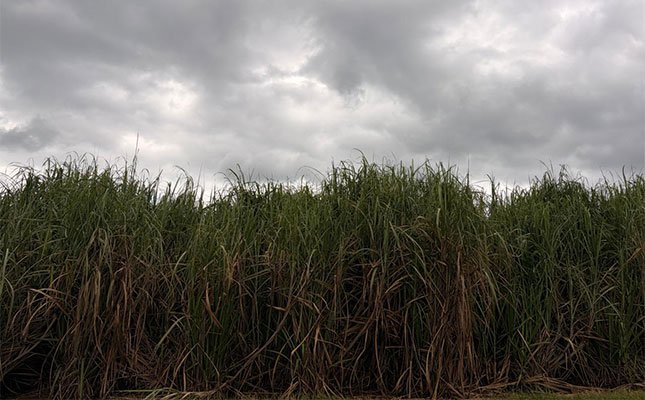
As local sugar cane farmers face rising sugar imports and global market pressures, the industry prepares for Phase 2 of the Sugarcane Value Chain Master Plan. Speaking to Farmer’s Weekly, South African Sugar Association executives reflect on Phase 1 outcomes and outline next-phase priorities.


– ADVERTISEMENT –
According to Sifiso Mhlaba, CEO of the South African Sugar Association (SASA), Phase 1 achieved just over 51% of its planned outputs between 2021 and 2023. A key objective was stabilising domestic sugar sales, which had fallen from 1,5 million tons to 1,2 million tons over multiple seasons before the plan.
He added that this recovery was supported by a pricing restraint commitment, which limited increases to the consumer price index, and by ensuring that downstream buyers sourced 95% of their sugar locally. Combined with trade protections, these measures helped restore stability to the domestic market.
Diversification efforts, conducted in partnership with the Industrial Development Corporation, initially considered more than 50 alternative sugar cane products, narrowing down to five, including sustainable aviation fuel (SAF) and polylactic acid (PLA). Phase 2 will focus on commercialising these innovations and exploring sustainable production pathways.
Other objectives included maintaining a moratorium on the Health Promotion Levy (HPL), South Africa’s tax on sugary beverages introduced in 2018 to combat obesity and non-communicable diseases, and ensuring government support for the measure.
Increasing imports and industry displacement
Alongside Phase 2 preparations, the industry faces rising sugar imports. Kulani Siweya, national market and trade policy executive at SASA, said South Africa received 163 000t of sugar from countries like Brazil, India, Guatemala, Thailand, and Eswatini between April and December 2025, up 155% from the previous year.
“These imports are highly subsidised, allowing foreign producers to export at prices below production costs,” he said, adding that every ton of imported sugar costs the local industry R7 500 and displaces domestic production.
“This has already cost the South African sugar industry over a R 1 billion, ” he said.
Siweya explained that South African producers still earn more selling locally than exporting at world prices, which remain below production costs.
“Maintaining the size of the [local] industry through protection measures is critical to preserving jobs and economic activity,” he added.
To cushion the industry, SASA is seeking a revision of the dollar-based reference price, which sets a benchmark for sugar imports. The current benchmark, US$680/t (around R10 890/t) set in 2018, no longer reflects current costs. SASA has applied to raise it to $905/t (R14 490/t).
“This protection will enable us to focus on the master plan commitments, responsible pricing, diversification, and transformation,” Siweya said.
He added that independent analysis indicates that the adjustment will result in only a 0,3% increase in sugar prices for consumers.
Phase 2: preparing for implementation
Mhlaba explained that Phase 2 will streamline operations through four test teams, down from 10 in Phase 1, to improve monitoring and evaluation:
- Test Team 1: trade and pricing issues
- Test Team 2: small-scale grower support
- Test Team 3: diversification efforts, including SAF and PLA
- Test Team 4: food policy and HPL considerations
He added that transformation underpins the master plan, with R2 billion earmarked over five years for black and small-scale growers, ensuring job creation and retention.
Get trusted farming news from Farmers Weekly in Google Top Stories.
➕ Add Farmers Weekly to Google
✔ Takes 10 seconds · ✔ Remove anytime


