HAVANA, Cuba, (ACN) – Carlos Fernandez de Cossio, Cuba’s deputy foreign minister, denounced in Havana the economic, commercial, and financial war facing the Caribbean nation, the result of more than six decades of coercive measures imposed by the United States, reported the foreign ministry’s website, Cubaminrex.
Fernandez de Cossio stated that US media outlets such as The Wall Street Journal and The Economist describe the situation in Cuba without impartiality, showing enthusiasm for the country’s difficulties and omitting critical assessments of the aggressor.
The official affirmed that the current situation is a consequence of a prolonged policy of hostility, characterised by disproportionate, ruthless, and asymmetrical actions aimed at weakening the Cuban economy and society.
He noted that, despite the challenges, Cuba has the accumulated experience of self-defense against 67 years of imperialist aggression, as well as a system of social justice that allows for the adoption of equitable measures to protect the population. He also emphasised that the Cuban socialist model facilitates the priority allocation of resources, encourages solidarity, and mobilises national will to confront current challenges.
The deputy minister also highlighted on his Facebook profile the letter published by The People’s Forum, signed by artists and personalities such as Jane Fonda, Ed Harris, Indya Moore, Silvio Rodriguez, Roger Waters, and Tatiana Maslany, who demanded an end to the policy of strangulation against Cuba.
According to that document, the oil embargo imposed by the US administration threatens to close hospitals and schools, while solidarity organisations are sending generators and solar panels to guarantee the electricity supply in health centers.
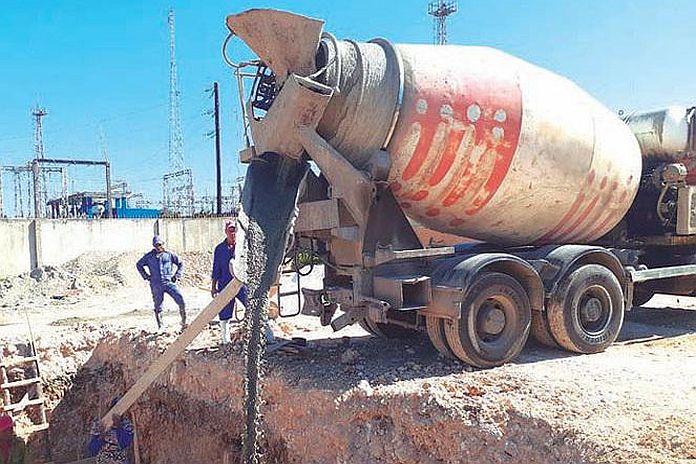
Amid tensions caused by measures taken by the US administration against Cuba, construction is progressing in the Havana municipality of Cotorro on a battery park designed to guarantee the efficiency of the capital’s photovoltaic parks, the newspaper Tribuna de La Habana reported.
Electrical engineer Alejandro Garcia Echemendia, head of operations, told the newspaper that the facility will have a capacity of 50 megawatts, with the purpose of storing energy and regulating the primary frequency of delivery to the National Electric System (SEN).
Garcia Echemendia explained that for every 1,000 megawatts from the photovoltaic parks, at least 100 megawatts of battery regulation are required, which will allow for the utilisation of 100 percent of the energy generated in Guanabacoa, Cotorro, and Boyeros.
The project includes civil engineering work, cabling, communications, and battery installation, with the participation of the companies Geysel and ATI, the ministry of construction, and technical advice from specialists in China.
The head of operations assured that the planned schedule is being met and the installation is expected to be completed in the first half of this year, which will bring greater stability and efficiency to the SEN.