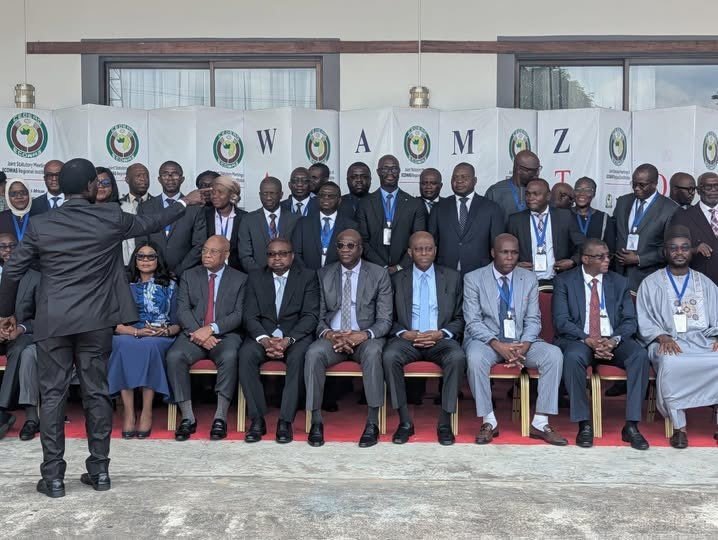
The meeting, held under the framework of the Economic Community of West African States (ECOWAS), is focused on aligning monetary policies, strengthening institutional governance, and ensuring participating countries meet agreed macroeconomic convergence benchmarks.
In a statement released on Saturday, Nigeria’s presidency said the session is aimed at “finalising critical policy alignments and governance structures required to operationalise the single currency project.”
The Governor of the Central Bank of Nigeria, Olayemi Cardoso joined counterparts from across the region, highlighting Nigeria’s central role in the initiative as West Africa’s largest economy.
The 12 countries driving the Eco rollout include Nigeria, Ghana, Liberia, Sierra Leone, Guinea, The Gambia, Cape Verde, Guinea-Bissau, Senegal, Côte d’Ivoire, Togo, and Benin.
Notably, the first phase of implementation is expected to involve Liberia, Nigeria, Ghana, Sierra Leone, Guinea and The Gambia, subject to each country meeting agreed macroeconomic convergence criteria and completing institutional governance frameworks.
“The launch of the Eco will depend strictly on compliance with macroeconomic convergence benchmarks and the establishment of strong institutional frameworks,” the presidency said, adding that the phased approach is intended to ensure “credibility, stability and long-term sustainability of the regional currency.”

A renewed push after years of delays
However, officials say the current engagement reflects stronger political will.
“This renewed technical engagement demonstrates West Africa’s collective resolve to build a more integrated and resilient regional economy,” the statement noted. “Monetary integration remains central to promoting trade, investment and shared prosperity across the region.”
While significant hurdles remain, the Monrovia meeting signals that West Africa’s common currency project is once again firmly on the policy agenda.