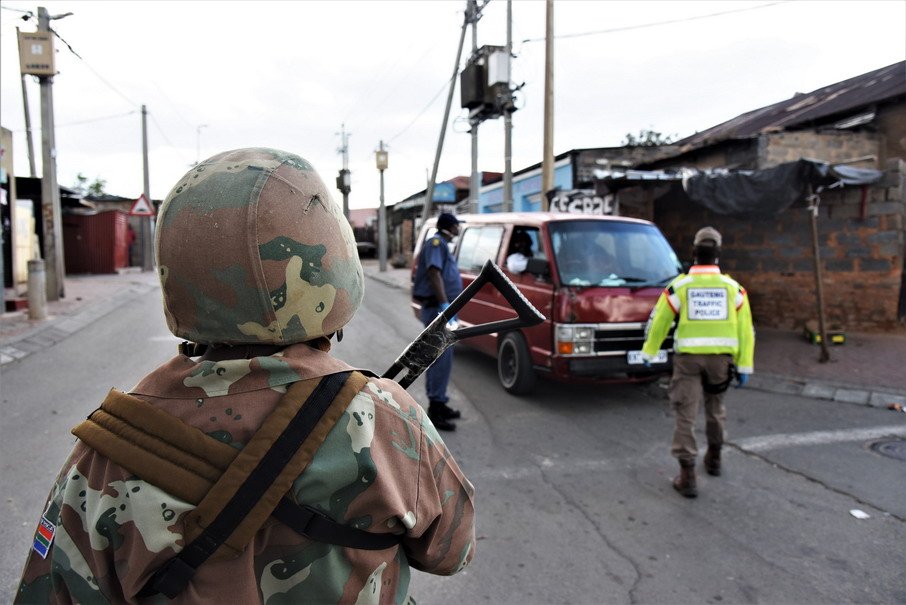

The Chairperson of the Portfolio Committee on Defence and Military Veterans (PCDMV) has welcomed President Cyril Ramaphosa’s commitment to deploy the South African National Defence Force (SANDF) to combat crime in Gauteng and the Western Cape, but not everyone is in agreement.
Ramaphosa made the announcement during the 2026 State of the Nation Address (SONA) on Thursday 12 February, saying the SANDF would be deployed alongside the South African Police Service (SAPS) in the coming days to combat to combat crime, gang violence and illegal mining.
The deployment will be limited to a few hundred defence force members, who will be deployed to the two provinces.
PCDMV Chairperson Dakota Legoete said the fight against internal criminal threats is just as critical as protecting the country from external aggression. “The safety of our citizens is non-negotiable. When organised crime syndicates and illegal mining networks terrorise communities, threaten livelihoods and undermine the rule of law, the state must respond decisively. We fully support the President’s firm commitment to restore order and protect our people.”
“The SANDF has a constitutional duty to defend and protect the Republic and its people. When criminal elements effectively hold communities hostage, particularly through illegal mining operations and violent gang activity, the deployment of the Defence Force becomes both necessary and justified,” he said.
The Chairperson noted that operations such as Operation Vala Umgodi have already exposed the scale of illegal mining activities, including the involvement of foreign nationals from Zimbabwe, Lesotho and Mozambique working with organised syndicates to exploit abandoned and disused mines, often terrorising surrounding communities. “Illegal mining is not a petty offence,” Legoete said in a statement on 13 February. “It is organised crime. It fuels violence, damages infrastructure, deprives the state of revenue and leaves communities living in fear. We cannot allow criminal syndicates to operate with impunity within our borders.”
“I have long warned that the threats we are facing within our own borders have escalated beyond what can be effectively managed through ordinary policing alone. The scale and sophistication of organised crime now require a more coordinated and robust intervention, one that includes the disciplined capacity of the SANDF working in support of SAPS. I therefore welcome the President’s decision.”
He said the situation, particularly in the Western Cape, has reached alarming levels. “Gang violence continues to terrorise communities, and the proliferation of illegal firearms in the hands of gangs and extortionists is completely out of control. Our people deserve urgent and decisive action.”
“This intervention is long overdue,” the Chairperson said. “Our people deserve to feel safe in their homes and in their communities. The deployment of the SANDF, working in support of SAPS, will strengthen government’s capacity to decisively confront those who threaten our national security.”
Ramaphosa is still due to, in line with constitutional requirements, inform Parliament of the details of the deployment, including its scope, duration and cost implications.
Legoete is reported by ENCA as cautioning that the Defence Force cannot be a silver bullet for all the problems the country has. “We want the executive to bring a proper strategy on how to deal with the criminal elements in the long term. The honeymoon of the criminal elements must come to an end. So far, it has demonstrated that it is undermining the sovereignty of the country.”
“We are of the view that, as a stopgap measure, the SANDF will have to come because it is the authority that is assigned to protect the nation and deal with territorial integrity and protection of the sovereignty of the country.”
Crime and gang expert Professor Irvin Kinnes told ENCA crime-affected residents will likely welcome the arrival of soldiers, but “in the longer term, it’s not going to make a significant effect. I think the presence of the Defence Force will provide hope, but it is a false hope… because eventually, the Defence Force leaves.”
Gauteng welcomes deployment
The Gauteng Provincial Legislature’s Portfolio Committee on Community Safety, meanwhile, has welcomed the SANDF deployment to the province.
“This firm intervention…underscores the gravity of the crisis and the urgent necessity for a coordinated, robust response to dismantle highly organised criminal syndicates that have terrorised communities and undermined the rule of law,” the committee said in a statement.
The committee noted that it has consistently “raised concerns about the devastating impact of illegal mining” in the province.
“During a recent unannounced oversight visit to the Bekkersdal Police Station, the committee received deeply disturbing reports of zama zamas [illegal miners] intimidating residents, perpetrating violent crimes and holding entire communities hostage through fear and lawlessness.
“Equally alarming are reports that more than 600 families were allegedly forced to flee their homes in Randfontein as a result of escalating violence linked to illegal mining activities, with displaced residents compelled to seek refuge in community halls.
“The committee reiterates that illegal mining is not a minor or isolated offence. It is an entrenched, organised criminal enterprise that endangers lives, destroys infrastructure, destabilises communities and erodes public confidence in the state’s ability to protect its citizens,” the statement said.
The committee said a “more aggressive, integrated, multi-agency approach is required to decisively confront and eradicate this criminal menace”.
“In this regard, the deployment of the SANDF represents a critical and long-overdue intervention – one that the committee has repeatedly recommended.
“The [committee] will closely monitor the implementation and impact of the SANDF deployment and remains committed to working with all spheres of government to ensure that Gauteng is decisively reclaimed from illegal mining and that communities are able to live free from fear, violence and intimidation,” the statement concluded.
Experts are against the deployment
Defence analyst Ricardo Teixeira said the SANDF should only be deployed in the most dire circumstances, and sending them to the Cape flats because of SAPS’ incompetence is not one of them. “The SANDF is once again being used to plug the gaps from SAPS’ failure. The cost will be exorbitant, and the SANDF will have to request additional funding. Worrying times ahead.”
Aerospace and defence expert Dean Wingrin said just flooding crime-ridden areas with troops with no other long-term plan is extremely short-sighted and unrealistic. “What are the other plans? I hope there is a comprehensive policing/prosecuting/community/social strategic plan underpinning the SANDF deployment with a realistic end goal.”
John Stupart, writing in The Daily Maverick, said the deployment of the SANDF is not a good thing, for several reasons. Firstly, the SANDF is overstretched, underfunded and ill-led, and does not have the capacity. Secondly, the military deployment will not address the root causes of gangsterism and crime, especially as soldiers do not have powers of arrest nor the remit to conduct criminal intelligence. Crime will rebound as soon as soldiers withdraw, Stupart maintains.
“For as long as SANDF deployments in domestic affairs receive rousing applause across all party benches, the military will continue to be used in situations for which it is ill-designed. This is equally true for border patrols as it is for anti-gang operations. Both should be the police’s responsibility,” he stated.
Defence Analyst Kobus Marais told SABC the deployment is a strong indication of a serious structural challenge deficit and the decaying within police service capabilities and their commitment.
“The announcement by the president to deploy our soldiers in the streets against our own citizens can never be supported in a constitutional democracy like ours. This is more so when we have a delipidated and defunded defence force with very poor defence capabilities left and the South African Police Services with a budget three times of that of defence force and with many more policemen and women than the defence force has available,” Marais said.
DA cautious
Lisa Schickerling, Democratic Alliance Spokesperson on Police, welcomed Ramaphosa’s deployment announcement, but cautioned that a properly mandated and time-bound SANDF deployment must be guided by a clear joint and integrated inter-agency cooperative framework between the SANDF and SAPS to stabilise areas plagued by gang violence.
“It can help stabilise hotspots, restore community confidence and create the operational space needed for law-enforcement agencies to act. However, stabilisation is not a strategy. The SANDF cannot replace the investigative and intelligence functions of the South African Police Service (SAPS) or the Directorate for Priority Crime Investigation (DPCI).”
Schickerling said that soldiers can assist with visibility and area control, but they cannot dismantle drug networks, build racketeering cases or secure sustainable convictions. The SANDF deployment may assist in stabilising high-risk areas in the short term, but it is not, and cannot be, a long-term crime-reduction solution.
“What South Africa requires instead is structural reform and intelligence-led policing grounded in credible crime intelligence. Most importantly, the expansion of policing powers to competent metropolitan governments within constitutional bounds must happen,” she said.
“Short-term stabilisation may calm hotspots, but long-term safety requires empowered and competent institutions, intelligence-driven policing, prosecution-led investigations and measurable accountability. Where capable provincial and local governments, like the Western Cape Government and the City of Cape Town can strengthen safety delivery within constitutional limits, their role should be expanded to reinforce South Africa’s national safety architecture,” Schickerling said.
Mission creep
Deputy Defence and Military Veterans Minister Bantu Holomisa told The Sunday Times that the SANDF could end up getting involved in other domestic security tasks. “For instance, look at our national key points — we are already protecting Eskom. We are also building one of the major operations in the Eastern Cape, along the N2; and we can deploy them against the construction mafia, because we cannot fold our arms when billions are going to be wasted.”
“No more nonsense will be allowed. No more chance-takers. This is an opportunity for the president to crack down on lawlessness. I see it as a first phase in confronting criminals,” he told the publication.
Holomisa did warn that a deployment longer than a few months would require financial backup as well as more permanent accommodation for soldiers. Similarly, Rise Mzansi leader Songezo Zibi said he was not in support of the deployment as the SANDF is underfunded.
Legoete also called for a properly funded and modernised SANDF to safeguard South Africa’s sovereignty, support peace missions and contribute to regional stability. He urged government to prioritise the implementation of the 2015 Defence Review and ensure sustainable funding for the Defence Force. “The SANDF is more than a military institution. It is a symbol of our sovereignty, resilience and unity. If we are serious about defeating organised crime and protecting our constitutional democracy, we must equip and fund our Defence Force accordingly. The time for decisive action is now.”