

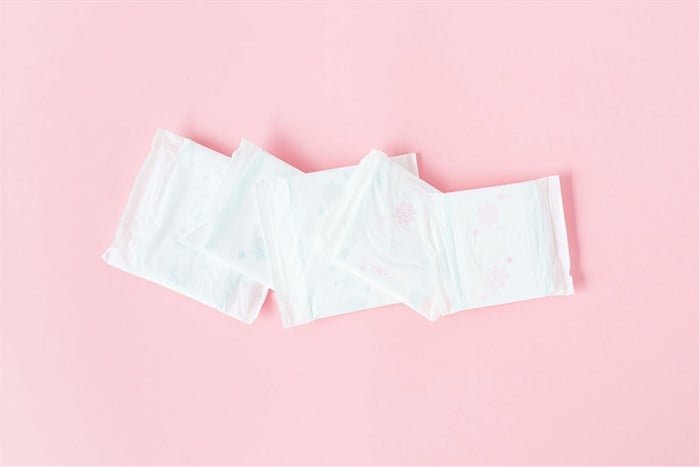

The researchers say the findings underscore the need for clearer labelling, stronger chemical standards, and continued monitoring of everyday menstrual products.
“This study serves as a wake-up call,” said Professor Visser, head of the department of chemistry at the UFS, “that current regulations and ‘clean’ labels in South Africa may not be providing the protection consumers expect.”

From puberty to menopause: How hormones shape South African women’s lives
Consumer safety concerns
The study found that every sanitary pad and pantyliner tested contained at least two endocrine-disrupting chemicals (EDCs), raising concerns about consumer safety, transparency, and long-term exposure.
“Our study highlights a concerning reality regarding the safety of menstrual products,” said Visser.
“Many sanitary pads and liners contain hormone-disrupting chemicals, even when they are marketed as being ‘free from harmful chemicals’.”
The study focused on three groups of EDCs — Phthalates, Bisphenols (including BPA), and Parabens.
Bisphenols were detected in 100% of sanitary pads and 75% of pantyliners, while parabens were found in more than 81% of pads and 75% of liners.
Phthalates were present in all pantyliners tested and in 50% of sanitary pads.
The researchers have cautioned that these substances are not always added intentionally, but may migrate into products from plastics, adhesives, and manufacturing processes.
“The heat-pressing process can cause these chemicals to move into the top layer that touches your skin,” Visser explained.

#WHXCapeTown: Why aren’t more African women offered IR for fibroid treatment?
Long-term exposure
While the levels detected may be small, the researchers warned that long-term exposure has been linked to hormonal imbalances, fertility problems, endometriosis, and even certain types of cancer.
Especially since most menstruating people use these products for several days for most of their lives.
Menstrual products come into contact with mucosal tissue, which absorbs chemicals more quickly and directly than normal skin.
The study also highlights gaps in chemical regulation in South Africa.
“SABS (South African Bureau of Standards) does have the SANS 1043 test, but it only tests for microbiology, absorbency, etc. According to our knowledge, there are no standards regarding the chemicals we observed,” Visser said.
Manufacturers are also generally not required to disclose the full chemical composition of menstrual products.
“We do believe that manufacturers should disclose all chemicals in their products, even if they fall below daily limits,” he added.

Heavy periods affecting productivity in South Africa
Reusable options
Visser has advised that consumers opt for products certified under the OEKO-TEX Standard 100, or consider reusable alternatives.
“Look for the OEKO-TEX Standard 100 verification – an international standard – or use a reusable sanitary towel,” he said.
This research forms part of a broader UFS initiative addressing menstrual health and access.
“Our research started several years ago when we discussed a radio programme that mentioned that many young girls do not have access to feminine products.
“We decided to get involved,” Visser said.
The interdisciplinary team is now working on innovations.
“Our team is in the process of developing a reusable sanitary pad with superpowers – antimicrobial properties,” he added.


